Mike Hollingsworth and Anne Diamond: A Study in Partnership, Privacy, and Life Beyond the Spotlight

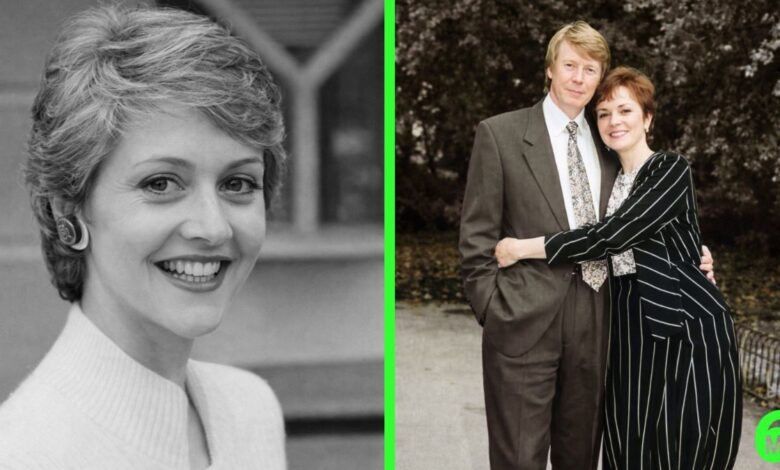
Few figures in British broadcasting are as recognisable as Anne Diamond. From the pioneering days of TV-am to later work with the BBC, Diamond built a career defined by warmth, journalistic credibility, and a strong connection with viewers. Alongside that public success sat a much quieter personal story—one shaped by family life, loss, and a deliberate distance from celebrity culture.
At the centre of that story is Mike Hollingsworth, a senior television executive and producer who was married to Diamond from 1989 to 1999. While Diamond’s career unfolded in front of the cameras, Hollingsworth worked behind the scenes in British television, occupying a role that was influential yet largely invisible to the public. This article explores Mike Hollingsworth’s life, his partnership with Anne Diamond, and the significance of his choice to remain a private figure—using verified facts, careful analysis, and context rather than speculation.
Profile Summary
| Detail | Information |
|---|---|
| Full Name | Mike Hollingsworth |
| Relationship | Former husband of Anne Diamond |
| Profession | Television executive and producer |
| Public Profile | Low; known primarily through professional credits and marriage |
| Age | Not publicly confirmed |
| Residence | United Kingdom (general) |
| Children | Five with Anne Diamond |
| Known Philanthropic Interests | Linked to family advocacy around SIDS awareness |
| Social Media Presence | No verified public profiles |
Who Is Mike Hollingsworth?
Mike Hollingsworth is best understood not as a celebrity figure but as a professional insider in British television. His career as a TV executive and producer placed him within the infrastructure that supports on-screen talent—commissioning, production oversight, and editorial leadership. Public awareness of Hollingsworth largely stems from his marriage to Anne Diamond, yet his significance lies in how he navigated proximity to fame without embracing it.
Unlike many partners of high-profile broadcasters, Hollingsworth did not cultivate a parallel media identity. This restraint provides insight into a broader philosophy: a preference for professional contribution over public recognition, and for family stability over visibility. His life offers a case study in how influence in television often operates quietly, through decisions and structures rather than personal branding.
The Private Life of Mike Hollingsworth
Privacy is the defining feature of Mike Hollingsworth’s public footprint. Verified information about his personal life is limited to what has emerged through Anne Diamond’s interviews and biographical accounts. This scarcity is not accidental. In an industry where personal narratives are often leveraged for publicity, Hollingsworth’s absence from media discourse reflects a conscious boundary between work and private life.
Rather than interpreting this absence as a lack of significance, it is more accurate to view it as an assertion of control. Hollingsworth’s approach contrasts with the increasing expectation—especially from the 1990s onward—that proximity to fame should translate into public presence. His choice underscores an alternative model of success: one measured internally, by professional respect and family commitment, rather than by public acclaim.
Early Life and Background of Mike Hollingsworth
Public records and reputable biographies offer little detail about Mike Hollingsworth’s early life, education, or upbringing. What can be established with confidence is that by the mid-1980s, he was already embedded in British television at a senior level, indicating a background of industry experience and professional credibility.
This lack of early biographical detail is itself revealing. It suggests a career built through institutional progression rather than celebrity association. Hollingsworth’s trajectory aligns with a generation of television executives whose influence derived from networks, editorial judgment, and long-term involvement rather than personal visibility. In that sense, his background mirrors the broader culture of British television management during the late 20th century.
Marriage and Partnership with Anne Diamond
Mike Hollingsworth and Anne Diamond met in the mid-1980s, at a time when Diamond’s career was accelerating rapidly through TV-am. They married in 1989, forming a partnership that bridged two sides of the same industry: the public-facing broadcaster and the behind-the-scenes executive.
Their marriage coincided with some of the most demanding years of Diamond’s professional life. Hollingsworth’s understanding of television pressures—deadlines, public scrutiny, and institutional politics—likely provided a shared framework that few outside the industry could offer. Public appearances together were rare, reinforcing the sense that their partnership was grounded more in mutual support than in public performance.
The marriage ended in 1999, but it remains a defining chapter in both their lives, particularly through their shared experiences as parents.
Mike Hollingsworth’s Role Behind the Scenes
As a television executive and producer, Mike Hollingsworth occupied a role that shapes content without claiming authorship in the public eye. Executives like Hollingsworth influence programming choices, production standards, and editorial direction—decisions that directly affect what audiences see, even if the decision-makers remain unnamed.
Within the context of his family life, this behind-the-scenes role takes on additional meaning. While Anne Diamond faced public expectations and scrutiny, Hollingsworth’s professional anonymity may have offered balance, ensuring that not every aspect of family life was subsumed by media attention. His career exemplifies the essential but often overlooked labour that sustains broadcast journalism.
Family Life: Raising the Next Generation
Mike Hollingsworth and Anne Diamond had five children together. Their family life was profoundly shaped by tragedy when their son Sebastian died from Sudden Infant Death Syndrome (SIDS) in 1991. This loss became a turning point, not only personally but publicly, as Diamond later emerged as a prominent advocate for SIDS awareness and safer infant sleeping practices.
Hollingsworth’s role in this period is understood primarily through Diamond’s accounts, which emphasise shared grief and parental responsibility. While Diamond spoke publicly, Hollingsworth remained private, reinforcing the pattern of complementary roles: one engaging with public discourse, the other maintaining personal boundaries. Together, these approaches created space for both advocacy and family preservation.
Philanthropy and Community Engagement
Although Mike Hollingsworth has not been publicly identified as a spokesperson or campaigner, his family’s philanthropic footprint—particularly around SIDS awareness—is well documented through Anne Diamond’s work. It is reasonable, based on verified interviews, to understand this advocacy as a shared parental response rather than a solo endeavour.
In this context, Hollingsworth’s contribution is indirect but meaningful. Supporting advocacy without seeking visibility reflects a form of engagement rooted in personal conviction rather than recognition. It also aligns with broader patterns of private philanthropy, where impact is prioritised over attribution.
The Power of Privacy: Influence Without Publicity
Mike Hollingsworth’s life illustrates how privacy itself can be a form of agency. By resisting public exposure, he maintained autonomy over his identity, even while closely connected to a national figure. This choice challenges assumptions that relevance requires visibility.
In an era increasingly defined by personal branding, Hollingsworth’s approach feels almost countercultural. It suggests that influence—whether professional or familial—does not depend on narrative ownership in the public sphere. Instead, it can operate quietly, through relationships, decisions, and support structures that never become headlines.
Public Curiosity and Misconceptions About Mike Hollingsworth
Public curiosity about Mike Hollingsworth often stems from his association with Anne Diamond rather than from his own actions. This can lead to misconceptions: that his privacy indicates disengagement, or that his significance is secondary. A closer examination reveals the opposite. His sustained absence from the public eye reflects consistency, not insignificance.
Such misconceptions highlight a broader tendency to equate silence with a lack of substance. In reality, Hollingsworth’s life demonstrates how personal restraint can coexist with professional accomplishment and deep family involvement.
Legacy and Future
Mike Hollingsworth’s legacy is not one of public accolades but of quiet contribution. Within British television, his work as an executive and producer forms part of the institutional memory of an era. Within his family, his role as a father and partner carries enduring weight in moments of joy and tragedy.
Looking ahead, his influence will likely remain indirect—embedded in the lives he has shaped rather than in public narratives. That, perhaps, is the most fitting continuation of a life defined by intention rather than exposure.
Conclusion
Mike Hollingsworth occupies a distinctive place in British media history: close to fame, yet never consumed by it. Through his marriage to Anne Diamond, his career in television, and his commitment to family privacy, he offers an alternative understanding of influence. His story reminds us that not all meaningful lives are loudly documented. Some are defined by steadiness, discretion, and the deliberate choice to let others stand in the spotlight while providing strength from behind the scenes.
Read this too:Claire Fellows and Ainsley Harriott: A Life Lived Beyond the Spotlight
(FAQs)
Q1: Who is Mike Hollingsworth?
A British television executive and producer, best known publicly as Anne Diamond’s former husband.
Q2: How is Mike Hollingsworth connected to Anne Diamond?
They were married from 1989 to 1999 and have five children together.
Q3: Did Mike Hollingsworth work in television?
Yes, he worked as a TV executive and producer in British broadcasting.
Q4: How many children did Mike Hollingsworth and Anne Diamond have?
They had five children.
Q5: What tragedy did their family experience?
Their son Sebastian died from Sudden Infant Death Syndrome in 1991.
Q6: Is Mike Hollingsworth a public figure?
No, he has maintained a low public profile throughout his life.
Q7: Was he involved in SIDS awareness work?
Indirectly, through publicly led family advocacy led by Anne Diamond.
Q8: Why is there limited information about Mike Hollingsworth?
Because he has consistently chosen privacy over public exposure.