The Business of Beauty Salons: Operational Strategies That Drive Client Retention and Revenue Growth

Introduction
The beauty salon industry operates within a highly competitive and experience-driven environment where success depends on far more than technical execution alone. While demand for services such as hair cutting, colouring, and advanced treatments remains consistent, profitability and long-term growth are determined by a combination of operational discipline, strategic positioning, and client retention.
Many salons fail not because of a lack of demand, but due to structural inefficiencies, inconsistent service delivery, and an absence of clear business strategy. In contrast, high-performing salons treat their operations as a system. They integrate service quality with financial awareness, marketing strategy, and client lifecycle management.
This article explores the operational strategies that enable beauty salons to achieve sustainable growth. It is designed for salon owners, operators, and industry professionals who want to move beyond short-term revenue generation and build a scalable, resilient business.
Understanding the Economic Model of a Beauty Salon
Revenue Streams and Their Strategic Role
A well-structured beauty salon does not rely on a single source of income. Instead, it builds layered revenue streams that reinforce one another and increase overall client value. These typically include:
- Core services such as haircuts and styling
- Colour services, which often deliver higher margins
- Advanced treatments such as laser hair removal or skincare
- Retail product sales for at-home maintenance
Each revenue stream serves a strategic purpose. Core services attract consistent traffic, while advanced treatments and retail increase average transaction value. Salons that fail to diversify often limit their growth potential and become overly dependent on volume.
Cost Structure and Profitability Pressures
Beauty salons operate with a relatively high fixed-cost base. Key expenses include:
- Staff salaries and commission structures
- Rent, utilities, and location-based overheads
- Product and equipment costs
- Marketing and client acquisition spend
Profitability is highly sensitive to inefficiencies. Even small operational gaps such as unused appointment slots or underutilised staff time can significantly impact margins over time.
Client Retention as the Primary Growth Lever
Why Retention Drives Profitability
Retention is one of the most powerful drivers of sustainable growth. Returning clients provide:
- Predictable revenue streams
- Lower acquisition costs
- Higher lifetime value
- Increased likelihood of referrals
In most service-based industries, including beauty, the cost of acquiring a new client significantly exceeds the cost of retaining an existing one. As a result, retention should be treated as a core business function rather than a secondary outcome.
Building Structured Retention Systems
Retention is not achieved through quality alone. It requires intentional systems and processes, including:
- Personalised client records detailing preferences and history
- Automated follow-up communication for rebooking
- Loyalty incentives or structured membership models
- Consistent service delivery across all visits
Salons that systemise retention reduce reliance on individual staff relationships and create a more stable client base.
Service Quality and Operational Consistency
Standardising Core Processes
Operational consistency begins with clearly defined processes. These should include:
- A structured consultation framework
- Defined service delivery steps
- Quality control checkpoints
Standardisation ensures that clients receive a consistent experience regardless of which staff member delivers the service.
The Balance Between Efficiency and Personalisation
While standardisation improves efficiency, over-standardisation can reduce perceived value. High-performing salons strike a balance by:
- Using structured processes as a baseline
- Allowing flexibility for individual client needs
Personalisation is particularly important in premium segments, where clients expect tailored experiences rather than transactional interactions.
Pricing Strategy and Market Positioning
Defining a Clear Pricing Model
Beauty salons typically operate within one of two broad models:
- A premium model focused on high-value services and fewer clients
- A volume-based model focused on high throughput and competitive pricing
Each model requires a different operational approach. Premium salons rely on expertise, experience, and brand positioning, while volume-based salons depend on efficiency and scale.
Aligning Price with Perceived Value
Pricing must be aligned with the client experience. This includes:
- Service quality and technical expertise
- Consultation depth and personalisation
- Environment and overall experience
Misalignment between price and perceived value leads to either reduced demand or reduced profitability.
Marketing Strategy and Client Acquisition
Digital Presence as a Core Growth Driver
In the modern market, a salon’s digital presence is one of its most valuable assets. This includes:
- Search engine visibility
- Social media positioning
- Online reviews and reputation
Clients increasingly rely on digital channels to evaluate service providers before making a booking decision.
Capturing High-Intent Local Demand
For location-based businesses, local search visibility is critical. Clients searching for services typically have immediate intent, making this channel highly valuable.
Salons that invest in strengthening their beauty salon presence in search results are better positioned to capture consistent inbound enquiries from clients actively seeking services.
Operational Efficiency and Systems
Appointment Scheduling as a Revenue Lever
Appointment scheduling is one of the most important operational components of a salon. Effective scheduling ensures:
- Maximum utilisation of staff time
- Reduced gaps between appointments
- Improved client flow
Poor scheduling leads to lost revenue opportunities and reduced efficiency.
Workflow Optimisation
Efficient workflows reduce operational friction and improve both staff and client experience. This includes:
- Minimising delays between services
- Ensuring tools and products are readily available
- Structuring service sequences logically
Operational efficiency must support, not compromise, service quality.
Risk Management and Operational Challenges
Dependency on Key Staff
Many salons face risk due to reliance on specific high-performing individuals. This creates vulnerability if those individuals leave.
Mitigation strategies include:
- Cross-training staff
- Documenting service processes
- Building a strong team culture
Reducing dependency improves business stability and scalability.
Inconsistent Service Delivery
Inconsistency is one of the most common causes of client churn. It leads to:
- Negative reviews
- Reduced trust
- Lower retention rates
Consistency must be enforced through training, supervision, and process standardisation.
Enhancing the Client Experience
Consultation as a Value Driver
Consultation is not only a technical requirement but also a key component of the client experience. A detailed consultation demonstrates:
- Professionalism
- Expertise
- Attention to detail
It also increases the likelihood of achieving the desired result.
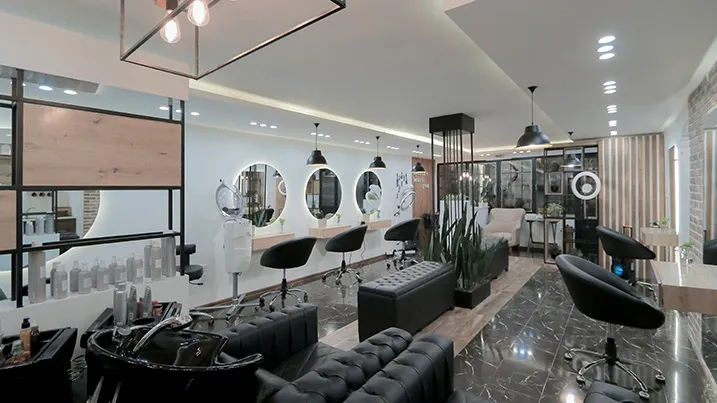
Environment and Brand Perception
The physical and visual environment of a salon plays a significant role in client perception. Key factors include:
- Cleanliness and organisation
- Interior design and atmosphere
- Alignment with brand positioning
A well-designed environment reinforces the perceived value of services.
Financial Implications of Strategic Decisions
Investment in Staff Development
Training and development are essential for maintaining service quality and competitiveness. Benefits include:
- Improved technical skill
- Greater consistency
- Ability to command higher prices
While training requires investment, it delivers long-term returns through improved performance and retention.
Marketing Spend and ROI
Marketing should be treated as an investment rather than an expense. Effective strategies focus on:
- Channels with measurable return
- Continuous optimisation
- Alignment with target audience
Inefficient marketing spend reduces profitability and limits growth.
Expansion and Scalability Considerations
Preparing for Growth
Salons aiming to expand must ensure that their operations are scalable. This includes:
- Documented processes
- Consistent training systems
- Strong brand positioning
Without these elements, expansion can lead to reduced service quality and brand dilution.
Diversification into Education and Training
Some salons expand into education by offering training programmes. This creates:
- Additional revenue streams
- Increased brand authority
- Opportunities for industry influence
This model is particularly effective for salons with strong technical expertise.
Future Trends in the Beauty Salon Industry
Premiumisation of Services
Clients are increasingly prioritising quality and experience over price. This shift favours salons that focus on expertise and service delivery.
Technology Integration
Technology is playing an increasing role in:
- Booking and scheduling
- Client relationship management
- Performance tracking
Adoption of these tools improves efficiency and decision-making.
Focus on Long-Term Client Value
Salons are moving towards models that prioritise lifetime value rather than one-off transactions. This includes:
- Membership programmes
- Ongoing treatment plans
- Personalised service strategies
Strategic Recommendations
Short-Term Actions
- Conduct a full audit of service quality and client feedback
- Optimise digital presence and local search visibility
- Improve appointment scheduling efficiency
Long-Term Strategy
- Invest in continuous staff training
- Strengthen brand positioning and differentiation
- Build systems for retention and scalability
Conclusion
The success of a beauty salon depends on more than technical skill. It requires a structured approach to operations, a clear understanding of financial drivers, and a strong focus on client retention.
Salons that integrate operational efficiency with high-quality service delivery are better positioned to achieve sustainable growth. In a competitive market, long-term success is determined by consistency, strategic planning, and the ability to deliver value at every stage of the client journey.