Clint Eastwood’s public life has been one of the most visible and studied careers in modern American film. He became an international star through Sergio Leone’s westerns, later built a second reputation as a director, and won Academy Awards for Unforgiven and Million Dollar Baby. That kind of fame tends to pull everyone nearby into the spotlight. Dina Eastwood, however, has always been more complicated than a footnote in somebody else’s legend. Before many people knew her as Clint Eastwood’s wife, she had already built a career in television news, later moved into hosting and reality TV, and has remained tied to California civic and cultural institutions in ways that are public, documented, and often overlooked.
This article focuses on Dina Eastwood on her own terms: as a broadcaster, media personality, mother, and public figure whose life has repeatedly touched celebrity culture without ever being fully defined by it. Because biographical reporting on her is uneven, the clearest portrait comes from confirmed facts: her California upbringing, her journalism career, her marriage and family life, her television work, and her visible engagement with community and cultural causes. That record reveals not a mystery to be solved, but a life that has balanced visibility with restraint.
The essentials are well documented. Dina Eastwood was born in Castro Valley, California, on July 11, 1965. Public biographies identify her as a television journalist and anchor who worked at KSBW in the Monterey-Salinas market, later co-hosted Candid Camera, and appeared in E!’s Mrs. Eastwood & Company. Public records and coverage also show that she married Clint Eastwood in 1996; they had one daughter, Morgan; divorced in 2014; and later married basketball coach Scott Fisher in 2016. Her public civic profile today is also visible through the California Museum, where she is listed on the Board of Trustees and as a named sponsor.
Quick Bio
| Field | Details |
|---|---|
| Full Name | Dina Marie Fisher, née Ruiz, professionally known as Dina Eastwood |
| Relationship | Former wife of Clint Eastwood; later married Scott Fisher |
| Public Profile | Journalist, news anchor, TV host, reality-TV personality, civic board member |
| Age | 60 (born July 11, 1965) |
| Residence | Publicly associated for years with Carmel/Monterey County, California |
| Children | One daughter, Morgan Eastwood |
| Known Philanthropic Interests | Public support for the California Museum and its educational mission |
| Social Media Presence | Public-facing online presence has existed, but she is not primarily a social-media-driven celebrity brand |
Who is Dina Eastwood?
Dina Eastwood is best understood as a media professional whose life intersected with Hollywood celebrity rather than being created by it. Long before reality television attached her name to a famous family, she had already worked in local news and built the kind of broadcasting résumé that comes from station work, on-air discipline, and regional credibility. San Francisco State University lists her among notable alumni in broadcasting and journalism, highlighting her work as a news anchor for KSBW, her time hosting Candid Camera, and her later appearance on Mrs. Eastwood & Company. That matters because it places her identity in a professional lineage, not just a marital one.
Her significance in public culture comes from that unusual mix. She moved from newsroom professionalism into celebrity adjacency, then into a form of selective public life that includes television, writing, and civic involvement. In biographies of famous men, women in their orbit are often flattened into symbols. Dina Eastwood resists that flattening because the public record shows a real career, a documented family role, and a visible but measured place in California cultural life.
The Private Life of Dina Eastwood
Dina Eastwood is not a private citizen in the strict sense; she has been on television, in entertainment coverage, and in celebrity reporting for decades. But the shape of her public life has still been notably selective. Most of what is firmly documented about her concerns are identifiable milestones: education, newsroom work, marriage, motherhood, television hosting, and a few civic affiliations. Beyond that, the record thins quickly. Rather than treating that as a gap to be filled with rumor, it is more accurate to see it as a boundary she has largely maintained, even after participating in a reality series built around family access.
That tension is part of what makes her interesting. In celebrity culture, visibility is often mistaken for total knowability. Dina Eastwood’s public story suggests otherwise. Even during the period when Mrs. Eastwood & Company invited cameras into domestic life, the publicly durable facts remained fairly narrow: where she worked, whom she married, the daughter she raised, and the projects she took on. The contrast between public curiosity and limited verified detail is not an absence of identity. It is, in many ways, evidence of control.
Early Life and Background of Dina Eastwood
Public biographies place Dina Eastwood’s origins firmly in Northern California. She was born in Castro Valley, grew up in Fremont, attended Mission San Jose High School, studied at Ohlone College, and graduated from San Francisco State University with a degree in broadcast-related studies. IMDb’s biographical summary and other public profiles also note her early anchoring work for Ohlone College Television and her first professional step at KNAZ-TV in Arizona before moving to KSBW in 1991. SF State continues to identify her as a distinguished alumna in broadcasting and journalism.
Those details matter because they locate her in a recognizable local-media trajectory. Dina Eastwood did not emerge from celebrity culture first; she came through the regional broadcast world that often produces versatile communicators. That helps explain the range of her later work. A person trained in local television learns not only how to appear on camera, but how to listen, manage live moments, and communicate with ordinary audiences rather than niche fan communities. Her later ability to shift between news, hosting, and personality-driven television makes more sense when seen against that foundation.
Marriage and Partnership with Clint Eastwood
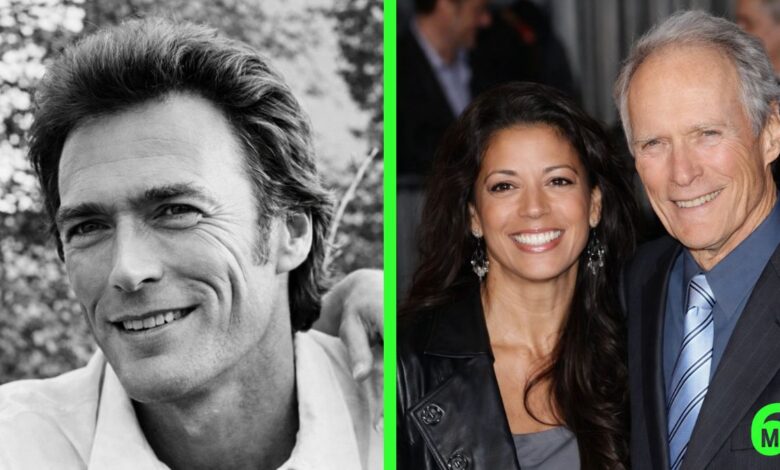
Dina met Clint Eastwood while assigned to interview him for KSBW. They married on March 31, 1996, and their daughter, Morgan, was born later that year. KSBW’s reporting, as well as public biographical summaries, consistently place the couple in Carmel and identify the marriage as lasting from 1996 until the divorce was finalized in late 2014. During that period, Dina was not merely a spouse who occasionally attended events; she was also part of a broader Eastwood family image that blended Hollywood stature with a distinctly California, Carmel-based lifestyle.
Their public appearances together reveal something important about the partnership. Clint Eastwood’s image has long leaned toward reserve, discipline, and old-school movie stardom. Dina’s public persona, by contrast, came from television: warmer, more conversational, more comfortable with the rhythms of interview culture and lifestyle media. That difference may be one reason observers found her compelling. She represented a more accessible bridge between Eastwood’s guarded legend and the public’s appetite for personal narrative. What can be said with confidence is that their marriage placed her in one of America’s most scrutinized celebrity orbits while she maintained her own media identity.
Dina Eastwood’s Role Behind the Scenes
The public record offers no reliable basis for dramatic claims about what Dina Eastwood did “behind the scenes” in Clint Eastwood’s life or career. What it does show is that she occupied a connective role across media, family, and public presentation. She managed or helped spotlight projects such as the South African vocal group Overtone during the Invictus era, contributed to Carmel Magazine, and remained comfortable in both journalistic and entertainment settings. Those are not trivial side notes; they indicate a person who understood image, communication, and the human side of public life.
Seen this way, Dina Eastwood’s role was not that of a shadowy influence but of a visible organizer and interpreter. Families built around major public figures often require someone who can translate between private routines and public demands. Her career background made her especially well-suited to that function. The evidence supports a portrait of someone who could host, anchor, manage, write, and appear, all while helping sustain a family identity that extended beyond red carpets into schools, local media, and community life.
Family Life: Raising the Next Generation
Morgan Eastwood is one of the clearest anchors in Dina Eastwood’s public biography. Public reports on the marriage, separation, and reality series consistently identify Morgan as the couple’s daughter, born in December 1996. KSBW’s coverage of the divorce filing specifically noted Dina’s request for full physical custody of their then-16-year-old daughter, a reminder that even highly public separations are, at their core, family matters involving ordinary parental responsibilities.
The family story also explains why Dina Eastwood has drawn continuing attention. She occupied a rare position: mother within a large blended celebrity family, but also a public figure with her own work history. Mrs. Eastwood & Company included Morgan and Francesca Eastwood, making family dynamics part of the show’s appeal. Yet the fact that the public still knows relatively little about the intimate texture of that family life suggests a line was never fully erased. The available facts point to care, continuity, and long-term responsibility, not endless exposure.
Philanthropy and Community Engagement
This is one area where the public record becomes more concrete than many casual profiles suggest. The California Museum lists Dina Ruiz on its Board of Trustees and describes the board’s role in advising leadership, supporting programming, and helping advance the museum’s educational and cultural mission. Separately, the museum’s sponsor page names Dina Ruiz among contributors supporting that mission. These are small but meaningful facts because they place her in a civic context rather than a purely celebrity one.
It would be wrong to inflate those facts into a grand philanthropic mythology. But it would also be wrong to ignore them. Board service and charitable support signal commitment to public culture, education, and California history. In biographical terms, that broadens her profile. Dina Eastwood’s public role has included not only broadcast and entertainment work, but also visible participation in institutions that frame California’s cultural story. That kind of engagement is often quieter than celebrity activism, but it is no less real.
The Power of Privacy: Influence Without Publicity
Dina Eastwood’s story illustrates a familiar modern paradox: the more famous the surrounding figure, the less useful gossip becomes in understanding the person beside them. Public fascination with Clint Eastwood has always been immense, but the most dependable material on Dina remains grounded in work, family, and selective public commitments. That restraint has likely helped preserve the difference between public role and private self. It also means her influence is better measured through continuity than spectacle.
There is a broader lesson in that. In a culture that rewards overexposure, Dina Eastwood’s public record suggests another model: be visible when the work requires it, engage when the institution matters, and leave much else undescribed. That is not invisibility. It is a form of authorship over one’s own life. Her career and civic footprint show that a person can remain publicly relevant without surrendering every private detail to public consumption.
Public Curiosity and Misconceptions About Dina Eastwood
The biggest misconception about Dina Eastwood is that she is known only because of Clint Eastwood. The public evidence does not support that reduction. She worked in journalism, hosted television, returned to local anchoring, and remains connected to cultural institutions in California. Her marriage to Clint Eastwood certainly amplified attention, but it did not define her entire public identity.
A second misconception is that sparse information means there is “nothing there.” In a biography, that is rarely true. Sometimes it simply means the archive is modest and the person has not made a career out of self-disclosure. In Dina Eastwood’s case, the public record is enough to establish a coherent portrait: California upbringing, television professionalism, marriage into an extraordinary Hollywood family, motherhood, public adaptation after divorce, and ongoing civic engagement. That is a complete enough outline to respect, even if it does not satisfy every curiosity.
Legacy and Future
Dina Eastwood’s legacy is likely to remain quieter than that of the man whose surname made her globally recognizable. But quiet does not mean slight. Her public life has already crossed several worlds: local news, national television, reality TV, family visibility, magazine writing, and cultural philanthropy. Very few people move through all those spaces while retaining a reputation that, at its core, remains personable, competent, and recognizably Californian.
What comes next is less important than what is already clear. Dina Eastwood’s biography resists caricature. She is neither merely “the ex-wife” nor an overexposed celebrity confessional figure. She occupies a more interesting middle ground: a woman whose life touched fame at close range, yet whose most durable contributions remain rooted in communication, family, and civic presence. For that reason, her story continues to hold attention long after the tabloid headlines faded.
Conclusion
Dina Eastwood’s life is best read not as a sidebar to Clint Eastwood’s fame, but as a study in how a person can remain distinct inside an overwhelmingly public orbit. The verified facts show a Northern California upbringing, formal training in broadcasting, real newsroom experience, national TV work, a long marriage that brought immense visibility, a central role in raising her daughter, and documented ties to cultural and educational institutions in California. That is a substantial public record, even if it is less sensational than celebrity culture prefers.
What gives the story its lasting shape is the balance she has maintained. Dina Eastwood has been visible, but never fully consumed by visibility. She has been associated with one of Hollywood’s most famous men, yet has maintained a public identity in journalism, hosting, writing, and civic engagement. In that sense, her role has indeed been quiet, but not minor. It has been steady, human, and more consequential than casual biographies often allow.
Read this too:Lucas Till Net Worth: From MacGyver Success to Family Life With Skyler Samuels
(FAQs)
1. Who is Dina Eastwood?
Dina Eastwood is an American journalist, former news anchor, TV host, and media personality best known for her work at KSBW, Candid Camera, and Mrs. Eastwood & Company.
2. What is Dina Eastwood’s real name?
Her full name is Dina Marie Fisher, née Ruiz. She has also been professionally known as Dina Eastwood.
3. How is Dina Eastwood connected to Clint Eastwood?
She was married to Clint Eastwood from 1996 until their divorce was finalized in 2014.
4. Does Dina Eastwood have children?
Yes. She and Clint Eastwood have one daughter, Morgan Eastwood.
5. What did Dina Eastwood do before becoming widely known in celebrity media?
She worked in television news, including as a reporter and anchor at KNAZ-TV and later KSBW in California.
6. Was Dina Eastwood on reality television?
Yes. She starred in the 2012 E! series Mrs. Eastwood & Company, which featured aspects of family life in Carmel.
7. Is Dina Eastwood involved in philanthropy or civic work?
Publicly, she is listed on the California Museum’s Board of Trustees and as a contributor supporting the museum’s educational mission.
8. Did Dina Eastwood remarry after divorcing Clint Eastwood?
Yes. Public biographical sources report that she married basketball coach Scott Fisher in 2016.