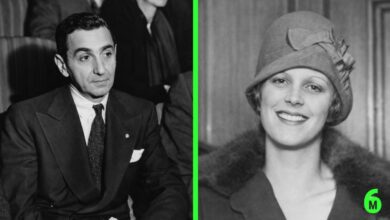
For millions of television viewers, Sorrell Booke will forever be remembered as the blustering, cigar-chomping Boss Hogg on The Dukes of Hazzard. His career spanned decades, crossed stage, film, and television, and showcased an intellect and range that extended far beyond a single iconic role. Yet behind this highly visible public figure was a far more private life—one shaped in part by his long marriage to Miranda Knickerbocker.
Miranda Knickerbocker never sought the spotlight that followed her husband. She was not an actress, celebrity, or public personality, but her life intersected with journalism, academia, and Hollywood in ways that quietly mattered. This article examines Miranda Knickerbocker not through speculation or myth-making, but through verifiable facts and careful analysis. By looking at what is known—and why so much remains unknown—we gain insight into a woman who embodied privacy, intellectual grounding, and family-centered values during a period when public curiosity often demanded more.
Quick Bio
| Key | Details |
|---|---|
| Full Name | Miranda Knickerbocker |
| Known For | Former wife of actor Sorrell Booke |
| Relationship | Married to Sorrell Booke (1958–1973) |
| Public Profile | Private individual |
| Father | Hubert Renfro Knickerbocker (Pulitzer Prize–winning journalist) |
| Education | Senior at Barnard College at time of marriage |
| Marriage Date | September 6, 1958 |
| Marriage Location | Nyack, New York |
| Children | Alexandra Booke, Nicholas Booke |
| Social Media Presence | None (publicly known) |
| Philanthropic Interests | Not publicly documented |
Who Is Miranda Knickerbocker?
Miranda Knickerbocker is best understood in context rather than as a celebrity. She entered public awareness primarily through her marriage to Sorrell Booke, yet her background placed her at the intersection of intellectual and cultural life in mid-20th-century America. As the daughter of Hubert Renfro Knickerbocker, a Pulitzer Prize–winning war correspondent, she was raised in an environment where global affairs, journalism, and disciplined thought mattered deeply.
Her significance lies not in public performances or interviews, but in the role she played during a formative period of Booke’s life and career. Their marriage lasted fifteen years, coinciding with critical stages of his professional development. Miranda Knickerbocker represents a category of historical figure often overlooked: the private partner whose influence is real, even if undocumented in headlines.
The Private Life of Miranda Knickerbocker
Miranda Knickerbocker’s life stands as an example of deliberate privacy. Unlike many spouses of entertainers, she did not cultivate a public identity through interviews, social appearances, or later retrospectives. This absence is itself meaningful. It suggests a conscious boundary between personal life and public fame, one that contrasts sharply with Hollywood norms both then and now.
Such privacy often reflects values shaped long before marriage. Growing up as the child of an internationally respected journalist, Miranda would have been familiar with public scrutiny and its costs. Her decision to remain private appears consistent with a worldview that valued substance over attention and family stability over recognition.
Early Life and Background of Miranda Knickerbocker
What is publicly known about Miranda Knickerbocker’s early life centers on her family and education. Her father, Hubert Renfro Knickerbocker, was a Pulitzer Prize–winning war correspondent whose reporting shaped American understanding of international conflict. This background places Miranda within a tradition of intellectual seriousness and global awareness.
At the time of her marriage in 1958, she was a senior at Barnard College, one of the most respected women’s liberal arts institutions in the United States. Barnard’s academic culture emphasized independent thinking, social responsibility, and rigorous scholarship. While specific details of Miranda’s studies are not public, her enrollment alone signals an engagement with higher education that was still relatively uncommon for women of her generation.
Marriage and Partnership with Sorrell Booke
Miranda Knickerbocker married Sorrell Booke on September 6, 1958, in Nyack, New York. The marriage predated Booke’s most famous television work and occurred during a period when he was establishing himself as a serious actor. Booke was a Yale University graduate, fluent in several languages, and a veteran of U.S. Army counter-intelligence during the Korean War—credentials that aligned closely with Miranda’s intellectually grounded upbringing.
Their partnership unfolded largely away from public view. There are no widely circulated photographs of red-carpet appearances or joint interviews, reinforcing the impression of a marriage centered on private life rather than public display. The couple divorced in 1973, a fact recorded without scandal or public dispute, further underscoring their shared commitment to discretion.
Miranda Knickerbocker’s Role Behind the Scenes
Although Miranda Knickerbocker did not participate directly in the entertainment industry, her role during Booke’s career should not be underestimated. Actors with demanding stage and television schedules often rely heavily on stable home environments. During their marriage, Booke navigated a competitive industry while maintaining a reputation for professionalism and intellectual depth.
Miranda’s contribution, while undocumented in press accounts, can be analyzed through outcomes. Booke’s ability to sustain a prolific career—over 150 television appearances—suggests a personal life that allowed focus and continuity. In this sense, Miranda Knickerbocker exemplifies the often-unseen labor that supports public achievement.
Family Life: Raising the Next Generation
Miranda Knickerbocker and Sorrell Booke had two children, Alexandra and Nicholas. Beyond their names, little is publicly documented, a reflection of their parents’ commitment to shielding family life from unnecessary exposure. This choice aligns with patterns seen among intellectually inclined families who prioritize normalcy and autonomy for their children.
Raising children in a household connected to both journalism and acting would have exposed Alexandra and Nicholas to diverse perspectives. Yet, the absence of public narratives suggests an intentional effort to let them define their own paths. The lack of public controversy or celebrity-driven narratives around the family supports this interpretation.
Philanthropy and Community Engagement
There is no public record of Miranda Knickerbocker’s independent philanthropic work, nor extensive documentation of joint charitable activities during her marriage. Rather than indicating absence, this likely reflects the private nature of any such engagement. Both journalism and acting traditions often include quiet support for cultural and educational institutions without public acknowledgment.
Given her family background and education, it is reasonable—without speculating on specifics—to view Miranda as someone shaped by civic awareness. The absence of publicity surrounding such efforts aligns with a broader pattern of discretion seen throughout her life.
The Power of Privacy: Influence Without Publicity
Miranda Knickerbocker’s life illustrates how influence does not always require visibility. In an era increasingly dominated by personal branding, her example stands apart. Privacy can be a form of agency, allowing individuals to shape their lives without external pressure or distortion.
By choosing not to engage with public curiosity, Miranda maintained control over her narrative—or, more precisely, declined to create one for public consumption. This decision reflects confidence and restraint, qualities often undervalued in celebrity-centered histories.
Public Curiosity and Misconceptions About Miranda Knickerbocker
Public interest in Miranda Knickerbocker typically arises from curiosity about Sorrell Booke. This can lead to misconceptions, including assumptions about her role, personality, or influence. The absence of public statements has sometimes invited conjecture, yet responsible historical writing resists filling gaps with imagination.
What can be stated with confidence is that her life was defined more by choice than by omission. Silence, in this context, is not a lack but a stance—one that deserves respect rather than projection.
Legacy and Future
Miranda Knickerbocker’s legacy is subtle but enduring. She represents a generation of educated women whose lives were rich in experience yet sparsely documented. Her story challenges modern expectations that significance must be publicly performed.
In examining her life, we are reminded that history is shaped not only by those who stand on stages or screens, but also by those who build stable, thoughtful lives alongside them. Miranda Knickerbocker’s legacy lies in that quiet strength.
Read this too:Chasen Joseph Schneider: Life, Identity, and the Quiet Influence of John Schneider’s Son
(FAQs)
1. Who was Miranda Knickerbocker?
She was the former wife of actor Sorrell Booke and the daughter of journalist Hubert Renfro Knickerbocker.
2. When did Miranda Knickerbocker marry Sorrell Booke?
They married on September 6, 1958.
3. Where was the wedding held?
The wedding took place in Nyack, New York.
4. Did Miranda Knickerbocker have children?
Yes, she had two children: Alexandra and Nicholas Booke.
5. What was her educational background?
She was a senior at Barnard College at the time of her marriage.
6. Was Miranda Knickerbocker involved in acting or entertainment?
No public records indicate involvement in the entertainment industry.
7. When did the marriage end?
Miranda Knickerbocker and Sorrell Booke divorced in 1973.
8. Why is so little known about her?
She maintained a private life and avoided public exposure.