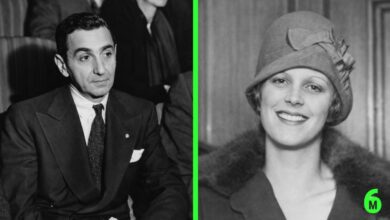
Alfie Karmal: The First Husband of Heather Mills and the Quiet Story Behind a Public Life


Few figures in modern British public life have attracted as much scrutiny—and controversy—as Heather Mills. Known internationally as a model and disability rights campaigner, and later as the former wife of Beatle Paul McCartney, Mills has lived much of her adult life under an unforgiving spotlight. Yet before the fame, the courtrooms, and the tabloid headlines, there was an earlier chapter—one that unfolded largely out of public view.
At the center of that chapter stands Alfie Karmal, Mills’ first husband. Their marriage, which lasted from 1989 to 1991, predated her global recognition and offers a rare glimpse into her formative adult years. Karmal himself never became a public figure in the conventional sense. Instead, his relevance emerges almost entirely through his proximity to someone who would later become world-famous.
This article examines Alfie Karmal’s life and significance using only verifiable public information. Where details are scarce—as they inevitably are with a private individual—the focus turns to careful analysis: what his choices reveal, how privacy shapes legacy, and why his brief marriage to Heather Mills still draws interest decades later.
Quick Bio
| Detail | Information |
|---|---|
| Full Name | Alfie Karmal |
| Relationship | First husband of Heather Mills |
| Marriage Period | May 6, 1989 – 1991 |
| Profession | Businessman |
| Public Profile | Private individual |
| Children | Had children from a previous relationship |
| Role in Mills’ Life | Early partner; stepfather figure |
| Known Philanthropic Interests | Not publicly documented |
| Social Media Presence | None publicly known |
Who Is Alfie Karmal?
Alfie Karmal is best known through a single, defining association: his marriage to Heather Mills before her rise to international prominence. Unlike many figures associated with celebrities, Karmal did not seek public attention or build a media profile. Instead, he remained firmly outside celebrity culture, appearing in the press only to discuss his past relationship during periods of heightened public interest in Mills’ life.
What makes Karmal noteworthy is not fame, wealth, or influence, but context. His relationship with Mills occurred during a transitional period when she was still establishing herself. As such, Karmal represents a pre-celebrity chapter—one that contrasts sharply with the high-profile relationships that followed. His significance lies in perspective rather than publicity.
The Private Life of Alfie Karmal
Karmal’s defining characteristic, according to public records, is restraint. After his divorce from Mills, he largely withdrew from public discussion of his personal life. This decision stands in contrast to an era when association with a rising public figure can be leveraged for attention or financial gain.
Privacy, in this sense, functions as a value statement. Karmal’s limited appearances suggest a preference for stability and discretion over narrative control. When he did speak—most notably during the media frenzy surrounding Mills’ later divorce—his comments were specific, restrained, and rooted in personal experience rather than speculation. That pattern reinforces an image of someone unwilling to convert private history into public spectacle.
Early Life and Background of Alfie Karmal
Very little is publicly documented about Alfie Karmal’s early life, education, or upbringing. What is known is that he was already established as a businessman by the late 1980s, with children from a previous relationship, before marrying Mills.
This absence of detail is itself instructive. In an age of digital footprints and self-branding, the lack of publicly traceable background information indicates a life structured outside celebrity and media networks. Karmal appears to belong to a generation—and mindset—where personal history remained personal unless circumstances demanded otherwise.
Marriage and Partnership with Heather Mills
Karmal and Mills married on May 6, 1989. At the time, Mills later described him as her “first real proper boyfriend,” a phrase that underscores the seriousness of the relationship in her early adulthood. Their marriage lasted roughly two years, ending in divorce in 1991.
Public accounts from Karmal portray the relationship as turbulent. He later alleged that Mills frequently left during arguments and accused her of compulsive lying—claims he said he raised privately during the marriage. Notably, these statements emerged years later and were framed as personal reflections rather than legal accusations.
From an analytical standpoint, the marriage reflects two individuals navigating adulthood under different pressures: one seeking a professional footing, the other already managing family responsibilities. The strain that followed appears less sensational when viewed through that lens.
Alfie Karmal’s Role Behind the Scenes
During their marriage, Karmal reportedly provided stability while Mills pursued work opportunities. He also became a stepfather figure to his own children while Mills assumed a caregiving role within that family structure.
Behind-the-scenes roles rarely receive public credit, yet they shape outcomes. Karmal’s contribution was not public advocacy or financial spectacle, but domestic grounding. That dynamic mirrors countless relationships that never attract attention—except here, one partner would later become a household name.
Family Life: Raising the Next Generation
Karmal entered the marriage with children from a previous relationship, making family life central rather than incidental. Mills’ role as a stepmother during this period is one of the few aspects of their private life consistently acknowledged.
This arrangement places the marriage firmly in the realm of lived responsibility rather than romantic idealism. The presence of children adds weight to decisions, conflict resolution, and long-term planning—factors often absent from simplified narratives about celebrity relationships.
Philanthropy and Community Engagement
Unlike Mills, whose later life became synonymous with charitable campaigning, Karmal has no documented public philanthropic profile. That absence should not be misread as indifference. Many private individuals contribute quietly, without press releases or public recognition.
What can be analyzed is contrast. Mills’ later public activism highlights how differently two people can approach impact. One chose visibility as a tool; the other chose discretion. Both approaches coexist within the broader ecosystem of social contribution.
The Power of Privacy: Influence Without Publicity
Karmal’s life illustrates a powerful counter-narrative to celebrity culture: influence does not require visibility. By declining ongoing media engagement, he maintained control over his personal identity.
Privacy, here, becomes a form of agency. It limits misinterpretation, resists commodification, and preserves personal boundaries. In a media environment hungry for personal detail, such restraint is increasingly rare—and arguably more meaningful.
Public Curiosity and Misconceptions About Alfie Karmal
Public interest in Karmal resurfaces primarily during retrospectives on Mills’ life. This episodic attention can create misconceptions, casting him as a footnote rather than a whole individual.
The reality is simpler and more human. Karmal did not seek relevance through fame; relevance found him through circumstance. Understanding that distinction helps dismantle the tendency to flatten private individuals into narrative devices within someone else’s story.
Legacy and Future
Alfie Karmal’s legacy is not built on headlines or institutions. It rests on having lived deliberately outside the glare of public attention. His story underscores the idea that not all meaningful lives are loud, documented, or searchable.
In the future, Karmal will likely remain exactly as he has chosen to be: private, largely unrecorded, and defined by personal relationships rather than public reputation.
Conclusion
Alfie Karmal occupies a unique space in modern biographical writing. He is significant not because of what is widely known about him, but because of how little is known about him. His brief marriage to Heather Mills connects him to a larger public narrative, yet his enduring choice has been separation from that narrative’s excesses.
By examining Karmal through facts, context, and restraint, a clearer picture emerges—one of an individual who valued privacy, family, and personal boundaries long before those concepts became talking points. In an age obsessed with exposure, his quiet presence offers a reminder that significance is not measured solely by visibility.
Read this too:J. Hope Stein and Mike Birbiglia: A Study in Creative Collaboration, Privacy, and Influence
(FAQs)
1. Who is Alfie Karmal?
He is a British businessman best known as Heather Mills’ first husband.
2. When were Alfie Karmal and Heather Mills married?
They married on May 6, 1989, and divorced in 1991.
3. Did Alfie Karmal have children?
Yes, he had children from a previous relationship.
4. Is Alfie Karmal a public figure?
No, he has consistently remained a private individual.
5. Why did Alfie Karmal speak to the media in 2006?
He commented during Mills’ divorce from Paul McCartney, offering a personal perspective.
6. What was Mills’ view of Karmal?
She described him as her first serious boyfriend.
7. Did Alfie Karmal remarry?
Public reports indicate that he later remarried.
8. Is there detailed information about his early life?
No, reliable public information is limited.