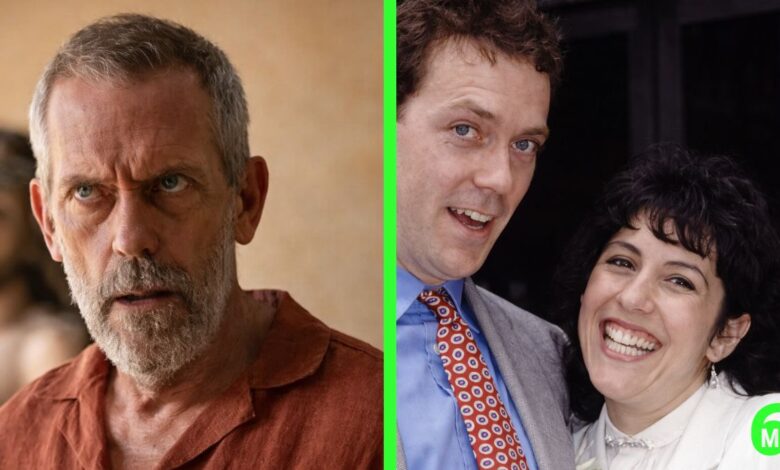
Hugh Laurie has spent decades as one of Britain’s most recognizable performers, moving from the Cambridge Footlights to television fame through Blackadder, A Bit of Fry & Laurie, Jeeves and Wooster, and later to global stardom as Dr. Gregory House in House. Yet the more public his career became, the more interesting the contrast around his home life seemed to audiences. At the center of that quieter story is Jo Green, the woman Laurie married in 1989 and with whom he built a family long before Hollywood turned him into an international star.
Jo Green is not a traditional celebrity. Public reports identify her as a theatre administrator and the wife of Hugh Laurie, but beyond these details, she has remained private. That privacy shapes her public significance. In a media environment where proximity to fame often brings publicity, Jo Green has chosen a different path: a life connected to a star, but not lived in public. What follows is a fact-based profile of Jo Green, compiled from documented sources and the context of Hugh Laurie’s interviews and career.
Quick Bio
| Field | Details |
|---|---|
| Full Name | Jo Green |
| Relationship | Wife of Hugh Laurie |
| Spouse | Hugh Laurie |
| Marriage Date | June 1989 |
| Profession / Publicly Reported Background | Theatre administrator |
| Public Profile | Very private, rarely appears in media coverage |
| Children | Three: Charlie, Bill, and Rebecca |
| Residence | Public reporting places the family in London / north London |
| Known Public Family Context | Married before Hugh Laurie’s biggest international fame |
| Social Media Presence | No major verified public-facing celebrity profile widely associated with her |
Who is Jo Green?
Jo Green is widely known as Hugh Laurie’s wife, but that is just the surface. Public accounts show she was part of Laurie’s life before his international fame and remained central to his family even as his career grew in Britain and the U.S. She is often described as a former or current theatre administrator, placing her in the performing arts world without seeking publicity herself.
That distinction matters. Jo Green’s significance is not based on interviews, branding, or celebrity. It stems from her durable marriage, the family structure she and Laurie kept, and her choice to remain outside the public machinery surrounding famous actors. In stories about Hugh Laurie, she appears not as a media personality but as a steady presence, in a long marriage that endured career upheaval, distance, and the pressures of fame.
The Private Life of Jo Green
What stands out most about Jo Green is how little of her life has been made public. That is not an absence of significance. It is evidence of a boundary. Public coverage of Hugh Laurie repeatedly mentions his wife and children, but usually with restraint, and Laurie himself has been described as reluctant to turn family life into interview material. In one 2009 profile, he was noted as having “only great things to say” about Jo Green while avoiding extended discussion of his family.
For a spouse connected to a figure as famous as Hugh Laurie, maintaining that level of privacy over decades is striking. It suggests a family culture that separates professional performance from domestic life. That line likely helped protect their household as Laurie rose from a respected British comic actor to one of the best-known faces on television. Jo Green’s privacy, in that sense, is not just a matter of personal temperament. It reads as a practical and disciplined way of living beside fame without letting fame consume everything around it.
Early Life and Background of Jo Green
The confirmed public record on Jo Green’s early life is limited. Profile sources focus on her marriage, her role in the family, and her work as a theatre administrator rather than on her childhood, education, or background. Her professional history in theatre explains how she and Hugh Laurie belonged to overlapping creative circles even before his breakthrough on the big screen.
Jo Green became publicly known through her marriage to Hugh Laurie, but has kept her biography limited to basic facts that appear consistently across profiles. This limited public narrative underscores a deliberate boundary, with Jo Green allowing only essential information to the public and keeping the rest private.
Marriage and Partnership with Hugh Laurie
HuHugh Laurie and Jo Green married in June 1989, with Stephen Fry as Laurie’s best man. Their partnership began before Laurie’s global TV success, giving it a character different from relationships formed in the spotlight. Their marriage started in an earlier, less public phase of his career. Their partnership endured one of Laurie’s most challenging professional periods: his years filming House in Los Angeles while the family remained in Britain to maintain continuity for their children. This long-distance arrangement highlights their focus on family stability and shared decision-making, prioritizing what was best for the household over celebrity spectacle.
Jo Green’s Role Behind the Scenes
The “Behind the scenes” suits Jo Green. Reports do not describe her as part of Laurie’s public image, but as a quiet presence: maintaining stability while he traveled and worked abroad. During the House, Jo Green stayed in Britain with their children as Laurie worked overseas for long periods. That role rarely attracts headlines but often brings stability. It shows why Jo Green matters in accounts of Laurie’s life. Celebrity stories focus on awards and appearances but rely on unseen domestic steadiness. By available facts, Jo Green was part of that support: not seeking attention, yet essential for Laurie’s career to grow. Family Life: Raising the Next Generation
Jo Green and Hugh Laurie have three children, commonly identified in public coverage as Charlie, Bill, and Rebecca. Their family life has mostly been kept private, but a few details have surfaced over the years, including the fact that two of the children had small appearances in Laurie’s work. Those details are minor, yet they show a family that remained connected to the creative life without becoming a celebrity franchise.
The broader public picture suggests that family stability was prioritized. Coverage of Laurie’s years filming in America repeatedly notes that the children remained in the UK, a decision framed in terms of continuity rather than glamour. That choice says a lot about the household’s values: education, rootedness, and a reluctance to let professional opportunity automatically dictate family life. Jo Green’s place in that story is central because she was the parent publicly associated with maintaining that British home base while Laurie worked overseas.
Philanthropy and Community Engagement
There is no large public record centered specifically on Jo Green’s individual charitable work. What is visible instead is the family’s broader orbit around causes and cultural institutions through Hugh Laurie’s public activities. Laurie has long been associated with Comic Relief and related charity entertainment efforts, and he has also been publicly listed as a patron supporting theatre fundraising.
FoA fair view of Jo Green is careful: she belongs to a family with visible charity and arts ties, but named activities are mainly associated with Laurie. That context still matters. A household tied to theatre and public service reflects a world where service and the arts are valued. Jo Green’s theatre background fits naturally there. The Power of Privacy: Influence Without Publicity
One reason Jo Green continues to draw public curiosity is that she represents something increasingly rare in celebrity culture: proximity to fame without surrender to it. She has been married to a globally recognized actor for decades, yet her name is not tied to a personal brand, a reality-show persona, or a constant stream of interviews. The result is that her public identity feels more substantial, not less. It is built on endurance rather than visibility.
There is also a strong thematic fit between that privacy and some of Hugh Laurie’s own comments about personal life. Laurie has spoken in interviews about depression, family strain, and the challenge of long absences during House. In that context, privacy can be understood not as secrecy for its own sake, but as protection. It shields what matters most from becoming part of the entertainment cycle. Jo Green’s influence, then, may be best understood as the power to remain offstage while shaping the conditions for a public life to continue.
Public Curiosity and Misconceptions About Jo Green
Because Jo Green is so private, online interest in her often turns simple biographical facts into exaggerated mystery. In reality, the most reliable information about her is straightforward: she is Hugh Laurie’s wife, she has a background in theatre administration, they married in 1989, and they have three children. The fascination comes less from scandal than from contrast. The spouse of a major star is expected, in many people’s minds, to be highly visible. Jo Green has consistently refused that script.
That sometimes leads to misconceptions that privacy must mean drama, distance, or hidden narratives. The stronger fact-based conclusion is simpler: long marriages can exist outside constant public display. Public reporting on Laurie’s family life has emphasized endurance, logistics, and adjustment rather than spectacle. Jo Green’s story is therefore often misunderstood precisely because it is not sensational. It is about constancy, which tends to generate fewer headlines but often deserves more respect.
Legacy and Future
Jo Green’s legacy, as far as the public can responsibly describe it, is tied to the unusual durability of a private life lived beside enormous fame. She is part of one of the more lasting marriages associated with modern British entertainment, and she appears in the public record as someone who remained steady through the many versions of Hugh Laurie’s career: comic actor, dramatic lead, musician, and international television star.
Looking ahead, there is little reason to think that pattern will change. Jo Green’s public image has remained consistent for decades. She has never seemed interested in converting recognition into a celebrity identity of her own. That consistency may ultimately be her clearest public legacy: not loud fame, but a model of discretion, family focus, and quiet durability in a culture that often rewards the exact opposite.
Conclusion
Jo Green is not famous because she sought fame. She is notable because, over many years, she has remained a stable figure in the life of a man whose work placed him under intense public attention. The most reliable facts about her are few but meaningful: she worked in theatre administration, married Hugh Laurie in 1989, raised three children with him, and maintained a notably private profile even as his career became global.
That combination of privacy and importance is what makes her worth writing about. Jo Green’s role is not defined by headlines or self-promotion. It is defined by continuity, discretion, and the kind of long partnership that often underpins public success without ever demanding public applause. In an age when visibility is often mistaken for value, Jo Green’s life suggests a different idea of significance: one built quietly, lived consistently, and felt most strongly by the people closest to it.
Read this too:Kristine Saryan: A Look at the Private Life Beside Scott Patterson’s Public Career
(FAQs)
Who is Jo Green?
Jo Green is best known as the wife of British actor and musician Hugh Laurie. Public reporting also identifies her as a theatre administrator.
When did Jo Green marry Hugh Laurie?
They married in June 1989.
How many children do Jo Green and Hugh Laurie have?
They have three children: Charlie, Bill, and Rebecca.
What does Jo Green do?
Reliable profile coverage describes Jo Green as a theatre administrator.
Is Jo Green a public celebrity?
No. She has remained notably private despite being married to a globally famous actor.
Did Jo Green live in the US with Hugh Laurie during House?
Public records indicate that for much of the House, Jo Green and the children stayed in Britain while Laurie worked in Los Angeles.
Was Stephen Fry involved in Jo Green and Hugh Laurie’s wedding?
Yes. Public reporting states that Stephen Fry was Hugh Laurie’s best man.
Why is Jo Green often searched online?
Because she is married to Hugh Laurie, yet has kept an unusually private life, which creates public curiosity.