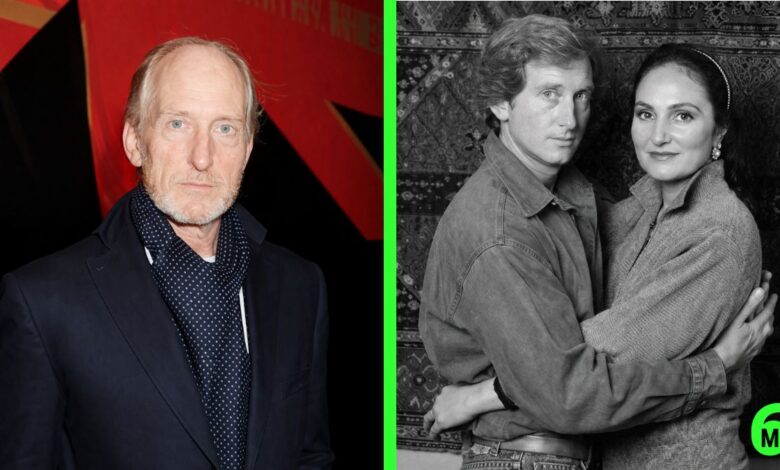
When an actor becomes a global name, public curiosity rarely stops at filmographies and awards. It stretches toward family, marriage, divorce, and the quieter people who stood nearby while the spotlight burned. That is certainly true of Joanna Haythorn, whose name most often appears alongside British actor Charles Dance, known internationally for roles in The Jewel in the Crown, Bleak House, The Crown, and Game of Thrones. Publicly available information about Haythorn is limited, and that matters. It means any serious account of her life has to begin with restraint.
Some facts are clear. Joanna Haythorn married Charles Dance in 1970. They were married for over thirty years and divorced in 2004. They had two children, Oliver and Rebecca. In recent interviews, Dance has said the marriage ended because of his own actions. After a hard time, he and Haythorn became friends again. These are the main facts about her in the public eye. Beyond that, the real story is not about scandal or gossip, but about privacy: how someone can be close to fame without becoming famous themselves. This focus on privacy guides the discussion throughout the following sections, each of which considers a distinct aspect of Haythorn’s life.
Quick Bio
| Key Detail | Information |
|---|---|
| Full Name | Joanna Elizabeth Nicola Daryl Haythorn |
| Relationship | Former wife of actor Charles Dance |
| Public Profile | Private individual known through her long marriage to Dance |
| Age | Not publicly confirmed in reliable mainstream sources reviewed |
| Residence | No reliably confirmed current public residence found |
| Children | Two children: Oliver and Rebecca |
| Known Professional/Creative Note | Listed in a reference source as an artist; another report describes her as a sculptor, though mainstream coverage is sparse |
| Known Philanthropic Interests | No clearly documented public philanthropic profile found in the reviewed sources |
| Social Media Presence | No verified public social media presence identified in the reviewed sources |
Who is Joanna Haythorn?
Joanna Haythorn is a private British individual best known for her long marriage to Charles Dance. That partnership lasted from 1970 until their divorce in 2004, encompassing the period during which Dance transitioned from stage and television roles to widespread screen recognition. Public records and interviews clarify that theirs was not a fleeting relationship but a significant family life, including two children and decades of shared experience. Haythorn is noteworthy not for a public-facing career but for her consistent privacy despite ongoing public interest in Dance’s personal life. That detachment from publicity is notable. In a time when proximity to a celebrity can bring sustained media attention, Haythorn’s narrative remains grounded in established facts rather than self-promotion.
The Private Life of Joanna Haythorn
The most striking fact about Joanna Haythorn is how little she appears to have offered herself to public view. That absence should not be treated as a gap to fill with rumor. It is part of the story. Haythorn belongs to a category of people often pushed to the edges of celebrity biographies: spouses who helped build a family life while the public narrative centered on the more famous partner. It is vital to recognize here the shift from celebrity-centric reporting to understanding those who deliberately avoid the spotlight. The available reporting does not show her cultivating public attention, and there is no broad interview trail, media persona, or visible effort to convert family association into public status. In practical terms, that means discussions of Haythorn must stay tied to verified facts. In interpretive terms, it suggests a life organized around privacy rather than exposure. That choice becomes even more meaningful when placed beside Charles Dance’s highly visible acting career, which expanded dramatically over the decades of their marriage.
Early Life and Background of Joanna Haythorn
Reliable public information about Joanna Haythorn’s early life is scarce, and the sources reviewed do not provide a developed public biography of her upbringing, education, or family background. What emerges from the reference material is a fuller legal name and a brief indication that she was an artist. A later report also described her as a sculptor, though this is less widely repeated in major outlets. Those small details matter because they hint at a personal identity that existed independently of celebrity marriage, even if the public record preserves only fragments of it. In cases like Haythorn’s, the responsible approach is to resist stretching thin evidence into an invented backstory. The absence of broad public documentation does not make a life empty; it simply means the record available to outsiders is limited. For a private person, that limit is often deliberate, and it deserves to be respected.
Marriage and Partnership with Charles Dance
Joanna Haythorn married Charles Dance in 1970, long before his Game of Thrones fame and the later phase of his public image as a widely recognized screen presence. Their marriage lasted 34 years, and Dance has since spoken openly about its end. In 2024 coverage of his remarks on Gyles Brandreth’s Rosebud podcast, Dance said he had “succumbed to some temptations” and that the marriage ended because of his behavior. He also described the marriage, for the most part, as wonderful. Those comments are important because they move the discussion away from speculation and toward direct acknowledgment. They also underscore the seriousness of the partnership: this was not a fleeting celebrity union later rewritten as trivial. It was a long marriage, formed early in adult life, that endured through career changes, children, and the pressures of recognition before breaking under admitted personal failings.
Joanna Haythorn’s Role Behind the Scenes
For spouses of major actors, the phrase “behind the scenes” can sound vague, but here it points to something concrete. Charles Dance’s career required years of sustained professional visibility, travel, and the unpredictable rhythms of stage and screen work. Public comments he later made about struggling to get back into family life after being away suggest the kind of domestic pressure that often goes unnoticed by audiences. Haythorn’s role cannot be fully mapped from public evidence, yet the shape of that role is clear enough: she was part of the structure that held family life together during the decades in which Dance’s reputation grew. That does not make her a footnote to his success. It makes her part of the lived context in which that success unfolded. In celebrity history, the private partner is often remembered only at the point of rupture. A fairer reading sees continuity, labor, and long-term emotional investment before the headlines of divorce.
Family Life: Raising the Next Generation
The facts publicly documented are limited yet significant: Joanna Haythorn and Charles Dance have two children, Oliver and Rebecca. This information helps to redefine her public identity—she played a central role within a family that included a parent with rising public recognition. Dance has also observed that media attention extended beyond himself to his wife and children, reflecting the broader impact of fame on family members. This underscores the notion that celebrity status can be a collective challenge, rather than an individual advantage. Haythorn’s approach appears to focus on safeguarding family privacy, refraining from placing her children in the public eye. In a culture that often values visibility, such discretion may be regarded as a protective choice.
Philanthropy and Community Engagement
No detailed public record was identified in the reviewed sources regarding Joanna Haythorn’s philanthropic activities or organized involvement in public causes. This absence of information should be carefully considered; it does not confirm that she was uninvolved, but rather indicates that there is insufficient public evidence to support a factual summary. Many private individuals associated with public figures make meaningful contributions without seeking publicity or formal recognition. In Haythorn’s case, the record warrants discretion, not conjecture. Often, private roles remain undocumented unless intersecting with high-profile events. Her limited media presence may reflect a preference for privacy over public validation, an important distinction in any factual account.
The Power of Privacy: Influence Without Publicity
Privacy is sometimes equated with insignificance, but Joanna Haythorn’s public profile indicates otherwise. Her continued association with Charles Dance prompts interest in her role in his private life, though evidence suggests she has not sought to turn this attention into a personal public presence. This gives her a different form of influence—one that is relational and largely private rather than publicly performed. Mainstream culture often prioritizes what is visible or marketable, yet Haythorn’s consistent privacy offers a counterpoint. She has remained significant in Dance’s personal history without stepping into public life herself. Dance’s own comments on regret, responsibility, and ongoing friendship add emotional detail, but do not alter the fact that she has maintained clear boundaries between privacy and public exposure.
Public Curiosity and Misconceptions About Joanna Haythorn
Because Joanna Haythorn is private, public curiosity often produces overstatement. Thin facts get repeated until they look like a full biography. Unverified details are copied from one site to another. That pattern is especially common with celebrity-adjacent figures, where demand for information is high and reliable sourcing is low. The safest facts about Haythorn are few: her marriage to Charles Dance, the length of that marriage, their two children, and Dance’s later public reflections on the breakup and their restored friendship. Beyond that, caution is necessary. One common misconception is that a lack of publicity means a lack of importance. Another is that a former spouse’s story can be told entirely through the fame of the better-known partner. In reality, Haythorn’s limited public record tells us more about media appetite than about the full content of her life. It reminds readers that not every meaningful life is publicly narrated.
Legacy and Future
Joanna Haythorn’s legacy, as far as the public record allows it to be described, rests on dignity, endurance, and privacy. She was part of a marriage that lasted from youth into late middle age, helped raise two children, and remained important enough in Charles Dance’s life that he has publicly spoken not only of regret but of enduring friendship after their divorce. That is a notable legacy in itself. It suggests that the relationship, despite its painful end, retained depth and mutual recognition. For future readers, Haythorn may continue to attract attention because Charles Dance remains a major actor with a long international audience. But the most honest portrait of her will probably remain a restrained one. She is not best understood as a mystery to be solved, but as a person whose public significance lies partly in having preserved a private life under the pressure of fame.
Conclusion
Joanna Haythorn occupies an unusual place in celebrity biography: she is well known by name, yet still largely private in substance. The facts that can be verified are straightforward. She married Charles Dance in 1970, shared more than three decades of life with him, had two children, and divorced in 2004. Dance has since said that the breakup resulted from his own behavior and that the two eventually became close friends again. Those are not minor details. They point to a relationship of real length, consequence, and emotional complexity. What stands out most, though, is how firmly Haythorn seems to have remained outside the machinery of publicity. In a culture that rewards constant visibility, that kind of privacy can look unusual. In truth, it can also look principled. Her public story may be quiet, but it still carries weight: the weight of family, endurance, and a life not surrendered to fame.
Read this too:Charlotte Emmerson: The Actress Behind the Public Interest Around Iain Glen
(FAQs)
1. Who is Joanna Haythorn?
Joanna Haythorn is best known as the former wife of British actor Charles Dance.
2. When did Joanna Haythorn marry Charles Dance?
They married in 1970.
3. When did Joanna Haythorn and Charles Dance divorce?
Their divorce was finalized in 2004.
4. How many children do Joanna Haythorn and Charles Dance have?
They have two children, Oliver and Rebecca.
5. Why did Joanna Haythorn and Charles Dance separate?
Charles Dance said publicly that the marriage ended because of his own behavior and that he had “succumbed to some temptations.”
6. Are Joanna Haythorn and Charles Dance on good terms now?
According to Dance’s public comments, they later became close friends.
7. Is Joanna Haythorn a public celebrity?
No broad public profile is documented in the sources reviewed; she is primarily known through her relationship with Dance.
8. What is publicly known about Joanna Haythorn’s work or interests?
A reference source identifies her as an artist, but detailed public information about her career remains limited in the sources reviewed.