Robert Russell: The Painter, the Partner, and the Quiet Life Shared With Lisa Edelstein

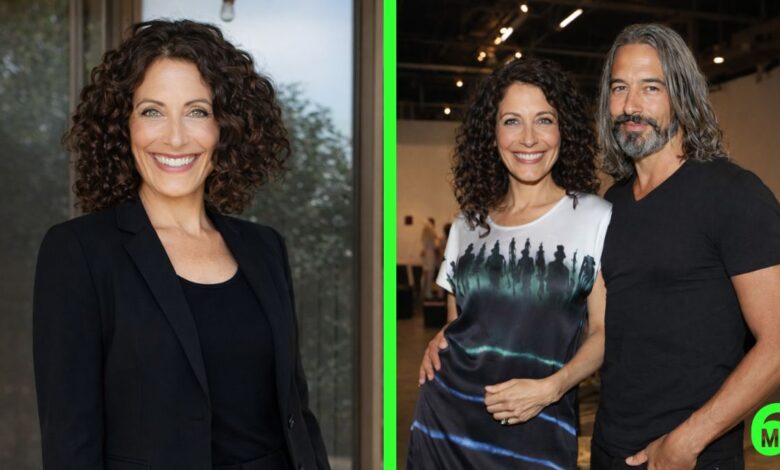
Robert Russell is a respected Los Angeles painter with an established gallery career and formal training from the Rhode Island School of Design and the California Institute of the Arts. Represented by Miles McEnery Gallery, his work has appeared in solo and group exhibitions in Los Angeles, New York, Vancouver, Munich, and elsewhere. He is also recognized as the husband of actress, writer, and painter Lisa Edelstein.
At the same time, Russell’s life remains notably private. That balance between visibility and restraint is part of what makes him interesting. He appears in the public record through his paintings, selected exhibitions, and a marriage that has been public but never overexposed. In 2026, that connection between art and home life became especially visible through his joint exhibition at the Skirball Cultural Center with Lisa Edelstein, A Palace in Time, a show centered on Jewish life, memory, ritual, and the emotional weight of ordinary objects.
Quick Bio
| Key Detail | Information |
|---|---|
| Full Name | Robert Russell |
| Relationship | Husband of Lisa Edelstein |
| Profession | Painter / visual artist |
| Birth Year | 1971 |
| Birthplace | Kansas City, Missouri |
| Education | BFA, Rhode Island School of Design; MFA, California Institute of the Arts |
| Residence | Los Angeles, California |
| Family | Married to Lisa Edelstein; father of two sons; Edelstein has publicly described becoming their stepmother |
| Public Profile | Established contemporary artist with solo and group exhibitions; generally private personal life |
| Social Media Presence | No major public-facing personal platform was central in the sources reviewed |
Who is Robert Russell?
Robert Russell is a contemporary American painter whose public identity combines serious studio practice with a deliberately low-profile personal life. Born in 1971 in Kansas City, Missouri, he later studied at two major art institutions, earning a BFA from the Rhode Island School of Design and an MFA from the California Institute of the Arts. His professional biography places him firmly within the contemporary gallery world, with solo exhibitions at venues including Miles McEnery Gallery, Anat Ebgi, The Cabin, Burrard Arts Foundation, and others.
For many readers, however, his name surfaces because of Lisa Edelstein. The two married in Los Angeles on May 25, 2014, and their relationship has remained steady and notably understated in public view. Edelstein has spoken of wanting to become the “official stepmother” to Russell’s children, which offers one of the clearest windows into the family structure they built together. Russell’s significance, then, lies not in tabloid visibility but in the way his art, marriage, and family life intersect around a consistent set of public themes: thoughtfulness, continuity, domestic meaning, and restraint.
The Private Life of Robert Russell
Robert Russell’s private life stands out precisely because it has remained private in an era when public association often becomes performance. There is no large publicity machine built around his home life, no steady stream of confessional interviews, and no heavily commercialized public persona in the material reviewed. What does exist is measured and credible: he lives and works in Los Angeles, he has an established studio career, and he shares a long-running marriage with Lisa Edelstein.
That privacy does not make him absent. It simply changes the terms on which he is visible. Russell is seen through work rather than spectacle. Even the Skirball’s description of A Palace in Time presents him not as a celebrity-adjacent figure but as one of “two Los Angeles-based artists and partners in life,” grounding him in artistic practice and shared cultural reflection rather than gossip. In that sense, the private life of Robert Russell is not a blank slate. It is a clear public choice to let paintings, exhibitions, and selective appearances carry the story.
Early Life and Background of Robert Russell
The verified public record on Russell’s early life is concise but meaningful. Miles McEnery Gallery identifies him as born in 1971 in Kansas City, Missouri. That same biography confirms his formal education: a Bachelor of Fine Arts from the Rhode Island School of Design and a Master of Fine Arts from the California Institute of the Arts. Those credentials matter because they place him within a serious tradition of studio training and help explain the disciplined, conceptually grounded language often used to describe his work.
Beyond those facts, the strongest way to understand his background is through the art itself. The Skirball describes Russell as a conceptual painter whose work returns to memory, iconography, and mortality, often through ordinary objects such as cups, books, figurines, and candles. That language suggests an artist drawn not to grand display but to objects that accumulate meaning over time. It also aligns with the still-life tradition visible in his gallery profile, where teacups and similar domestic forms recur. Even without an extensive public autobiography, the available record shows continuity between training, subject matter, and artistic temperament.
Marriage and Partnership with Lisa Edelstein
Robert Russell and Lisa Edelstein married in Los Angeles on May 25, 2014, according to PEOPLE. The report described them as “very happy” and “very loving,” and subsequent coverage makes clear that the marriage quickly became part of Edelstein’s own understanding of adulthood, commitment, and family. In a 2017 PEOPLE interview, Edelstein said she wanted to marry Russell and become the official stepmother to his children, indicating that the marriage was about more than a formal romance. It was also about building a family structure.
What makes their partnership especially notable is that it extends into artistic life. The Skirball’s 2026 exhibition places their paintings side by side and presents them as married partners reflecting together on Jewish ritual, memory, joy, loss, and communal gatherings. That matters because it shows a marriage expressed not only in photographs from events but in parallel acts of making. Russell’s paintings of ritual objects and Edelstein’s paintings based on family photographs differ in method, yet the exhibition frames them in conversation. Publicly, this is one of the clearest signs that their partnership is both domestic and creative.
Robert Russell’s Role Behind the Scenes
Public sources do not portray Russell as someone pursuing broad celebrity, but they do show him occupying an important role behind the scenes in a creative household. Edelstein’s comments about marriage and step-parenthood suggest a family structure built on commitment and communication, while the Skirball exhibition suggests a home environment where art and reflection are not separated from daily life. Russell’s work focuses on ritual objects such as Kiddush cups and yahrzeit candles, objects tied to remembrance, continuity, and shared practice. That artistic focus itself points to a sensibility attentive to what holds families and communities together.
It is also significant that his public role does not diminish his independent career. He is not merely Edelstein’s husband. He is a painter with solo exhibitions, institutional presence, and a clearly articulated practice. The “behind the scenes” role, therefore, should not be read as secondary in the sense of lesser. It is better understood as steady, grounded, and structurally important: the work of sustaining home, family, and an artistic life without converting every personal detail into public material.
Family Life: Raising the Next Generation
The public record on Russell’s children is careful and limited, revealing much in itself. What is documented is that Lisa Edelstein publicly stated she wanted to become the official stepmother to “my kids,” referring to the children she shares a family life with through Russell. Your supplied summary described two sons, and that is consistent with widely repeated public descriptions of their blended family, though major sourced interviews tend to emphasize the stepmother relationship more than a detailed discussion of the children themselves.
That restraint appears intentional. The children are part of the family’s public outline, but not part of a public campaign. In a media culture that often treats the children of public figures as content, Russell and Edelstein appear to have drawn a boundary. The value of that boundary is easy to understand. It preserves ordinary growth, personal dignity, and the possibility of family life outside audience demand. Because Russell’s own work and Edelstein’s recent paintings both engage with family memory and domestic life, the silence around the children’s identities does not feel evasive. It feels protective.
Philanthropy and Community Engagement
There is a difference between documented philanthropy and broader cultural contribution, and that distinction matters here. In the public sources reviewed, Russell is not tied to a widely advertised personal philanthropic platform like some celebrity couples are. It would be inaccurate to invent one. What is clearly documented, however, is his participation in a major institutional exhibition at the Skirball Cultural Center, an organization that frames its mission around Jewish tradition, community, education, and building a more just society.
Within that setting, Russell’s work contributes to community engagement through culture rather than campaign slogans. A Palace in Time invites viewers to reflect on celebration, grief, memory, ritual, and intergenerational continuity. His paintings of Kiddush cups and yahrzeit candles do not function as abstract decoration; the Skirball explicitly presents them as objects that carry history, absence, and endurance. That kind of public-facing cultural work matters. It expands conversation around Jewish domestic life and remembrance, and it does so in an institution designed for public learning and encounter.
The Power of Privacy: Influence Without Publicity
Robert Russell’s example is useful because it shows that visibility is not the same thing as importance. He has influence, but it travels through a different channel. His paintings circulate in galleries and museums. His marriage is known, but not overperformed. His family is acknowledged, but guarded. In public terms, that creates a profile that is quieter than fame culture usually rewards. Yet it also produces credibility.
The Skirball exhibition provides a strong lens for understanding this. Its themes are memory, ritual, witness, and intimacy. Those are not accidental themes for an artist whose public life has remained measured. Russell’s practice suggests that meaning accumulates in attention, not noise. The institutional language around his work repeatedly emphasizes contemplation, history, and devotion to ordinary forms. Seen that way, privacy is not the absence from the world. It is a way of deciding what deserves exposure and what deserves care.
Public Curiosity and Misconceptions About Robert Russell
The most common misconception about Robert Russell is that he is known only because of Lisa Edelstein. The public record does not support that simplification. While the marriage unquestionably increases public curiosity, Russell also has a substantial independent career. His gallery biography lists solo exhibitions across multiple cities and group exhibitions at respected venues, while the Skirball identifies him as a conceptual painter with a distinctive body of work focused on memory, iconography, mortality, and ritual objects.
Another misconception is that privacy means a lack of substance. In fact, Russell’s public profile is substantial where it matters most: education, exhibitions, artistic themes, and enduring personal commitments. What is missing are sensational details, and that absence can tempt readers to imagine mystery where there may simply be discretion. The factual picture is enough: he is an established artist, a husband, a father, and a Los Angeles-based creative professional whose life has been public in selective, purposeful ways.
Legacy and Future
Robert Russell’s legacy is still unfolding, but its shape is already visible. Professionally, he has built a recognizable career as a painter whose still lifes and object-centered works treat domestic forms as carriers of memory and ritual. Institutionally, the 2026 Skirball exhibition marks an important point of recognition, placing his work in a major cultural setting and connecting it to larger questions of Jewish life, mourning, continuity, and belonging.
Personally, his future legacy will likely remain tied to the same qualities that define his present public image: seriousness of craft, loyalty to family, and an unwillingness to turn private life into spectacle. That does not make his story smaller. It gives it a different kind of durability. In a culture that often confuses exposure with significance, Robert Russell represents something steadier: an artist whose work deepens with context and whose life, though quietly lived, carries visible emotional and cultural weight.
Conclusion
Robert Russell is a rare figure in contemporary public culture: someone connected to fame without being consumed by it. The verified facts show a painter with serious academic training, a sustained exhibition record, and a long marriage to Lisa Edelstein that has remained both public and dignified. They also show a family life treated with care rather than exploitation. That balance is central to understanding him.
His 2026 Skirball exhibition with Edelstein offers the clearest public expression of what seems to matter most in his world: ritual, memory, home, mourning, celebration, and the quiet emotional force of ordinary objects. Those themes make him more than a name associated with a television star. They reveal an artist whose work is rooted in attention and whose personal life reflects the same discipline. Robert Russell’s story may be quieter than many celebrity-adjacent narratives, but it is no less for that. It is thoughtful, grounded, and enduring.
Read this too:Jo Green: The Private Woman Behind Hugh Laurie’s Public Life
(FAQs)
1. Who is Robert Russell?
Robert Russell is a Los Angeles-based contemporary painter known for still lifes and concept-driven works focused on memory, ritual objects, iconography, and mortality.
2. Is Robert Russell married to Lisa Edelstein?
Yes. Robert Russell and Lisa Edelstein married in Los Angeles on May 25, 2014.
3. What is Robert Russell known for as an artist?
He is known for paintings of ordinary objects, including cups, figurines, books, and candles, and for a soft-focus style that gives those objects emotional and historical resonance.
4. Where does Robert Russell live?
Public biographies identify him as living and working in Los Angeles, California.
5. Does Robert Russell have children?
Public reporting and Lisa Edelstein’s own comments show that he has children and that Edelstein became their stepmother after marriage.
6. What is A Palace in Time?
It is a 2026 exhibition at the Skirball Cultural Center featuring paintings by Robert Russell and Lisa Edelstein that explore Jewish life, memory, ritual, and domestic experience.
7. What are Robert Russell’s educational credentials?
He earned a BFA from the Rhode Island School of Design and an MFA from the California Institute of the Arts.
8. Why is there so much curiosity about Robert Russell?
Much of the interest comes from his marriage to actress Lisa Edelstein, but his own established career as a painter and his deliberate privacy also make him a subject of public curiosity.