Living in one of Sydney’s coastal suburbs is a dream until you look down and realise your carpet has basically become a satellite campus for Bondi Beach.
Between the sand that hitches a ride on your flip-flops and the salty breeze that doubles as a slow-motion wrecking ball for the fibres, your rug is losing a war it wasn’t built for.
Luckily, steam cleaning is one of the best things you can do for your coastal home. But before you fire up a machine or book a service, it helps to understand why it works so well and how to do it properly from start to finish.
Your Carpet vs the Coast
Most carpets in inland homes deal with dust, the occasional muddy footprint, and perhaps a rogue chip or two.
But living by the ocean does come with a few trade-offs. Carpets in coastal houses deal with all of that plus a very specific trio of troublemakers.
- Sand. Those tiny grains work their way deep into carpet fibres and act like sandpaper every time someone walks over them, slowly breaking down the pile.
- Salt. It attracts moisture from the air, keeping your carpet subtly damp even when you can’t feel it. Over time, that dampness creates the perfect conditions for mould and bacteria to move in and get comfortable.
- Humidity. It slows drying times, encourages microbial growth, and makes every other problem worse.
What Steam Cleaning Does
Steam cleaning, also called hot water extraction, sounds technical, but the idea is pretty simple. Hot water gets pushed deep into the fibres, then pulled straight back out, taking all the loosened dirt with it.
That’s where it pulls ahead of regular vacuuming. Your trusty vacuum only handles what’s sitting on the surface, while steam cleaning goes after everything hiding underneath.
The heat also does something vacuums simply can’t: it kills dust mites, bacteria, and mould spores on contact. So, if you’re living in a coastal home, where humidity and salty air tend to hang around, it can help you keep your space healthy.
You don’t have to soak your carpets to get good results, either. Compared to old-school wet cleaning, it uses far less water, which matters more than ever across Australia.
With water restrictions becoming a regular thing in many council areas, it’s good to know you can clean properly without feeling like you’ve just drained a small reservoir.
Choosing the Right Equipment for the Job
Not all steam cleaners are created equal. And since you’re dealing with sand, humidity, and the occasional mystery stain, some features aren’t optional.
Strong suction is the first thing to look for. You won’t be able to get rid of fine sand easily, and a machine with weak extraction will leave it behind to keep grinding away at your fibres.
Next, check how quickly it heats up and how hot it gets. Higher temperatures mean a better shot at knocking out allergens, bacteria, and anything else lurking in the fibres. If it takes ages to get going, you’ll feel it every time you use it.
Finally, if your home has multiple rooms or awkward layouts, pick a portable device. A compact, easy-to-move unit will save you a lot of frustration and a back-breaking workout.
And if you’re not planning to use it often, don’t rush out and buy one. Plenty of equipment hire spots around Sydney carry commercial-grade machines that are a noticeable step up from the entry-level models.
This way, you’ll get better results without committing to storing a large, slightly intimidating appliance in your cupboard.
Professional Service or DIY?
This is where a lot of people get tripped up, so let’s make it simple.
Go for professional cleaning if your home is large, your carpets are delicate or expensive, or you’re dealing with deep-set stains and mould.
Companies offering steam carpet cleaning in Sydney know exactly how to handle salt residue and humidity-related damage. These issues often require commercial-grade equipment and experience.
On the other hand, if your rugs are fairly tough and you’re just staying on top of routine cleaning, doing it yourself can work well. You’ll save money, and for low-pile carpets, the results can be perfectly decent.
Just keep in mind that rental machines don’t have the same extraction power as industrial-grade ones, so it’s easy to leave too much water behind without realising it.
To avoid this, open every window, run your fans, and don’t walk on your carpet until it’s completely dry.
Preparing Your Home Before You Start
A little preparation goes a long way, and skipping it is how people end up with a half-cleaned carpet and a sore back.
Start by clearing the room. Move your furniture to give yourself full access to the carpet. You’ll thank yourself later when you don’t have to manoeuvre a heavy machine around a couch leg.
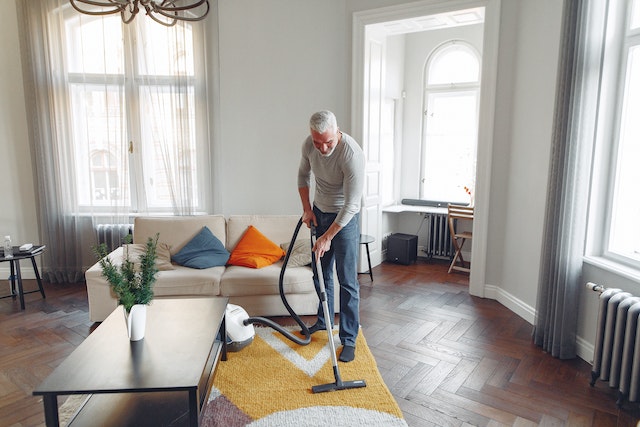
Before you bring in the steam cleaner, vacuum your rug well. This will remove the surface dirt so the machine can focus on the grime that’s settled deep into the fibres.
If there are any obvious stains, deal with them first. Use a spot treatment and give it a few minutes to sit.
Last but not least, keep all the windows facing the ocean closed while you clean so you don’t pull salty air straight into your damp carpet. Once you’re done, open everything up to get some airflow going and help the fabric dry faster.
Keeping Your Carpet Clean in the Long Run
Steam cleaning gives your rugs a fresh start. But you still need to make sure the reset sticks. Here are some easy ways to do this:
- Vacuum regularly. This stops sand and debris from grinding back down into the fibres. Once a week is enough for most households, but you should do it more often if you have pets or kids.
- Deal with spills immediately. A cloth and a mix of water and white vinegar handle most everyday spills without leaving residue or damaging the fabric.
- Use doormats at your front door. Put one outside and another inside to reduce the amount of sand and salt that makes it onto your carpet.
- Schedule a deep clean every six months. Coastal conditions are harder on carpets than inland environments, so the standard annual schedule most Australians follow isn’t quite enough.
- Protect your rug from the sun. UV-blocking window film or quality curtains can make a meaningful difference to how long your carpets hold their look.
Conclusion
You moved to the coast for the lifestyle, not to start a private sand collection in your living room.
So, go ahead and tackle that build-up with a steam cleaner or bring in a professional to handle it. Your home will feel fresher, and you can finally go back to enjoying the view without the gritty soundtrack.