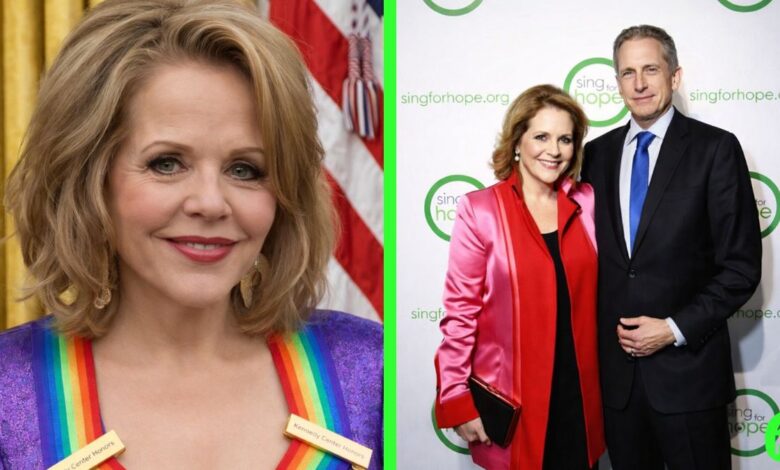
For more than three decades, Renée Fleming has occupied a singular place in American cultural life. Celebrated for her luminous soprano, stylistic range, and advocacy for the arts, Fleming’s career spans the world’s major opera houses, concert halls, and national stages. Her public identity is well documented, widely analyzed, and richly deserved.
By contrast, Tim Jessell exists largely outside that spotlight. A Washington, D.C.–based corporate attorney, Jessell is best known publicly through his marriage to Fleming, yet his presence in her life reflects a different kind of significance—one grounded in stability, discretion, and partnership rather than visibility. This article does not attempt to turn a private individual into a public spectacle. Instead, it examines what can responsibly be known about Tim Jessell through verified facts, public appearances, and contextual analysis, while respecting the boundaries he and his family have consistently maintained.
Quick Bio
| Detail | Information |
|---|---|
| Full Name | Timothy (Tim) Jessell |
| Relationship | Husband of Renée Fleming |
| Profession | Corporate attorney |
| Public Profile | Private individual |
| Residence | Washington, D.C. area |
| Children | Has children from a previous marriage |
| Known Philanthropic Interests | Appears at arts and veterans-related events |
| Social Media Presence | None publicly known |
Who Is Tim Jessell?
Tim Jessell is a U.S.-based corporate attorney whose public recognition stems primarily from his marriage to Renée Fleming. Unlike many spouses of globally recognized artists, Jessell has never pursued a public-facing role of his own. His significance lies not in personal celebrity but in his long-term partnership with Fleming, one that has unfolded alongside the later chapters of her career.
What distinguishes Jessell is not what is publicly said about him, but what is consistently not said: there are no promotional interviews, no social media commentary, and no self-curated public narrative. This absence is itself informative, pointing to a deliberate commitment to professional separation and personal privacy. Within the narrow yet reliable frame of public knowledge, Jessell emerges as a steady presence—one whose influence is best understood in context rather than through quotation.
The Private Life of Tim Jessell
Tim Jessell’s private life is defined by restraint. In an era when proximity to fame often leads to visibility, Jessell has maintained a low profile that appears both intentional and sustained. He does not give interviews, does not promote his work publicly, and rarely appears alone at events. When he is seen, it is almost always alongside Fleming, and even then, without drawing attention to himself.
From an analytical standpoint, this approach clearly delineates the boundary between personal identity and spousal association. Rather than leveraging public curiosity, Jessell’s privacy reinforces a broader theme in Fleming’s life: that artistic prominence does not require total personal exposure. The consistency of this choice over more than a decade suggests values rooted in discretion, professional integrity, and family focus.
Early Life and Background of Tim Jessell
Publicly available information about Tim Jessell’s early life is limited, and responsibly so. What is known is his professional identity as a corporate attorney based in Washington, D.C.—a role that implies advanced legal training, long-term career development, and engagement with complex institutional structures.
The absence of detailed biographical information should not be read as a gap to be filled, but as an indication of how effectively Jessell has maintained separation between his professional life and public curiosity. In contrast to the well-documented upbringing of many public figures, Jessell’s background remains largely off the record, reinforcing the notion that his public relevance begins—and ends—with verifiable facts.
Marriage and Partnership with Renée Fleming
Tim Jessell and Renée Fleming were married over Labor Day weekend in September 2011 in upstate New York. Their introduction came via a blind date arranged by author Ann Patchett, a detail that has been publicly acknowledged and frequently cited.
Since their marriage, Jessell has accompanied Fleming to select high-profile events, including the Kennedy Center Honors in 2024, the Carnegie Hall Medal of Excellence Gala, and the Stand Up For Heroes event. These appearances are notable not for their frequency, but for their selectivity. They suggest a partnership that supports public engagement without centering itself within it.
Tim Jessell’s Role Behind the Scenes
There is no public record of Jessell participating directly in Fleming’s artistic decisions, and it would be inappropriate to imply otherwise. What can be responsibly analyzed is the structural support implicit in long-term partnerships between artists and non-artists. As Fleming’s career expanded into advocacy, education, and institutional leadership, Jessell’s stable professional life likely provided a counterbalance to the volatility of performance schedules and public scrutiny.
This behind-the-scenes role is not performative. It does not generate headlines. Yet it aligns with a broader pattern seen among partners of high-achieving artists: enabling continuity, grounding family life, and preserving normalcy where possible.
Family Life: Raising the Next Generation
Tim Jessell has children from a previous marriage, and together with Fleming, they have formed a blended family. Beyond this, the family’s internal dynamics remain private, and there is no verified public information detailing the children’s identities or lives.
From an analytical perspective, the choice to shield children from public exposure is consistent with best practices among public families. It suggests prioritizing autonomy and emotional well-being over public curiosity. The absence of spectacle around family life underscores a shared commitment to boundaries—a theme that runs throughout Jessell’s public footprint.
Philanthropy and Community Engagement
While Tim Jessell does not maintain a personal philanthropic platform, his presence alongside Fleming at events tied to arts advocacy and veterans’ causes is verifiable. Appearances at benefit events such as Stand Up For Heroes place him within a broader ecosystem of cultural philanthropy.
Rather than personal branding, this form of engagement reflects collective participation. Jessell’s role appears supportive rather than directive, aligned with causes Fleming has publicly championed. The lack of individual attribution reinforces the impression of shared values without self-promotion.
The Power of Privacy: Influence Without Publicity
In media culture, privacy is often mistaken for absence. In Jessell’s case, it functions more accurately as a form of agency. By limiting public exposure, he retains control over his professional identity and family life, even while standing adjacent to global fame.
This approach carries its own influence. It models an alternative narrative: that proximity to prominence does not require participation in it. Over time, this consistency has shaped public understanding of Jessell not as a mystery to be solved, but as a private individual whose boundaries are respected.
Public Curiosity and Misconceptions About Tim Jessell
Public curiosity about Tim Jessell tends to focus on the unknown rather than the known. Misconceptions often arise from this imbalance, including assumptions about wealth, influence, or behind-the-scenes control. None of these claims is supported by verified sources.
What the public record does support is far simpler: Jessell is a corporate attorney, a husband, and a father who has chosen not to cultivate a public persona. Understanding this distinction is essential to separating fact from projection.
Legacy and Future
Tim Jessell’s legacy is unlikely to be defined by public recognition, and that appears intentional. Instead, his lasting impact will exist within personal, professional, and familial spheres that remain largely unseen. As Fleming’s career continues to evolve, Jessell’s role as a private partner remains steady, unchanged by shifting public narratives.
In a culture that often equates visibility with value, Jessell’s life offers a counterexample—one in which influence operates quietly and meaningfully, without demanding attention.
Read this too:Aimee Ginsburg Bikel: Journalism, Privacy, and the Enduring Legacy of Theodore Bikel
Conclusion
Tim Jessell occupies a rare position: a figure adjacent to global fame who has consistently declined it. Through verified facts and careful analysis, a clear picture emerges—not of a man defined by mystery, but of one defined by choice. His marriage to Renée Fleming is public, respectful, and enduring; his professional life remains separate and intact.
Rather than diminishing his significance, this discretion enhances it. Jessell’s story demonstrates that partnership does not require performance, and that privacy, when deliberately chosen, can be a powerful form of integrity.
(FAQs)
Q1: Who is Tim Jessell?
Tim Jessell is a Washington, D.C.–based corporate attorney and the husband of Renée Fleming.
Q2: When did Tim Jessell marry Renée Fleming?
They married in September 2011 over Labor Day weekend.
Q3: How did Tim Jessell and Renée Fleming meet?
They were introduced on a blind date by author Ann Patchett.
Q4: Does Tim Jessell work in the arts?
No. His professional background is in corporate law.
Q5: Do Tim Jessell and Renée Fleming have children together?
They are raising a blended family that includes children from Jessell’s previous marriage.
Q6: Is Tim Jessell active on social media?
There is no known public social media presence.
Q7: Why is so little known about Tim Jessell?
He has consistently chosen to keep his personal and professional life private.
Q8: Does Tim Jessell attend public events?
Yes, selectively, often alongside Renée Fleming at major cultural or philanthropic events.