John Gould Rubin: The Theater Director Behind Julianne Moore’s Early Years and a Life Lived Beyond the Spotlight

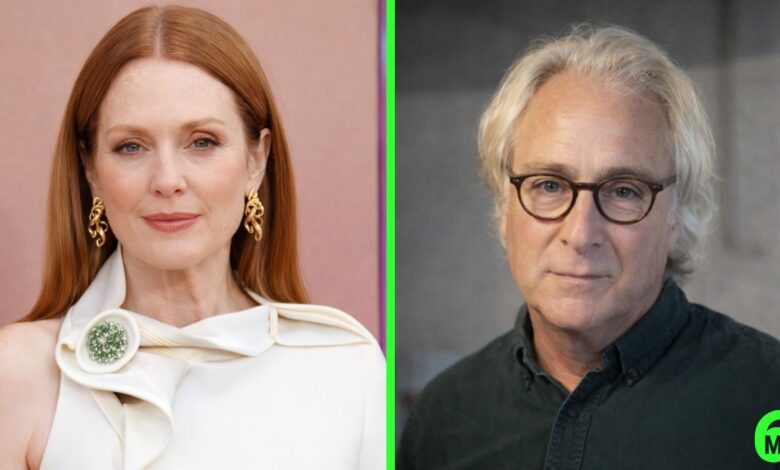
Julianne Moore’s career stands out for its range, intelligence, and emotional precision. An Academy Award winner and multiple-time Golden Globe recipient, Moore is widely respected, and her public life has been thoroughly examined. Yet, an early figure in her story remains largely outside the glare of celebrity culture: John Gould Rubin.
Before Moore became a household name, she was married to Rubin, an accomplished theatre actor, director, and producer in his own right. Their marriage, which lasted from 1986 until their divorce was finalised in 1995, represents a formative period in both of their lives. While Moore has since spoken candidly about marrying young, Rubin himself has maintained a notably private posture. This article explores what is publicly known about John Gould Rubin, examining his professional life, his marriage to Julianne Moore, and the deliberate privacy that has shaped his public profile.
Quick Bio
| Full Name | John Gould Rubin |
| Date of Birth | January 26, 1951 |
| Profession | Actor, Producer, Stage Director |
| Known For | Theater work; films including Dead Again (1991), Three Men and a Baby (1987) |
| Award | Drama-Logue Award (1991) for Don Juan |
| Relationship | First husband of actress Julianne Moore |
| Marriage Duration | 1986–1995 (separated 1993; divorce finalized August 1995) |
| Children with Moore | None |
| Public Profile | Primarily theater-based; maintains low personal publicity |
| Social Media Presence | No verified public social media presence |
Who Is John Gould Rubin?
John Gould Rubin is an American theatre actor and director whose career has centred largely on stage performance and production. While many recognise his name because of his former marriage to Julianne Moore, Rubin’s professional credentials extend beyond that association. He has appeared in films such as Dead Again (1991) and The Out-of-Towners (1999), but his most sustained work has been within New York’s theatre community.
Rubin and Moore married in 1986, when she was still establishing herself as an actress. Their marriage ended after a separation in 1993, with the divorce finalised two years later. Moore later described the experience as marrying too young and acknowledged that it was not the right relationship for her long term. Rubin, for his part, has not publicly revisited the marriage in interviews, reflecting a consistent pattern of privacy that defines his public identity.
The Private Life of John Gould Rubin
Unlike many individuals associated with major celebrities, John Gould Rubin has not leveraged his connection to Julianne Moore for media visibility. There are no tell-all interviews, memoirs, or public commentaries recounting their marriage. This silence is not an absence of history but a deliberate boundary.
His professional life has remained centred on theatre, an industry that—while artistically influential—operates largely outside the mass-media ecosystem of Hollywood celebrity. Rubin’s limited presence in entertainment tabloids underscores the difference between public fame and professional credibility. In an era when former spouses of celebrities often become fixtures of public fascination, Rubin has chosen discretion.
This choice reflects a broader pattern among serious stage professionals: the work takes precedence over persona. Rubin’s career trajectory suggests a commitment to craft rather than notoriety.
Early Life and Background of John Gould Rubin
Born on January 26, 1951, John Gould Rubin came of age in a period when American theatre was undergoing significant experimentation and transformation. While extensive public documentation of his early upbringing remains limited, his professional path indicates classical theatrical training and immersion in New York’s stage culture.
By the late 1980s and early 1990s, Rubin had established himself as a credible presence in theatre circles. His 1991 Drama-Logue Award for Don Juan highlights peer recognition rather than commercial hype. Drama-Logue Awards, historically given for excellence in theatre, signalled serious artistic merit.
His early professional footprint demonstrates a career built from stage performance upward—an environment that values discipline, rehearsal, and interpretive depth over mass visibility.
Marriage and Partnership with Julianne Moore
When Julianne Moore married John Gould Rubin in May 1986, she was still years away from becoming an Oscar-winning actor. At that time, Moore was working in television and theatre, building experience and reputation. Their marriage unfolded during a formative stretch in both careers.
The couple separated in 1993, and their divorce was finalised in August 1995. Moore has since spoken candidly about that period, stating in interviews that she believed she married too young and eventually realised the marriage was not right for her. She has also noted that they have not remained in contact since their separation.
Importantly, the marriage occurred before Moore’s meteoric rise in the late 1990s with films such as Boogie Nights and The End of the Affair. Rubin’s presence in her early adult life coincided with her early professional years rather than with her peak fame. That context shapes how their relationship is understood historically—not as a celebrity spectacle, but as part of two working artists navigating early careers.
John Gould Rubin’s Role Behind the Scenes
While there are no public accounts detailing Rubin’s influence on Moore’s career, it is reasonable—based strictly on chronology—to recognise that they shared years during which both were developing artists. Theatre communities are collaborative ecosystems. Directors, actors, and producers influence one another’s craft through rehearsal rooms and production cycles.
Rubin’s own professional focus on directing and producing suggests he was immersed in storytelling and performance at a structural level. Behind-the-scenes creative labour rarely attracts headlines, yet it forms the backbone of theatrical culture.
His career remains rooted in artistic production rather than celebrity culture, clarifying his standing as a working artist contributing to stage culture instead of Hollywood fame.
Family Life: Raising the Next Generation
John Gould Rubin and Julianne Moore did not have children. Moore later married Bart Freundlich in 2003, with whom she has two children.
Rubin’s personal life after his divorce has remained largely outside public documentation. The absence of publicly available details about children or domestic life is not unusual for theatre professionals who do not actively court publicity.
In the absence of verified records, responsible reporting avoids assumption. What can be observed is that Rubin’s professional life continued in theatre, suggesting stability and continuity rather than public reinvention.
Philanthropy and Community Engagement
There is limited public documentation linking John Gould Rubin to specific philanthropic initiatives under his name. However, his sustained presence in the theatre implies ongoing contribution to cultural institutions—many of which operate within nonprofit frameworks.
American theatre often intersects with community engagement, educational outreach, and artistic mentorship. While no formal philanthropic campaigns are publicly associated with Rubin, his professional domain is deeply rooted in cultural preservation and artistic education.
In contrast, Julianne Moore has been publicly associated with literacy advocacy and various social causes. The divergence in public visibility between the two underscores how philanthropic footprints often correlate with celebrity status rather than personal values.
The Power of Privacy: Influence Without Publicity
John Gould Rubin’s life highlights the power of privacy in celebrity-adjacent narratives. Despite his association with a high-profile actor, Rubin has not sought media attention.
His lack of public commentary about his marriage to Julianne Moore reinforces a professional boundary. It preserves both parties’ dignity and keeps personal history separate from public discourse.
Privacy, in this case, appears less like withdrawal and more like discipline. Rubin’s public identity remains anchored in his work. That decision shapes how history records him—not as a recurring tabloid figure, but as a theatre professional whose early marriage to a future Oscar winner remains one chapter of a longer life.
Public Curiosity and Misconceptions About John Gould Rubin
Public interest in Rubin often spikes when discussions of Julianne Moore’s personal history resurface. This pattern reflects how celebrity narratives can flatten complex lives into relational footnotes.
A common misconception is that Rubin’s relevance exists solely through his marriage to Moore. Yet his award-winning theatre work predates and outlasts that chapter. Recognising his independent professional identity is crucial to understanding the full picture.
The scarcity of sensational material sometimes fuels speculation. Responsible biography resists that impulse. Facts remain clear: a marriage, a separation, a divorce, and two separate professional paths.
Legacy and Future
John Gould Rubin’s legacy rests primarily within theatre. Awards, stage productions, and sustained engagement in directing and acting define his professional footprint. His connection to Julianne Moore situates him in a historical narrative, but it does not encapsulate his career.
As Moore’s career continues to evolve, interest in her early life will likely persist. Rubin’s enduring privacy ensures that the public record remains factual rather than embellished.
His story is a reminder that proximity to fame does not require participation in it. Some lives intersect with celebrity briefly before returning to quieter, equally meaningful work.
Conclusion
John Gould Rubin occupies a distinctive space in the cultural record. He is both an accomplished theatre professional and Julianne Moore’s first husband. Their marriage, spanning from 1986 to 1995, occurred before Moore’s ascent to international acclaim. While she has reflected openly on that chapter, Rubin has maintained discretion.
That privacy is not emptiness; it is intention. His career in theatre, marked by award recognition and steady artistic involvement, reflects dedication to craft rather than public narrative. In examining John Gould Rubin, one finds not scandal or spectacle, but a portrait of a working artist whose life briefly intersected with rising Hollywood stardom—and then continued on its own path.
Read this too:Mark Croft & Kerry Katona: The Private Man Behind a Very Public Celebrity Marriage
(FAQs)
1. Who is John Gould Rubin?
John Gould Rubin is an American actor, producer, and stage director known for his theatre work and as the first husband of Julianne Moore.
2. When did John Gould Rubin marry Julianne Moore?
They married on May 3, 1986.
3. When did John Gould Rubin and Julianne Moore divorce?
They separated in 1993, and their divorce was finalised in August 1995.
4. Did John Gould Rubin and Julianne Moore have children together?
No, they did not have children.
5. What is John Gould Rubin known for professionally?
He is recognised for his theatre work and film appearances, including Dead Again (1991) and Three Men and a Baby (1987).
6. Has John Gould Rubin spoken publicly about his marriage to Julianne Moore?
There are no widely documented public interviews in which he discusses the marriage in detail.
7. What award has John Gould Rubin received?
He received a Drama-Logue Award in 1991 for his performance in Don Juan.
8. Is John Gould Rubin active on social media?
There is no verified public social media presence associated with him.