Mike Wolfe Passion Project: How the American Pickers Star Turned Historic Preservation Into a Main Street Mission

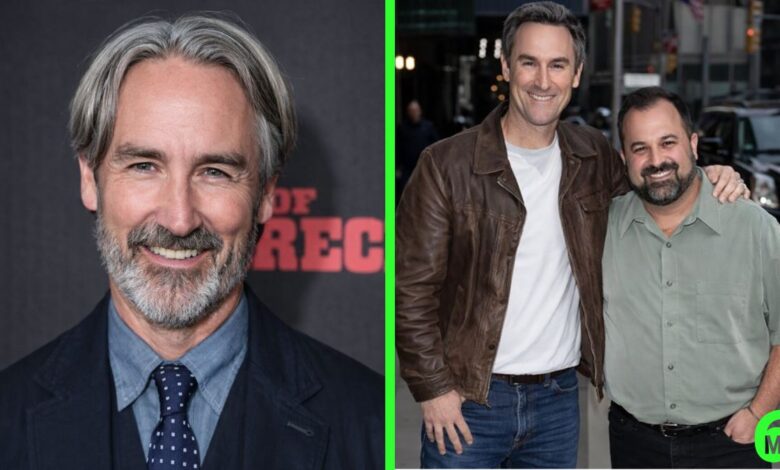
Mike Wolfe built his public reputation by travelling America’s back roads, finding overlooked objects, and telling the stories behind them. On television, that work made him the face of American Pickers. Off-screen, it has evolved into something larger: a visible commitment to historic preservation, adaptive reuse, and small-town revitalisation. In recent years, the phrase “Mike Wolfe’s passion project” has become shorthand for a cluster of efforts centred especially in Columbia, Tennessee, where Wolfe has restored automotive-era buildings and promoted spaces meant to honour local history rather than erase it. His work also connects to Nashville’s Big Back Yard, a regional tourism and relocation initiative highlighting rural communities along the Natchez Trace corridor. What makes these projects notable is not celebrity branding alone, but their consistent theme: old buildings are not debris from the past, but living anchors for community identity and economic life. That is the real story behind Mike Wolfe’s passion project.
Quick Bio
| Key Detail | Verified Information |
|---|---|
| Main public figure | Mike Wolfe, creator/star of American Pickers |
| Core focus | Historic preservation, adaptive reuse, Main Street renewal |
| Best-known location | Columbia, Tennessee |
| Signature preservation site | Columbia Motor Alley, identified by Antique Archaeology as a restored 1947 Chevrolet dealership |
| Additional Columbia project | Restoration of a historic service station in downtown Columbia |
| Broader initiative | Nashville’s Big Back Yard, a regional movement Wolfe helped promote |
| NBBY geography | A corridor of rural communities tied to roughly 100 miles of the Natchez Trace Parkway between Leiper’s Fork and Muscle Shoals |
| Publicly stated goal | To reimagine “forgotten places” and preserve transportation history and small-town character |
| Reliable public sources | Antique Archaeology, NewsChannel 5 Nashville, Experience Tennessee, Nashville’s Big Back Yard site |
What is Mike Wolfe’s passion project?
Mike Wolfe’s passion project centres on restoring historic commercial properties—especially those linked to America’s transportation and roadside culture—and using them to foster local identity, tourism, and business. His Antique Archaeology site describes Columbia Motor Alley as where his “love of transportation history and historic preservation comes together,” calling it a project meant to inspire people to reimagine neglected properties. This shows the project goes beyond collecting antiques or opening stores; it’s about giving old buildings a new purpose while preserving their stories. Local Tennessee reporting confirms Wolfe’s commitment, highlighting his role in preserving downtown Columbia’s older structures.
Why did Columbia, Tennessee, become the focal point
Columbia has emerged as the clearest public stage for Wolfe’s preservation work. NewsChannel 5 reported that he took the lead on plans to renovate an old service station in the city’s historic district, presenting those plans to the Columbia Historic Zoning Commission in 2023. The report described a project designed to blend old and new, including green space, a fire pit, and decorative gas pumps, while preserving the structure. The same article noted that Wolfe had also helped preserve Columbia Motor Alley, a former Chevrolet dealership repurposed into a retail and rental space. That pairing is revealing. Columbia is not just where Wolfe owns a building or two; it is where his preservation philosophy becomes visible in the urban fabric. The town offers exactly the kind of setting his public persona has long celebrated: a place with transportation history, old storefronts, and a Main Street culture still capable of renewal.
Columbia Motor Alley and Wolfe’s preservation philosophy
Among all the properties associated with the Mike Wolfe passion project, Columbia Motor Alley is the most clearly documented. Antique Archaeology identifies it as a restored 1947 Chevrolet dealership and explicitly links it to Wolfe’s interest in “old car dealerships, gas stations, and service garages.” That statement is more than brand copy. It captures the worldview behind the project. Wolfe is drawn not only to the objects of Americana—cars, signs, pumps, tools—but to the buildings that once housed them. In other words, the architecture is part of the artefact. Preserving a dealership or garage preserves a setting, a rhythm of commerce, and a recognisable slice of twentieth-century American life. That is why Columbia Motor Alley matters. It is not merely a backdrop for merchandise or events; it is presented as proof that commercial preservation can be visually compelling, historically legible, and publicly accessible.
The restored service station and the “Revival” concept
A second highly visible piece of the story is Wolfe’s work on a historic Columbia service station. NewsChannel 5 reported on plans for the site in 2023, noting that the small building—about 900 square feet—was slated for a transformation that would add outdoor amenities while preserving the bones of the old station. Later coverage and entertainment reporting described the concept under the name “Revival,” though the strongest verifiable reporting is still the local Tennessee coverage documenting the restoration effort itself. What can be said with confidence is that this project follows the same logic as Columbia Motor Alley: use preservation as a form of placemaking. The value lies not only in saving an old building, but also in making it useful again in a way that keeps the site’s visual memory alive. For Wolfe, the old gas station is not charming because it is old. It is important because it carries a story that a generic new build never could.
Nashville’s Big Back Yard and Wolfe’s wider regional vision
If Columbia shows the building-scale version of Wolfe’s passion project, Nashville’s Big Back Yard shows the regional version. Experience Tennessee reported in 2020 that Wolfe joined community leaders from 13 rural Middle Tennessee and Northwest Alabama communities to launch the initiative. The movement was described as a region spanning roughly 100 miles along the Natchez Trace Parkway, promoting towns with populations under 5,000 and positioning them as attractive alternatives to dense urban living. The article quoted Wolfe saying he knows “first-hand how much rural communities have to offer” and that it was the right time to think about getting “back to small town Main Streets and open spaces.” The NBBY site also features Wolfe as a public voice in explaining the region. This matters because it confirms that his interests extend beyond single properties. The preservation work is tied to a larger argument: rural communities are not relics; they are viable places to live, visit, and invest in.
Why this work resonates beyond television
Wolfe’s preservation work attracts attention because it feels consistent with the values that made him famous. American Pickers built an audience around the idea that forgotten things still have worth. The passion project applies that same instinct to the built environment. That continuity makes the project legible to the public: viewers understand why someone who spent years rescuing signs, motorcycles, pumps, and Americana would care about saving the garages and stations those objects once inhabited. Antique Archaeology’s own description of Columbia Motor Alley reinforces that continuity, describing abandoned automotive buildings as places that “kept America going throughout the years.” In that sense, the project works as a cultural argument as much as a real estate one. It says that preservation is not nostalgia for its own sake; it is a way of keeping local memory visible in daily life.
Public interest, exaggeration, and what can actually be verified
One reason the keyword “Mike Wolfe’s passion project” circulates so widely online is that the story is easy to amplify. Celebrity involvement, photogenic buildings, and small-town revival make for clickable copy. But a lot of secondary coverage repeats numbers and claims that are not well-sourced in the strongest public reporting. For example, some articles circulate large-dollar figures about a broader transformation, while the most reliable sources available here are more cautious and concrete: a restored 1947 Chevrolet dealership, a documented plan to renovate a Columbia service station, and Wolfe’s confirmed role in promoting Nashville’s Big Back Yard. That distinction matters for trustworthiness. The verifiable story is already substantial without embellishment. Wolfe has publicly attached his name, brand, and energy to preserving historic roadside architecture and to championing rural communities as places worth saving and reimagining. That is stronger than internet mythmaking, and it does not need inflated numbers to stand on its own.
Legacy and future outlook
The future of Mike Wolfe’s passion project will likely be judged less by headlines than by durability. Do the restored buildings remain active and relevant? Do they continue drawing people into Colombia’s historic core? Does the regional storytelling around Nashville’s Big Back Yard keep translating into tourism, relocation interest, or renewed civic pride? Those are the meaningful tests. Publicly available evidence already shows that Wolfe has done more than talk about preservation. He has put his brand behind specific places, especially in Colombia, and has helped frame rural Main Streets as assets rather than leftovers. That alone gives the project a distinctive place in the broader celebrity-business landscape. Plenty of public figures attach themselves to developments. Fewer build a recognisable identity around the idea that old garages, service stations, and small-town corridors deserve to be seen not as dead space, but as part of America’s living cultural map.
Conclusion
The phrase “Mike Wolfe’s passion project” suggests something more serious than a hobby. It describes a preservation mission rooted in Wolfe’s long-standing fascination with American back roads, transportation history, and overlooked places. In Columbia, Tennessee, that mission has taken a visible physical form through projects like Columbia Motor Alley and the restoration of a historic service station. Through Nashville’s Big Back Yard, it has also expanded into a broader argument for the value of rural communities and Main Street culture. The most trustworthy way to understand the project is not through exaggerated online claims, but through the documented pattern in local reporting and official sources: Mike Wolfe consistently uses his platform to draw attention to old buildings, small towns, and the possibility of renewal through preservation. That is why the project resonates. It is not just about aesthetics. It is about memory, place, and the belief that communities can move forward without wiping away the marks of where they came from.
Read this too:Derek Cole: The Director, Cinematographer, and Creative Partner Linked to Shelly Cole
(FAQs)
1. What is Mike Wolfe’s passion project?
It is a preservation-centred effort focused on restoring historic commercial buildings, especially automotive and roadside properties, while promoting small-town revitalisation.
2. Where is Mike Wolfe’s passion project mainly based?
The clearest publicly documented hub is Columbia, Tennessee.
3. What is Columbia Motor Alley?
According to Antique Archaeology, it is a restored 1947 Chevrolet dealership connected to Wolfe’s interest in transportation history and preservation.
4 . Did Mike Wolfe restore a gas station in Colombia?
Local reporting confirms he pursued restoration of a historic Columbia service station and presented plans to the Historic Zoning Commission.
5. Is “Revival” part of Mike Wolfe’s passion project?
Public reporting has linked the Columbia service-station restoration to a concept called Revival, though the strongest confirmed reporting is the documented restoration project itself.
6. What is Nashville’s Big Back Yard?
It is a regional initiative connecting rural communities along the Natchez Trace corridor, and Wolfe helped promote it publicly.
7. How many communities are involved in Nashville’s Big Back Yard?
Experience Tennessee reported the launch involved 13 rural communities in Middle Tennessee and Northwest Alabama.
8. Why do people connect this work to American Pickers?
Because the project extends the same idea that made Wolfe famous: overlooked pieces of American history still have value and deserve preservation.