Maria Cahill and David Henrie: A Fact-Based Look at the Private Life Beside a Public Career

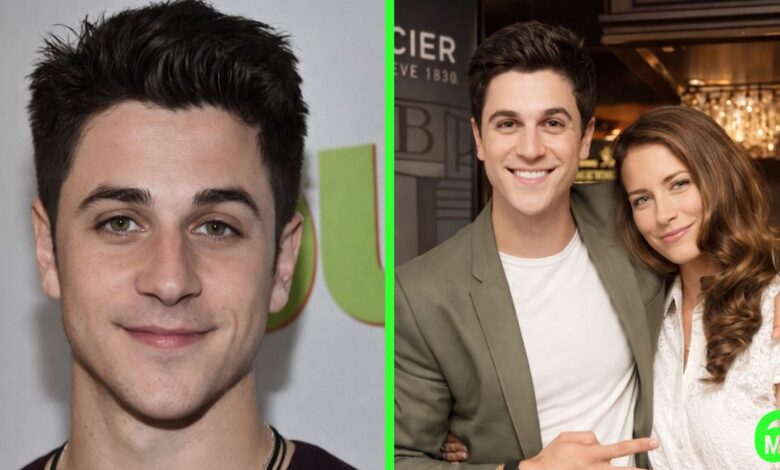
David Henrie built his public identity in Hollywood. For many, he will always be Justin Russo from Wizards of Waverly Place, the quick-witted older brother in a defining Disney Channel sitcom. Since then, his career has expanded into directing, producing, and family-focused interviews. Yet one of the most persistent questions attached to his name is more personal: who is Maria Cahill, the woman central to his life off set? Public records and interviews offer a clear outline, though not the exhaustive detail celebrity culture often seeks. Cahill is a former Miss Delaware, Henrie’s wife since 2017, and mother of their three children. She has been part of their public conversations about faith, miscarriage, and family life. What follows is a source-based profile of Maria Cahill that sticks to what is known and treats public knowledge gaps as meaningful rather than accidental.
Quick Bio
| Key detail | Information |
|---|---|
| Full name | Maria Cahill |
| Relationship | Wife of actor David Henrie |
| Public profile | Former Miss Delaware 2011; public figure largely known through pageantry, faith-centered media, and family coverage |
| Age | Born in 1991; exact birth date is reported by entertainment databases, but the strongest widely repeated public point is the birth year 1991 |
| Residence | Publicly associated with family life in the United States; wedding and many public appearances were in Southern California, but no precise residence should be stated as settled fact |
| Children | Three children with David Henrie: Pia, James, and Gemma |
| Known philanthropic interests | Public advocacy around miscarriage stigma and participation in Catholic charitable outreach, including mission-related work and Box of Joy-linked efforts reported in Catholic media |
| Social media presence | Known publicly mainly through family posts and entertainment coverage rather than a heavily documented standalone public-media profile |
Who is Maria Cahill?
Maria Cahill is widely known as David Henrie’s wife, but this title omits key parts of her public life. Before her marriage entered entertainment coverage, she was already recognised as Miss Delaware 2011. She is also associated with Catholic media, where her faith is a central theme. Since marrying Henrie on April 21, 2017, Cahill has appeared in coverage of wedding milestones, the births of their children, red-carpet events, and interviews about pregnancy loss and family. This pattern matters. Her public presence is not based on constant visibility, but on appearances at family, faith, and milestone events. In short, Maria Cahill is a private person with a public profile: visible but measured, known but self-defined.
The Private Life of Maria Cahill
The public record around Maria Cahill is notable more for what it omits. There is no steady stream of self-promotion, high-volume interviews, or sprawling celebrity-brand identity. Instead, reliable reporting situates her within family events and values-based moments. This suggests less a lack of public interest than a deliberate limit on what is shared. In celebrity culture, spouses of actors are often turned into lifestyle content or tabloid material, yet Cahill’s profile is unusually restrained. Her public image is shaped by selectivity: wedding coverage, family milestones, a serious discussion of miscarriage, and appearances beside Henrie at premieres. This does not make her invisible but legible on her own terms. Maria Cahill’s publicly documented private life seems built around boundaries, with family privacy as an active choice, not a vacuum awaiting gossip.
Early Life and Background of Maria Cahill
What is publicly known about Cahill’s early background mainly comes from pageant coverage and retrospective profiles. She won Miss Rehoboth Beach and later became Miss Delaware 2011. Later coverage lists her as born in 1991 and coming from a large family. SCMP reported she is one of seven children and studied marketing at Wilmington University, later pursuing studio production and political science. Catholic media places faith at the centre of her early public identity—not a later add-on, but part of how she was first introduced. This matters because it challenges the idea that she entered public life only through marrying an actor. The evidence shows she had a modest but recognisable public profile before Hollywood attention. Her background, as public sources show, blends pageantry, education, religious commitment, and a family-centred upbringing. While not exhaustive, these details establish continuity between her earlier profile and the person later seen beside Henrie.
Marriage and Partnership with David Henrie
David Henrie and Maria Cahill married on April 21, 2017, in Southern California. Before the wedding, Henrie told People that he was getting to “marry [his] best friend,” a quote that has endured because it frames their relationship in the language of companionship rather than spectacle. Coverage of the wedding emphasised intimacy, faith, and close personal bonds, including the attendance of Wizards of Waverly Place cast members such as Selena Gomez. Later public appearances followed a similar pattern. When the family appeared at the October 28, 2024, premiere of Wizards Beyond Waverly Place, the event was covered not just as a celebrity-couple showcase, but also as a family appearance, with Cahill present alongside their children. That is a revealing throughline. In public, their partnership has not been presented as a tabloid romance sustained by headlines. It has been presented as a marriage organised around shared faith, parenthood, and continuity. Even sparse public appearances can say a great deal when they are consistent, and in this case, the consistency is unmistakable.
Maria Cahill’s Role Behind the Scenes
The phrase “behind the scenes” can flatten spouses into background figures, but in Cahill’s case, the record suggests something more substantive. Henrie’s public comments about marriage, family, and fatherhood repeatedly place domestic life at the centre of his adult identity, and Cahill is plainly central to that structure. The strongest example is their joint interview about miscarriage, where both spoke publicly about pregnancy loss and the emotional strain surrounding it. That interview did not cast Cahill as a silent witness to Henrie’s story; it presented her as a co-narrator of the family’s most difficult experiences. Public reports also situate her within the couple’s shared Catholic life, from references to their faith to their widely repeated account of receiving a papal blessing before the birth of their first child. In that sense, Cahill’s role behind the scenes is not best understood as passive support. It is better understood as moral and familial co-authorship: helping shape the values, narratives, and rhythms through which the Henrie family presents itself to the world.
Family Life: Raising the Next Generation
Publicly, the family story is anchored by three children: Pia Philomena Francesca, born in March 2019; James Thomas Augustine Emanuel, born on December 25, 2020; and Gemma Clare, born in July 2022. Coverage in People and other mainstream outlets has treated these births not simply as celebrity announcements, but as milestones following repeated pregnancy loss. That context changes how the family narrative is understood. The children are not presented in the public record as accessories to celebrity branding; they are presented as longed-for children whose arrivals followed grief, waiting, and public testimony about miscarriage. Family reporting has also highlighted the couple’s focus on rituals and moral formation, including charitable experiences with their children and Henrie’s discussion of teaching generosity at home. Because Maria Cahill speaks publicly only sparingly, it would be wrong to overstate the details of her parenting philosophy. Still, the public pattern is clear enough: the family image attached to her is one of intentional parenthood, faith-shaped routines, and strong protection of childhood from overexposure, even when the parents themselves remain publicly recognisable.
Philanthropy and Community Engagement
The most reliable way to discuss Cahill’s charitable involvement is to stay with documented activities rather than exaggerate them into a broad philanthropic portfolio. Two elements are well-supported. First, Cahill and Henrie spoke openly about miscarriage, bringing their experience into public dialogue. Their Future of Personal Health interview clearly framed their candour as a response to the stigma surrounding pregnancy loss. Second, Catholic media and Cross Catholic Outreach reporting link the couple to service for children and families in need, including participation in Box of Joy and a mission trip to Guatemala. This consistency highlights that their engagement is intentional, aligning with faith, family, children, and practical compassion. It would be inaccurate to call Cahill a full-time activist based on these accounts. However, it is fair to say that when she enters public view, it is commonly in situations where private convictions become public advocacy.
The Power of Privacy: Influence Without Publicity
Privacy can be misread as passivity, especially in celebrity-adjacent coverage. In Cahill’s case, the opposite reading makes more sense. Her limited public exposure appears to lend greater weight to the moments she chooses to share. Because she is not omnipresent in entertainment media, interviews about miscarriage or family faith carry more seriousness than they might in a nonstop publicity cycle. That is part of why public curiosity around her persists: audiences are used to access, and restraint now stands out. Yet the public record suggests that privacy is itself one of the defining features of her influence. She is visible enough to shape the family’s public moral narrative, but not so overexposed that her identity dissolves into celebrity churn. The family’s 2024 premiere appearance, their discussion of pregnancy loss, and the careful way their children are presented in coverage all point to a model of influence that does not rely on saturation. In a media environment built on constant disclosure, selective visibility can become its own form of authority.
Public Curiosity and Misconceptions About Maria Cahill
Most misconceptions about Maria Cahill come from a familiar source: the tendency to collapse a private spouse into a one-line celebrity descriptor. She is often reduced to “David Henrie’s wife,” which is factually correct but incomplete. The public record shows she had a recognised identity before the marriage through pageantry and faith-based media. Another point that often gets muddled is the couple’s reproductive history. Reliable public coverage supports multiple miscarriages, but different outlets have summarised the number differently, making cautious wording essential. The safest description is that Cahill and Henrie have spoken openly about repeated pregnancy loss, including four miscarriages in their joint interview, rather than treating any larger number circulating online as a settled fact. There is also a tendency to assume that a small public footprint means no meaningful role. The opposite is closer to the truth. What public sources consistently show is a woman whose significance lies not in perpetual visibility, but in the steadiness of the family and values-centred public image she helps sustain.
Legacy and Future
It is too early, and too unsupported by evidence, to write about Maria Cahill in grand historical terms. But legacy does not always need scale to matter. Based on the public record, her emerging legacy is already tied to three themes: quiet steadiness in a celebrity marriage, visible commitment to family life, and a willingness to speak candidly when the subject is painful and useful to others. That last point may prove especially lasting. Public conversations about miscarriage are often shaped by recognisable couples who choose openness over image management, and Cahill’s joint interview with Henrie placed her in that category. Her future public profile may remain limited; in fact, the pattern so far suggests that is likely. Yet a restrained public life does not erase influence. It often sharpens it. If Cahill continues to appear only at selected moments, the record will probably remain consistent with what it already shows: a life lived largely offstage, but one that still leaves a distinct mark on the public understanding of this family.
Conclusion
Maria Cahill does not fit the usual template of a celebrity spouse whose public identity is built on constant visibility. The verifiable record points in another direction. She is a former Miss Delaware, a practising Catholic who has spoken publicly about faith, a wife since 2017 to actor David Henrie, and the mother of their three children. She has entered public conversation at meaningful moments rather than frequent ones: a marriage rooted in friendship, a family formed after repeated miscarriages, selected public appearances, and charitable or faith-centred engagement. That selective visibility is not a weakness in her story. It is the story. Maria Cahill’s role, as public sources reveal, is quiet but substantial. She is not merely adjacent to David Henrie’s fame. She is part of the structure that gives his adult public life its emotional and moral centre. In an era that rewards oversharing, her measured presence may be the clearest fact of all.
Read this too:Andrew Joblon and Claire Holt: a fact-based profile of the man behind the celebrity headlines
(FAQs)
1. Who is Maria Cahill?
Maria Cahill is the wife of actor David Henrie and a former Miss Delaware 2011.
2. When did Maria Cahill and David Henrie get married?
They married on April 21, 2017, in Southern California.
3. How many children do Maria Cahill and David Henrie have?
They have three children: Pia, James, and Gemma.
4. Was Maria Cahill known publicly before marrying David Henrie?
Yes. She was publicly known through pageantry, most notably as Miss Delaware 2011.
5. Has Maria Cahill spoken publicly about miscarriage?
Yes. She and David Henrie gave a joint interview discussing repeated miscarriages and the stigma surrounding pregnancy loss.
6. Is Maria Cahill active in philanthropy or service?
Public reports connect her and Henrie to miscarriage-awareness discussions and Catholic charitable outreach, including mission-related service and Box of Joy-linked work.
7. What is publicly known about Maria Cahill’s faith?
Multiple public sources describe her as Catholic, and faith has been a recurring theme in coverage of her life and marriage.
8. Why is there so much public curiosity about Maria Cahill?
She is connected to a well-known actor while maintaining a relatively private public profile, which naturally increases interest without producing much tabloid-style access.