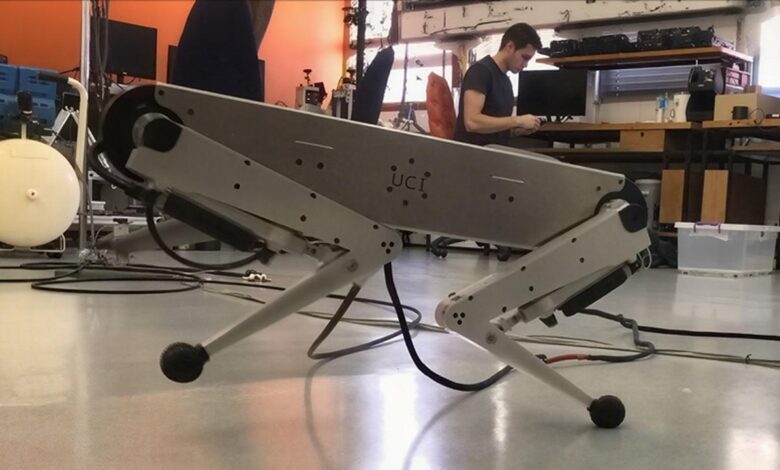
Robot Dog Motor is now used for practical tasks like inspecting infrastructure, studying the environment, and security. Moving these activities entail accuracy in movements, load carrying capacity and dependability under different operational conditions. Choosing the motor influences accuracy, responsiveness and the capacity of the robot to do it repeatedly with time. Not all motors meet these needs. When selecting a motor, consider torque, control flexibility, mechanical efficiency, and system integration. The following sections discuss motor features suitable for research and inspection.
How Does Torque Density Impact Performance?
In the case of robot dogs that are transporting sensors, cameras, or inspection devices, the density of the torque has a direct influence on mobility and energy consumption. Small high-torque-density actuators have sufficient joint power in a compact diameter. This allows the robot dogs to be stationary on rough surfaces, climb steep slopes and other obstacles, yet with a moderate weight of the whole system. The modern brushless DC motors utilize an optimized planetary gearbox to give them high torque and efficiency as compared to the traditional motors, which may not be able to balance the load and mobility.
Why Is Multi-Mode Control Essential for Research Applications?
When robot dogs are used in research or inspection work, it is important that they are precise. To ensure that the motors serve various operational needs, they have to support various control measures such as position, speed, and torque control. To give an example, torque control allows compliant interaction with delicate structures, whereas position control allows precise gait patterns in data collection. A few sophisticated motors have hybrid control modes, which combine torque and position feedback to allow smooth motion with different loads. Dual encoders are built in to enhance more accurate feedback, which assists in the stabilization of movement despite uneven surfaces. This kind of control is hard to obtain with the classical single-mode motors, which can bring lag, overshoot or positioning errors.
How Do Gear Design and Backlash Influence Accuracy?
The overall efficiency in the inspection and the performance of the research is heavily dependent on mechanical efficiency. Planetary gearboxes find application in the motors of robot dogs due to their high multiplication of torque within a small size. The gear ratio choice, 6:1 (or any other ratio) to suit agile joints and higher ratios to suit task-intensive tasks in terms of torque, will influence the accuracy and stability, particularly in quick directional changes. Backlash, or the amount that is lost in gear play, may cause lower accuracy and stability. The precision gears and correct lubrication of the motors reduce backlash, resulting in a smoother movement and steady joint operation. By contrast, traditional spur gears usually cannot offer this kind of repeatable precision in small robotics.
What Role Does Dynamic Response Play in Inspection Tasks?
The robot dogs assigned to genuine inspection procedures in the real world require making quick adjustments to the unpredictable environmental conditions. When used in industrial or hazardous conditions, high responsiveness is achieved by minimizing rotor inertia of motors, speed in current regulation, and optimization of driver boards. The characteristics provide stability when walking and during high-speed movements; the position of the sensors is accurate. Older motors, on the other hand, which have slower response times, can be inconvenient and pose a threat to the accuracy of the task.
Why Is Integrated Protection and Durability Critical?
Working and research conditions are tough. Motors are subjected to varying temperatures and repeated impact, as well as possible overloading. The use of reliability has been required to eliminate downtime or damage to equipment. Current robot dog motors have built-in protection measures against overcurrent, overvoltage, undervoltage and overheating. Thermal monitoring will keep constant performance when operating over a long duration. Mechanical components that withstand vibration and shock, including bearings that are hardened and reinforced housings, are used. These design aspects offer some sense of resilience that other industrial motors do not offer.
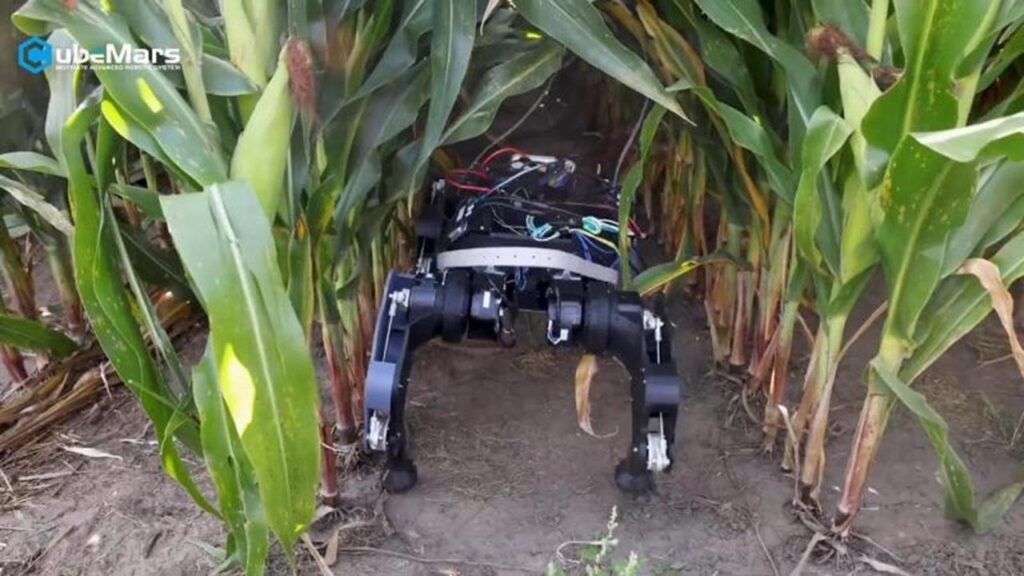
How Do QDD and Integrated Actuators Improve Functionality?
Conventional motor arrangements usually need individual parts of the motor, gearbox, encoder and driver board. This adds weight, wiring complexity and possible points of failure. Quasi-Direct Drive (QDD) and highly integrated actuators will integrate these factors together into one compact module. This design minimizes mechanical impedance and enhances back drivability, besides making the systems easy to assemble. The uniformity in torque, accurate motion and ease of integration with sensors and controllers provided by integrated solutions have also been valuable to research and inspection robots in terms of payload carrying capacity and ease of use in carrying sensors or inspection and measurement equipment without compromising mobility.
What Additional Features Enhance Research and Inspection Capabilities?
A robot dog can be enhanced to perform better in its work with several additional features:
- Adaptive PID Tuning: The automatic parameter tuning will provide smooth control without manual tuning to accelerate the deployment process.
- Plug-and-Play Connectors: Minimization of the installation time and wiring error makes it easier to maintain in a field setting.
- Thermal Stability: The electromagnetic design that is optimized to achieve torque output extends its operation time.
- Impact Resistance: When making a jump or traversal, the motor can endure the sudden shock on cross-roller bearings or reinforced output shafts.
All these characteristics contribute to the reliability and usability of the professional research and inspection plans.
Conclusion
The motor of a research has to compromise between control, stability, and torque. Increased density of torque provides powerful, small joints. High-res encoders and multi-mode control provide the ability to be in the right position and have a stable gait. To reduce backlash, planetary gearboxes reduce torque transmission. Its dynamic agility, protection and its long-lasting components facilitate working in extreme surroundings. This defeats the limits of conventional motors, decreases the complexity of systems, and raises the back drivability and accuracy. A purpose-built robot dog motor can improve mobility, accuracy and reliability, which are essential in navigating inaccessible areas, performing specific tasks, and helping to conduct high-end research, which are important to research teams.