Pauletta Washington: The Accomplished Actress, Musician, and Steady Force Alongside Denzel Washington

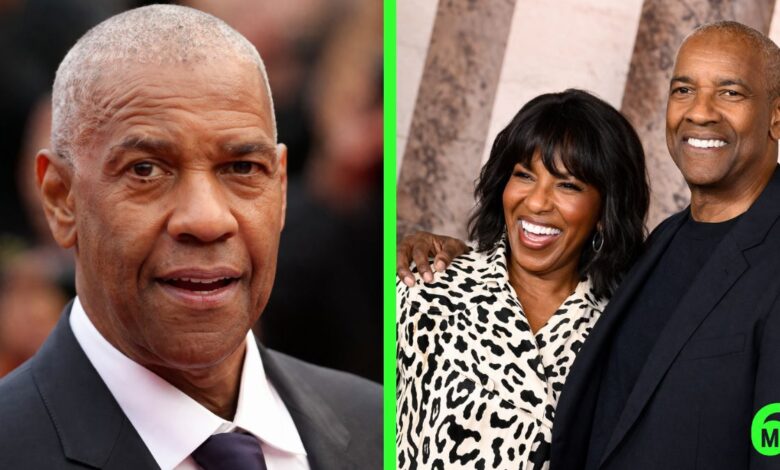
Denzel Washington’s public career has been detailed for decades. His awards, performances, and speeches define him as a leading American actor. Pauletta Washington, by contrast, is often viewed through the lens of his fame, though she has her own identity as an actress, vocalist, and classically trained pianist. Her public record includes work in stage, film, television, music, philanthropy, leadership, and a marriage that has endured since June 25, 1983. Examining Pauletta Washington is not about making privacy mysterious but recognizing the facts: she is a disciplined artist, a supporter of education and neuroscience, and a central figure in a lasting Hollywood family.
Profile Summary
| Field | Details |
|---|---|
| Full Name | Pauletta Pearson Washington |
| Relationship | Wife of Denzel Washington; married June 25, 1983 |
| Public Profile | American actress, vocalist, and classically trained pianist |
| Age | 75, based on a September 28, 1950 birth date |
| Residence | Los Angeles, California |
| Children | John David, Katia, Malcolm, and Olivia Washington |
| Known Philanthropic Interests | Brain care and neuroscience research through Cedars-Sinai; higher-education leadership at Spelman College |
| Education/Training | North Carolina School of the Arts; public biographies also credit further music study including Juilliard |
| Notable Screen Work | Wilma, Beloved, The Parkers, She’s Gotta Have It, Genius |
| Social Media Presence | Not emphasized in the main public biographies and institutional profiles reviewed for this article |
Who is Pauletta Washington?
Pauletta Washington is an American actress and musician whose public identity extends beyond her marriage to Denzel Washington. Institutional and entertainment biographies consistently describe her as a vocalist and a classically trained pianist, and her acting résumé spans stage, television, and film. She met Denzel during the period of the 1977 television film Wilma, later married him in 1983, and became the mother of their four children. Yet the most accurate way to understand her significance is not simply as a spouse in a famous marriage. She appears, in the public record, as an artist with formal training, a philanthropic figure tied to Cedars-Sinai’s neuroscience efforts, and a trustee at Spelman College. Her significance is therefore dual: she is both a creative professional in her own right and a stabilizing presence in a family whose children have also entered the arts and film production.
The Private Life of Pauletta Washington
Pauletta Washington is often described as private, but that description is too broad. She is not absent from public life; she has worked onscreen, performed on stage, attended premieres, served on boards, and participated in charitable initiatives. What is true is that she has not built her reputation through constant personal exposure. That distinction matters. In a celebrity culture that often rewards revelation, her public footprint suggests a different model of visibility: selective, purposeful, and tied to work, family, and institutions rather than confession. The record of appearances around family milestones, including support for Malcolm Washington’s The Piano Lesson premiere, shows someone present at consequential moments but not dependent on publicity to validate her role. That kind of public restraint has likely helped preserve the seriousness with which her family is viewed. It also explains why public curiosity around her remains high: she is visible enough to matter, but measured enough to remain dignified.
Early Life and Background of Pauletta Washington
What is publicly documented about Pauletta Washington’s early life points to artistic discipline rather than celebrity inheritance. Institutional profiles identify her as a graduate of the North Carolina School of the Arts and describe her as a classically trained pianist and vocalist. Entertainment reporting, citing earlier local coverage, adds that she began entering piano competitions at a young age and pursued additional music study beyond that formal foundation. Those facts matter because they place her origins in training and performance, not in tabloid mythology. Her public life did not begin with Hollywood marriage; it began with preparation. That background helps explain why she has always seemed comfortable in multiple artistic lanes, moving between acting, music, and live performance without treating any as a substitute for the others. It also explains the composure that has marked her public image for years. People often interpret elegance as mystique, when in fact it is sometimes the visible result of long practice, education, and professional self-command.
Marriage and Partnership with Denzel Washington
The marriage between Pauletta and Denzel Washington has lasted since June 25, 1983, making it one of the rare long-term unions in modern entertainment. Public interviews do not present it as a fairy tale without effort. Quite the opposite: Pauletta said in 2024 that there is “no secret,” adding that “we work at it,” while also describing the “basic love” they have for each other. Denzel’s public comments are equally revealing. He has credited her with making their house a home, raising their children, and doing “the heavy lifting,” and in later remarks said she “holds everything together.” These are not ornamental compliments. They suggest a division of strength and labor that he has openly acknowledged for years. The marriage’s longevity, then, is not just a celebrity milestone. It reflects a repeatedly stated ethic of work, loyalty, and mutual dependence, reinforced by public appearances where the two still move with ease, humor, and familiarity.
Pauletta Washington’s Role Behind the Scenes
The phrase “behind the scenes” can suggest women’s support without agency. For Pauletta Washington, the record shows something stronger: influence through steadiness and standards. Denzel has said she made their home, protected their children, and sacrificed for them, stating in 2023 she “holds everything together.” These are not passive traits, but describe authority in family life. The outcomes support this: four children with strong educational and professional paths and a family that collaborates on major projects like The Piano Lesson. Her role is about continuity, an often-unseen achievement that underpins what endures.
Family Life: Raising the Next Generation
The Washington family is one of the clearest ways to understand Pauletta Washington’s influence. Public reporting identifies four children: John David, Katia, and twins Malcolm and Olivia. All four have moved into film, television, or the broader creative industries. John David first pursued a career in professional football before becoming an actor; Katia works as a producer; Malcolm directed The Piano Lesson; Olivia has built an acting career. That pattern does not prove a scripted family plan, but it does suggest a household where art was treated as work rather than fantasy. Denzel once described performance in their home as a “team sport,” and Malcolm said in 2024 that Pauletta was “at the center” of The Piano Lesson, the film he dedicated to her. Those comments matter because they come from within the family itself. They imply that Pauletta’s contribution to the next generation was not merely emotional support, but the creation of an environment in which discipline, collaboration, and artistic seriousness could become normal.
Philanthropy and Community Engagement
Pauletta Washington’s public life also includes sustained philanthropic work, especially in brain care and neuroscience research. Spelman College’s profile states that she is one of the founding and executive members of The Brain Trust of Cedars-Sinai, a group focused on raising awareness and funds for brain care and research, and notes that she and Denzel have been involved with the organization for more than twenty years. Cedars-Sinai reporting adds substance to that involvement, describing her participation in Brain Trust efforts and noting the Pauletta and Denzel Washington Family Gifted Scholars Award in Neuroscience. This is not celebrity philanthropy in the shallow sense of lending a famous name to a gala. The public descriptions tie her work to long-term institutional support, fundraising, awareness-building, and educational opportunities for aspiring scientists. Her trusteeship at Spelman College adds a second pillar to that record, linking her not just to charitable giving but to governance and educational stewardship.
The Power of Privacy: Influence Without Publicity
Pauletta Washington’s life offers a useful case study in how privacy can function as a form of strength rather than retreat. She has never been invisible, but she has resisted the modern expectations. The public descriptions tie her work to long-term institutional support, fundraising, awareness-building, and educational opportunities for aspiring scientists. matters, a mother recognized by her children, and a philanthropist attached to durable institutions. That combination creates a different kind of authority. It shifts attention from revelation to reputation. In celebrity culture, privacy is often treated as suspicious, as though the refusal to overshare must conceal something. In reality, it can also signal boundaries, maturity, and control over one’s own story. Pauletta Washington’s public example suggests that influence can deepen when it is not constantly performed. Her life has remained legible through actions: marriage, work, parenting, and philanthropy. That is quieter than self-branding, but not less.
Public Curiosity and Misconceptions About Pauletta Washington
One common misconception is that Pauletta Washington exists only as “Denzel Washington’s wife.” The public record does not support that reduction. Goodman Theatre’s biography credits her with Broadway work and screen roles; public entertainment coverage identifies television and film performances, including The Parkers, She’s Gotta Have It, and Genius; institutional biographies emphasize her musicianship and training. Another misconception is that privacy means absence. It does not. She has remained active enough that recent family-centered coverage around The Piano Lesson made clear how central she still is to the Washington family’s cultural life. Public curiosity tends to flatten women adjacent to major male fame into symbols of support or mystery. Pauletta Washington resists both simplifications. She has a documented body of work, a public service record, and a family influence that others in the family have openly acknowledged. The better reading is not that she is hidden, but that she has chosen proportion over exposure.
Legacy and Future
Pauletta Washington’s legacy is already visible in three overlapping areas. First, there is the artistic record: acting credits, stage work, musical training, and screen appearances over many years. Second, there is the philanthropic and educational record: Cedars-Sinai, The Brain Trust, and Spelman College. Third, there is the family legacy, where her children’s work in acting, directing, and producing suggests a household shaped by discipline and creative seriousness. Future public attention will probably continue to arrive through those same channels rather than through personal self-promotion. That seems consistent with the life she has built. For that reason, her legacy is unlikely to be measured by volume of visibility. It will be measured by durability: a long marriage publicly described as hard-earned, children who collaborate across generations, institutions she has helped strengthen, and a career that stands on its own. In an age that often confuses attention with importance, Pauletta Washington represents a more lasting idea of impact.
Conclusion
Pauletta Washington deserves to be understood as more than a supporting name in someone else’s biography. The verified public record shows an actress, vocalist, and classically trained pianist with formal artistic roots, a marriage that has lasted more than four decades, a meaningful philanthropic presence, and an enduring role in shaping a family that has become a creative force in its own right. Her story is not built on constant disclosure, which may be exactly why it carries weight. She has remained visible where it counts: in work, in service, and in the testimony of the people closest to her. That combination gives her a distinctive place in American celebrity culture. She is not important because she stayed near fame. She is important because she helped define what that fame rested on: home, continuity, artistic discipline, and purpose beyond applause.
Read this too:Eric Keoghan: The Private Brother Behind Barry Keoghan’s Public Story
(FAQs)
1. Who is Pauletta Washington?
Pauletta Washington is an American actress, vocalist, and classically trained pianist. She is also known for her long marriage to Denzel Washington and her philanthropic work.
2. When did Pauletta Washington marry Denzel Washington?
Pauletta Washington married Denzel Washington on June 25, 1983.
3. How many children do Pauletta and Denzel Washington have?
They have four children: John David, Katia, Malcolm, and Olivia Washington.
4. What is Pauletta Washington known for professionally?
She is known for her acting work in projects such as Wilma, Beloved, The Parkers, She’s Gotta Have It, and Genius, as well as her work as a vocalist and pianist.
5. Where did Pauletta Washington study?
Spelman’s biography identifies her as a graduate of the North Carolina School of the Arts, and public entertainment coverage also credits her with additional music study, including Juilliard.
6. What philanthropic work is Pauletta Washington associated with?
She is tied to The Brain Trust of Cedars-Sinai and to the Pauletta and Denzel Washington Family Gifted Scholars Program in Neuroscience. She also serves on the Board of Trustees at Spelman College.
7. What has Pauletta Washington said about a long marriage?
In 2024, she said there was “no secret” and explained that a strong marriage requires work, along with a basic love for each other.
8. Why is Pauletta Washington often described as private?
She maintains a measured public presence focused on work, family, and philanthropy rather than constant personal exposure, even though she remains publicly active. That is an inference from her documented career and public appearances.