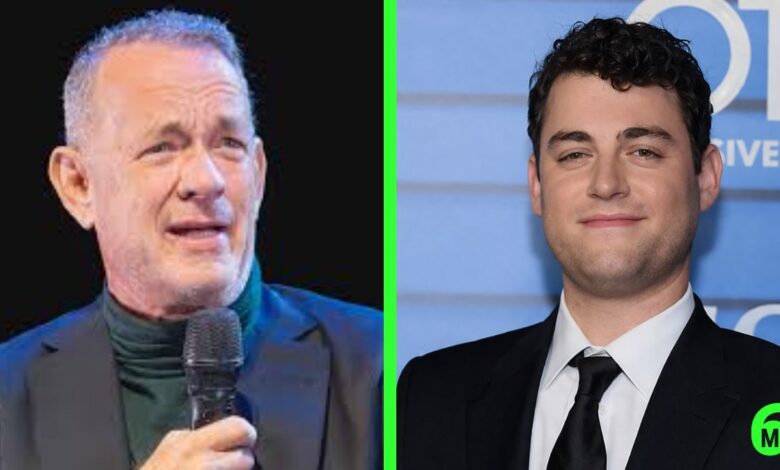
Tom Hanks ranks among the most recognizable actors of the modern era, while Rita Wilson has sustained a varied career in acting, producing, music, and philanthropy. In a family accustomed to public scrutiny, their youngest son, Truman Hanks, has chosen a distinctly different path. Instead of cultivating a celebrity persona, he has worked primarily behind the camera, contributing to film productions in technical roles before briefly appearing as the younger Otto in A Man Called Otto. This contrast distinguishes Truman Hanks. While his surname fuels public curiosity, records reveal a young film professional whose career is built on crew work rather than publicity. Examining Truman Hanks through facts highlights not gossip, but craft, family legacy, privacy, and the unique pressures of growing up in Hollywood’s shadow.
Profile Summary
| Key Detail | Information |
|---|---|
| Full Name | Truman Theodore Hanks |
| Date of Birth | December 26, 1995 |
| Age | 30, as of April 2026 |
| Parents | Tom Hanks and Rita Wilson |
| Siblings | Chet Hanks; half-siblings Colin Hanks and Elizabeth Ann Hanks |
| Birthplace | Los Angeles, California |
| Education | Stanford University, graduated in 2018 |
| Public Profile | Film crew professional and occasional actor |
| Known Screen Role | Young Otto Anderson in A Man Called Otto |
| Behind-the-Scenes Work | Camera-related work on productions including West Side Story; entertainment databases also list work connected to Black Widow and Wrath of Man |
| Residence | Not publicly detailed in reliable coverage reviewed; professionally tied to the U.S. film industry |
| Children | No public reporting located in major reviewed sources |
| Known Philanthropic Interests | No standalone public philanthropic profile identified for Truman himself; he is part of a family associated with major charitable causes |
| Social Media Presence | No major public-facing media profile stood out in the reviewed mainstream coverage |
Who Is Truman Hanks?
Truman Hanks is the youngest son of Tom Hanks and Rita Wilson, and also the youngest of Tom Hanks’s four children. What distinguishes him in public coverage is not a loud celebrity image, but the opposite. Reporting on the family consistently presents Truman as someone who has largely worked behind the camera, entering the film world through technical and production roles rather than pursuing an aggressive acting career. That makes him an unusual figure in the orbit of a famous Hollywood family. He is known to general audiences mainly because he played the younger version of his father’s character in A Man Called Otto, but the broader record suggests that this was less a pivot into fame than a visible moment in a career that had already been developing in quieter industry spaces. In that sense, Truman Hanks matters not as a tabloid figure, but as an example of second-generation Hollywood choosing labor and craft over celebrity branding.
The Private Life of Truman Hanks
The most striking thing about Truman Hanks is how little he has made of his family name as a public identity. Reliable coverage of him is thin, and that scarcity is itself meaningful. In celebrity culture, the children of major stars often become public figures long before they have substantial work experience. Truman’s public record suggests the reverse. He appears occasionally at family-linked premieres and in entertainment coverage, but the coverage is usually tied to a specific project rather than an ongoing public persona. That restraint has helped shape his image. Instead of becoming known for interviews, controversy, or social media visibility, he is best known for his famous family and a growing film résumé. For a person raised in the glare of extreme fame, that low-profile approach reads less like absence and more like discipline. It keeps the focus on verified work and leaves very little room for a manufactured celebrity narrative.
Early Life and Background of Truman Hanks
Publicly confirmed biographical details about Truman Hanks are limited but consistent. He was born in Los Angeles on December 26, 1995, to Tom Hanks and Rita Wilson, making him a member of a family already deeply rooted in American film and television. Entertainment profiles also note that he graduated from Stanford University in 2018. That educational detail matters because it challenges the simplistic assumption that he drifted into film work via family ties. The available record points to a more deliberate path: university, then entry-level industry work, then steady accumulation of credits. While many children of famous actors are publicly filtered almost entirely through lineage, Truman’s background shows something steadier. He benefits from privilege and access, certainly, but the visible outline of his life is one of preparation, education, and technical learning. That combination explains why his career has been pragmatic rather than performative.
Truman Hanks and the Hanks Family Legacy
Any article about Truman Hanks must acknowledge his family’s prominence. Tom Hanks’s career made the surname globally recognizable, and Rita Wilson’s adds industry credibility and public respect. The family has a broad footprint in entertainment. Yet Truman has not mirrored the most public aspects of that legacy: he avoids celebrity interviews and branding. Instead, evidence places him in essential production roles. While the Hanks name surely opened doors, Truman’s inheritance is more about familiarity with the film industry and the value of work off-camera than just fame.
Truman Hanks’s Role Behind the Scenes
This is the section where the verified record becomes most useful. Public entertainment profiles describe Truman Hanks as someone who works behind the camera, and the Society of Camera Operators’ published breakdown for Steven Spielberg’s West Side Story lists Truman Hanks as a camera intern. That credit is valuable because it places him within the technical hierarchy of a major film production rather than in a symbolic or honorary role. Other entertainment databases connect him to projects such as Black Widow and Wrath of Man, again reinforcing that his work has been rooted in crew departments rather than publicity. In practical terms, this paints a clear picture. Truman Hanks did not first emerge as a headline actor and later claim interest in the filmmaking craft. The visible evidence runs in the opposite direction. He appears to have learned from within production, where reputation is shaped by competence, reliability, and teamwork more than by name recognition alone.
Acting Work and A Man Called Otto
Truman Hanks’s most widely noticed screen role came in A Man Called Otto, where he played Young Otto Anderson, the younger version of the character his father portrayed. That fact gave the casting a built-in emotional and promotional hook, and Tom Hanks openly spoke about how special it was to work with his son on the film. Still, it is important to read the moment accurately. The role did not suddenly transform Truman into a conventional celebrity actor. Instead, it introduced mainstream audiences to someone who had already been linked to production work. Entertainment profiles also connect him with smaller on-camera appearances in News of the World and Asteroid City, but A Man Called Otto remains the project most clearly attached to his public identity. The reason it resonated is obvious: it merged family resemblance, narrative fit, and a rare on-screen collaboration between father and son. But even here, Truman’s story remains grounded in modesty rather than reinvention.
Family Values, Privacy, and Public Attention
Because Truman Hanks is the child of two famously visible parents, privacy becomes one of the most revealing themes in his story. Tom Hanks and Rita Wilson are not reclusive figures, but they have long cultivated a public image built on professionalism, steadiness, and family loyalty more than scandal. Truman’s own low-profile path fits comfortably within that pattern. Public attention follows him because of who his parents are, yet his visible choices suggest an effort to keep attention in proportion to his work. That matters in an era when inherited fame is often monetized immediately. By contrast, Truman’s public footprint stays unusually narrow. The effect is that curiosity around him tends to exceed the available facts. For biographical writing, that creates a challenge but also an insight: his privacy is not an empty space to be filled with rumors. It is part of the story, and it signals a preference for being known through contribution rather than visibility.
Philanthropy and Public Responsibility in Family Context
There is no major public philanthropic profile for Truman Hanks himself in the sources reviewed, and it would be wrong to invent one. What can be said, factually, is that he belongs to a family with a strong public charitable footprint. Rita Wilson has longstanding ties to the Women’s Cancer Research Fund, where she is listed among the founders, and both Wilson and Tom Hanks have been recognized by the USC Shoah Foundation for humanitarian commitment and support of veterans. Coverage of the family’s connection to Greece also notes recognition linked to their support after the 2018 wildfires. The careful way to read this in relation to Truman is not to assign him causes he has not publicly claimed, but to note the environment of public responsibility around him. When a person grows up in a household known for visible civic engagement, that context shapes how the public reads their values, even when the individual has chosen a quieter path.
Public Curiosity and Common Misconceptions
The biggest misconception about Truman Hanks is that he is primarily a celebrity offspring who only entered film work through a one-off acting opportunity. The stronger reading of the record is that his acting visibility came after, or alongside, technical work that had already placed him on major productions. Another misconception is that a limited public profile means a limited career. In film, some of the most important careers are largely invisible to the public because they happen in departments audiences rarely discuss. There is also a tendency to flatten all children of famous actors into the same story of inherited spotlight. Truman’s case is more specific. Yes, his surname shapes public curiosity, and yes, A Man Called Otto heightened that interest. But the available sources do not support the idea of a heavily managed star launch. They support a narrower, more grounded image: an industry insider at the beginning of what may become a longer technical or hybrid film career.
Legacy and Future
It is too early to talk about Truman Hanks in terms of a finished legacy, but not too early to describe the direction of his public identity. So far, that identity is built on three durable elements: family lineage, technical film work, and unusual privacy. That combination gives him a distinct place among second-generation Hollywood figures. He is connected to one of the industry’s best-known families, yet his emerging profile is less about inheriting center stage and more about learning how the machinery of filmmaking actually works. Whether he continues primarily in crew roles, expands into cinematography, or takes occasional acting parts, the existing record suggests that his future will likely be judged most seriously when it is tied to tangible work. For now, Truman Hanks remains compelling precisely because the public knows just enough to see the outline of a career, but not enough to mistake him for a manufactured celebrity product.
Conclusion
Truman Hanks occupies a rare space in contemporary celebrity culture. He is undeniably part of a famous family, yet the verified facts about him do not suggest a person seeking easy visibility. They point to a film worker who has moved through technical departments, studied at Stanford, and stepped into acting only selectively, with A Man Called Otto serving as his clearest public moment so far. That makes him more interesting than a standard “celebrity child” profile. His story is about restraint as much as it is about access. It is about what it means to grow up in the shadow of global fame and still choose the quieter side of the industry. For readers looking for scandal or mythology, there is not much to hold onto. For readers interested in how legacy, craft, and privacy can coexist, Truman Hanks offers a much stronger subject. His role may be quiet, but it is not insignificant.
Read this too:Zoe Grace Quaid: Inside the Private Life of Dennis Quaid’s Daughter
(FAQs)
1. Who is Truman Hanks?
Truman Hanks is the youngest son of Tom Hanks and Rita Wilson, and he works in the film industry, mostly in behind-the-scenes roles.
2. When was Truman Hanks born?
He was born on December 26, 1995.
3. Did Truman Hanks go to college?
Yes. Public entertainment profiles say he graduated from Stanford University in 2018.
4. What is Truman Hanks known for in film?
He is known for behind-the-camera work and for playing Young Otto in A Man Called Otto.
5. Is Truman Hanks an actor like Tom Hanks?
He has acted in some screen roles, but the public record describes him mainly as someone who has worked behind the camera.
6. What films has Truman Hanks been connected to behind the scenes?
Reliable sources confirm he worked on West Side Story as a camera intern, while entertainment databases also list Black Widow and Wrath of Man among his credits.
7. How many siblings does Truman Hanks have?
He has one full brother, Chet Hanks, and two older half-siblings, Colin Hanks and Elizabeth Ann Hanks.
8. Is Truman Hanks active in public life?
He maintains a relatively low public profile compared with many celebrity children, appearing in coverage mostly when tied to family or film projects.