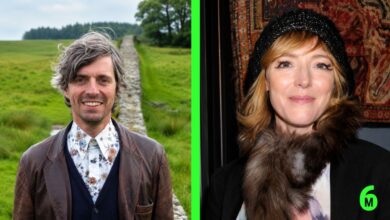
Joséphine de La Baume and Mark Ronson: The Actress, Musician, and the Public Relationship That Drew Lasting Interest

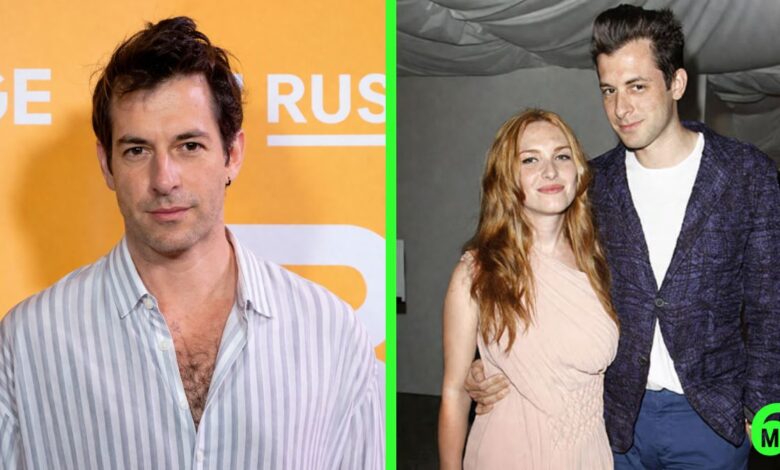
Mark Ronson’s fame rests on hit records, red carpets, award stages, and a public creative life spanning pop, film, and fashion. Joséphine de La Baume entered that orbit as much more than “Mark Ronson’s wife.” Already a French actress, singer, and creative force across film, television, and music, her marriage to Ronson (2011–2018) remains a much-searched chapter in her public story. But focusing on the relationship overlooks her larger life and work. De La Baume has balanced a career across acting and music, from films like Rush and The Hitman’s Bodyguard to the band Singtank and her later project Film Noir. The true story is not about vanishing into celebrity marriage, but about a performer continually shaping a multi-hyphenate career on her own terms.
Quick Bio
| Key Detail | Information |
|---|---|
| Full Name | Joséphine de La Baume |
| Relationship | Former wife of Mark Ronson |
| Public Profile | French actress, singer, film director, and model |
| Age | Born in 1984 |
| Residence | Public interviews place her between Paris and London, with later coverage describing her as based in London |
| Children | One child has been publicly reported |
| Known Philanthropic Interests | No major public philanthropic platform is widely documented in mainstream profiles |
| Social Media Presence | Public Instagram presence documented in search results |
Who Is Joséphine de La Baume?
Joséphine de La Baume is a French actress and singer born in Paris in 1984. Over time, she has worked on French, British, and American productions, with screen credits including Johnny English Reborn, One Day, Rush, Listen Up Philip, and The Hitman’s Bodyguard. Her music career has followed a parallel route. She first performed with her brother Alexandre in Singtank, then later fronted Film Noir, a project that leaned into garage rock and a more noir-styled aesthetic. That creative range matters when discussing her connection to Mark Ronson. She was never simply adjacent to entertainment fame; she was already part of it. The public interest in her relationship with Ronson is real, but it sits within a wider career spanning acting, songwriting, performance, and image-making.
The Public Life and Personal Boundaries of Joséphine de La Baume
De La Baume occupies an unusual space in celebrity culture. She is visible enough to be recognizable from film roles, fashion coverage, and music projects, but not so overexposed that every part of her private life becomes content. That distinction helps explain why public curiosity around her has often clustered around relationships rather than around the slower, steadier work of her career. Interviews over the years show someone comfortable speaking about craft, cities, style, and music, while keeping intimate details relatively contained. That is not secrecy so much as selectivity. In celebrity media, restraint can look mysterious simply because it is less common than constant disclosure.
Early Life and Background of Joséphine de La Baume
What is publicly known about her early life is straightforward. She was born in Paris in 1984 and later studied fine art and acting at the American University in London, according to profile coverage. Those two cities, Paris and London, have remained central to how she describes her life and sensibility. In interviews, she has spoken about growing up in Paris and living between Paris and London, suggesting a biography shaped by movement between French and British cultural worlds rather than a single national lane. That duality also helps explain her career path: French by birth and style, but comfortable working in English-language film and television.
Marriage and Partnership with Mark Ronson
Mark Ronson and Joséphine de La Baume married on September 3, 2011, in Provence, France. Coverage at the time framed the wedding as fashionable and high-profile, which made sense given Ronson’s public standing and de La Baume’s place within style and entertainment media. They had reportedly dated since around 2009. The marriage became a regular point of reference in profiles about both of them, especially because Ronson was already a globally known producer and de La Baume moved naturally in fashion and film circles. In May 2017, reports said she filed for divorce, citing irreconcilable differences and listing April 21, 2017, as the date of separation. Their divorce was later reported as finalized in October 2018. They had no children together. These facts are well-established in entertainment coverage, but the larger takeaway is quieter: their relationship was public, yet its ending was handled with relative restraint rather than public spectacle.
Joséphine de La Baume’s Work Beyond the Headlines
The most useful corrective to relationship-driven coverage is her filmography and discography. On screen, de La Baume has worked across genres and markets, from costume and period work to thrillers and mainstream action films. In music, her earlier collaboration with her brother in Singtank showed a softer indie-pop direction, while Film Noir pushed into a darker, more garage-driven sound. Interviews suggest that this was not branding for its own sake but a genuine extension of her taste and artistic personality. That continuity matters. Even as headlines often attached her name to Ronson, her own output kept moving. Her career reads less like a celebrity side note than like a long-running creative practice with changing forms.
Family Life and Motherhood
After her marriage to Ronson ended, de La Baume’s later personal life entered public view in a limited, carefully bounded way. Coverage has linked her to Carlos O’Connell, and Irish media reported in early 2023 that O’Connell said they were about to welcome a baby girl; later reporting referred to the birth of their first child. That is enough to establish motherhood as part of her current life, but not enough to justify intrusive storytelling. The responsible reading is simple: this is a public figure who has allowed only a narrow window into family life. That narrowness is itself informative. It shows a line between what can be confirmed and what should remain private.
Public Presence, Style, and Creative Identity
Part of de La Baume’s appeal has always been that she fits awkwardly, and therefore interestingly, into standard celebrity categories. She has been profiled as an actress, singer, muse, model, and style figure, yet those labels do not fully contain her. Fashion coverage often notices her because she presents an identifiable aesthetic, but interviews point back to the work: film sets, songs, performance, and collaboration. That makes her public image less about pure glamour and more about artistic atmosphere. She has often come across as someone whose style is inseparable from her creative life rather than a substitute for it.
The Power of Privacy: Influence Without Constant Publicity
Privacy is often misunderstood as the absence of something. In de La Baume’s case, it is better understood as proportion. She gives enough to sustain a public career, yet not so much that her personal life overwhelms the work. That is why coverage of her can feel fragmented: there are clear facts about her films, music, marriage, and later motherhood, but not a constant stream of confession or self-disclosure. In a culture that rewards overexposure, that choice can make a figure seem elusive. The more grounded interpretation is that she has maintained control over narrative emphasis. Her public record privileges craft over commentary.
Public Curiosity and Common Misreadings
The most common misconception about Joséphine de La Baume is that she is primarily notable for her relationship with Mark Ronson. Search patterns may reinforce that, but her career record does not. Another recurring simplification is to treat her as a fashion-world personality first and a working performer second. Public sources show the reverse is at least as true: she has accumulated acting credits over the years and across countries, and her musical work has evolved across multiple projects. The persistence of these misreadings says as much about celebrity media as it does about de La Baume. Relationships create searchable hooks; careers require more attention.
Legacy and Future
Joséphine de La Baume’s legacy is still being written, but the pattern is already visible. She has built a career that spans media without collapsing into a single identity, while retaining a noticeable degree of personal boundaries. That combination is harder to maintain than it looks. Public recognition tied to a famous marriage can easily flatten a person’s own work, yet her acting and music careers continue to provide a fuller measure of who she is. The future, judging by recent interviews and credits, remains rooted in that same mix of screen work, music, and creative reinvention.
Conclusion
Joséphine de La Baume remains best known in some corners of the internet through the keyword pairing of “Joséphine de La Baume.Mark Ronson,” but that is only one chapter of her public life. The confirmed facts tell a broader story: a Paris-born actress and singer who studied in London, built credits in film and television, developed a music career first with Singtank and later with Film Noir, married Mark Ronson in 2011, and finalized a divorce in 2018 before moving into a later stage of life that now includes motherhood. What stands out most is not scandal or headline-grabbing reinvention, but continuity. She has kept working, kept evolving, and kept a measure of privacy in an era that rarely rewards it. That may be the clearest explanation for her lasting fascination: she is visible, but never entirely consumed by visibility.
Read this too:Ludlow Ogden Smith and Katharine Hepburn: The Quiet Life Behind a Hollywood Legend
(FAQs)
Who is Joséphine de La Baume?
She is a French actress, singer, film director, and model born in Paris in 1984.
Was Joséphine de La Baume married to Mark Ronson?
Yes. They married on September 3, 2011, in Provence, France.
When did Joséphine de La Baume and Mark Ronson separate?
Reports on her divorce filing said the separation date was April 21, 2017.
When was their divorce finalized?
Entertainment coverage reported that the divorce was finalized in October 2018.
Did Joséphine de La Baume and Mark Ronson have children together?
No. The divorce coverage stated that they had no children together.
What movies is Joséphine de La Baume known for?
Public film listings and profiles list titles such as Johnny English Reborn, One Day, Rush, and The Hitman’s Bodyguard.
What music projects has she been part of?
She performed with her brother in Singtank and later fronted Film Noir.
Does Joséphine de La Baume have children now?
Public reporting indicates she later welcomed her first child with Carlos O’Connell.