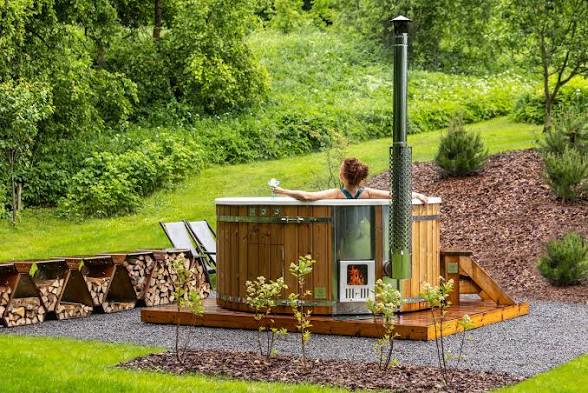
A rather strange thing happened to the British hot tub market over the last few years. The inflatable lay-Z spa hype assembly has gradually died down, those old acrylic plastic hot tubs are now looking quite dated, and many buyers who would have defaulted to a fourgrand electric model in the past are now contemplating wooden barrels with chimneys sticking out of them in the purchase instead.
Wood-fired hot tubs have quietly displaced the regular acrylic models as the garden hard-to-get item of the year. The attraction is pretty straightforward: they look amazing, hardly cost anything to run, and the whole feeling that you get from one of them simply cannot be matched by a plastic tub with LED lights. In 2026, they are to be seen everywhere, from Devon farmhouses to the suburban gardens of Croydon.
Their popularity aligns perfectly with the overall change in how Brits are thinking about outdoor wellness. Cold plunges saunas garden rooms and fire pits all have their respective markets now. The wood-fired hot tub fits well into this range, and for many buyers, it is the focal point of the entire installation.
Why Wood-Fired Beats the Plastic Alternative
The main difference is of course the visual. A cedar or thermowood barrel with a brass hoop and a curl of smoke rising from the stove looks like something one would expect to find at a Scandinavian retreat. An acrylic hot tub is the kind of thing one would see at a caravan park in 1998. That visual gap is the first thing that matters to a lot of people than the writers admit, a garden feature which you are proud to show people is being used more often.
But the experience differ quite a lot as well. Wood-fired tubs heat more gradually and retain the heat better once they are at the desired temperature, giving rise to a slow and intense type of bathing in contrast to the typical electric unit with jets and bubbles. In fact, most wood-fired tubs don’t have any jets, and users almost unanimously stop missing them within a week. The bath is the event, not the hydrotherapy gadgetry.
There is also a ceremony to it that electric tubs simply cannot match. Lighting the stove in the afternoon, watching the temperature rise for two or three hours, adding a log as the sun is setting; it is not a chore but part of the pleasure. Many owners have pointed out that it is the reason why they chose wood-fired even before price came into the conversation.
The Cost Story That Changed in 2025
However, the economics changed dramatically when UK electricity prices went up and remained high. Operating a traditional plastic hot tub throughout the year now costs most families between 800 and 1,500 in electricity alone, depending on the level of insulation, condition of the cover, and frequency of use. That is even before considering chemicals, filter changes, and the inevitable repair service when some electronic component breaks down.
On the other hand, a wood-fired tub hardly has any running cost. One heating cycle will use about 10 to 20 kilograms of wood which comes to a few pounds at most if you are purchasing seasoned hardwood, and virtually nothing if you are getting your wood from a source. Unlike a plastic tub, there is no pump running 24 hours a day, no heating element struggling to maintain 38 degrees through a cold night. When you are not using it, the hot tub does not cost a thing.
Moreover, front-end costs are also becoming more attractive. Basic wood-fired tubs today cost 2,500 to get a nice thermowood barrel with a stainless steel stove, which is on par with a plastic tub of mid-range quality and far less expensive than the premium acrylic models that consumers purchased three years ago. Sophisticated cedar tubs with built-in seating and external heaters are in the 5,000 to 8,000 range, still
What You Actually Need to Know Before Buying
The material is really the key thing that the marketing glosses over. Thermowood, which is basically heat-treated pine or spruce, is by far the most popular option and it delivers a very good overall mix of affordability, durability, and resistance to rot. Western red cedar is the high-end choice. It will develop a lovely character over time, but it is much more costly and requires more maintenance to keep it looking good.
Larch, on the other hand, represents a sort of compromise and a middle ground that has recently seen a spike in popularity. Deciding where to put your stove is also a major factor. Internal stoves are the ones that are inside the tub itself which heats up the water in no time and doesn’t call for any extra space, on the downside, it means that the same hot metal box will be in direct contact with the people in the bath. External models are the ones fixed outside of the tub and the water is run through them by means of a thermosiphon which is very child’s friendly, easier to keep stoking without getting out however they are a bit more pricey and occupy a little more space.
How big your tub is really something you should consider realistically. A hot tub for 6 people sounds great until you realise that you will hardly ever be using it with 2 or 3 people, and then you will always be heating a much bigger amount of water for the whole time without any advantage. Tubs for 4 people are the perfect size for most UK gardens: large enough for a
The Wider Wellness Setup
A lot of wood-fired hot tub owners don’t stop at the tub. The strongest growth in the category is among buyers putting together a combined outdoor wellness setup, and that’s where the purchase decision starts getting interesting.
The natural pairing is a sauna and a hot tub, ideally with some form of cold water option in between. The contrast cycle, hot sauna, cold plunge, warm soak, has become the default evening routine for buyers in this space, and it’s genuinely more pleasant than any single element on its own. Specialist suppliers like UK Saunas have seen a clear uptick in customers planning the sauna element alongside a wood-fired tub rather than as a separate project years later, which makes the overall layout easier to design and tends to produce a better end result.
Planning the two together also lets you share elements sensibly. A single changing area, one covered path from the house, shared decking, and coordinated screening cost less than building each piece separately. Buyers who sequence it properly often spend less overall than those who add a sauna two years after the tub.
Installation, Maintenance, and British Weather
The practical aspect of having a wood-fired tub is pretty clear, though it’s not something that happens magically. Firstly, the tub must rest on a level base. The best option would be concrete pavers or a slab made specifically for this purpose; a completely wooden tub filled with water weighs more than a tonne, so the ground underneath must be strong enough. Usually, the sellers will give you details of the kind of base they want, and it’s a good idea to follow their recommendations instead of making up your own.
Keeping the water clean is, in some respects, less complicated than with acrylic tubs but, in other ways, it’s more challenging. You don’t require the same substantial chemical treatment because the water is not kept hot for several weeks, but on the other hand, you have to change the water more often. Generally, owners empty and fill the tubs every two to four weeks dependent on how much they use them, which might sound inconvenient however it very soon becomes a regular thing. Some take the route of gentle sanitisers for the longest periods; others completely go down the route of empty-and-refill.
British weather is not so much of an issue as the buyers imagine. If you put a good thermal cover on the tub when it is not in use, it will protect both the water and the wood, and the tubs themselves can handle frost well as long as they are not left drained in the middle of winter with water trapped in the stove coils. It is entirely feasible to use them all year round and many owners have said …
The Upgrade That Keeps Earning Its Keep
Wood-fired hot tubs are on trend for 2026 because they honestly provide something that the plastic versions never did. The operating expenses add up, the looks fit British gardens better than a screen moulded shell ever could, and the pleasure itself is something that people anticipate rather than feel they have to use to justify the expense.
The purchasers entering this market now are also changing their minds compared to a few years ago. Instead of viewing a hot tub as a one-off buy, more of them are incorporating it into the design of their whole outdoor wellness area, and those types of projects generally hold up over time. For a country that has for a most part left relaxation to gyms and spa resorts, a wood-fired tub at the bottom of the garden is a truly different offer, and a very difficult one to regret.