Global Property Trends 2026: Why Dubai Remains a Magnet for International Investors

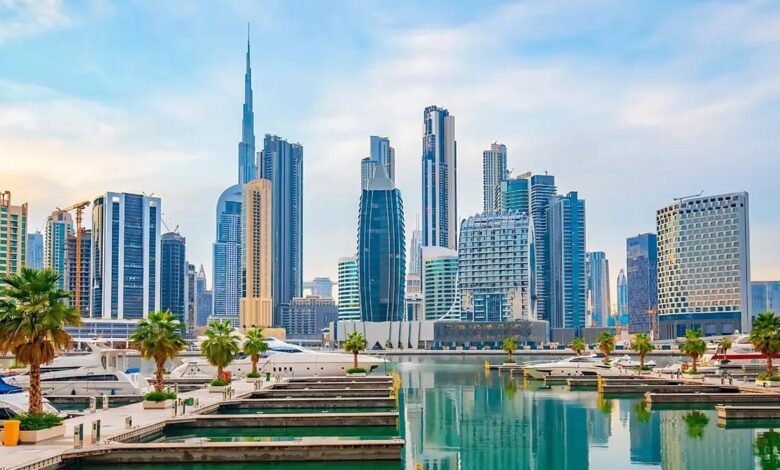
Thanks to investor-friendly policies, a vibrant property sector, and master-planned developments, which have sustained Dubai’s position among global investment destinations well through the year 2026.
With the exceptional influx of high-net-worth individuals, surging demand for luxurious properties, robust appreciation, and a strong focus on sustainable projections, the city is outperforming its competitors.
Let’s dive into the guide to understand the trends shaping global capital flows into real estate and see why masterfully executed neighborhoods like Dubai Hills Estate consistently appeal to international investors.
Dubai Real Estate Trends Shaping Investment in 2026
- Master-planned Communities: Investment That Scales, Governance That Appeals
Property investors from around the globe are increasingly attracted to fully furnished, amenity-rich neighborhoods instead of generic land plots. Dubai has vigorously joined the competition and has surpassed many global hubs in the fast release and completion of master-plan districts.
Developments like Dubai Hills Estate are a visionary example of this trend. Occupying a massive 2,700-acre land, an impressively built championship golf course, lush parks, healthcare, and an international-standard school make properties in Dubai Hills Estate thrive fast and furious in both rental and capital appreciation.
- ESG & Sustainability: A Core Criterion for Savvy Global Investors
Eco-friendly developments no longer remain a niche selling point but have been transformed into an essential demand driver. Foreign investors chasing properties in Dubai now prefer assets rooted in green certifications, energy performance, operational cost efficiency, and pedestrian-friendly paths.
Dubai is responding to environmentally friendly real estate demand with the highest ratio of green spaces, integrated walking and cycling routes, efficient building systems, and LEED-certified ventures.
Scalable neighborhoods like Dubai Hills Estate feature water conservation measures and incorporate renewable energy sources like solar panels. Moreover, a huge part of the community is dedicated to verdant landscapes, lush parks, and 1,800 trees.
The recent emergence of Ghaf Woods in Dubai plans to plant 35,000 trees, which aligns with global ESG mandates. Such cautious inclusions draw smart international investors who treat real estate as a long-term asset.
- Return-Ready Promise & Secondary Market Liquidity
Unlike many real estate hubs currently dependent on the off-plan segment, Dubai in the first half of 2025 exhibited a phenomenal activity in secondary and ready inventory in addition to the off-plan segment’s exceptional success.
Amidst the soaring volumes and values across the city, Dubai Hills Estate becomes a crown jewel for international investors. According to the reports revealed by Khaleej Times, sales prices of off-plan units surged AED 2,479 psf, while ready inventory stood at AED 2,362 psf.
The ready apartment and villa market reports a significant price appreciation. For instance, villas in Dubai Hills Estate’s resale market have witnessed an 18% surge in price momentum.
Liquidity in the secondary market is crucial among international investors who chase buy-to-let units or focus on resale transactions. Such units offer visible comparables, lower risk compared to long-construction-cycle developments, and an established rental yield history.
- Location Incentive & Lifestyle Demand
Global property trends in 2025 lay significant emphasis on lifestyle provision rather than just offering square footage. Lifestyle-enhancing facilities mean availability of open spaces, large parks, robust transport connectivity, integrated retail, and access to trusted healthcare services.
Dubai Hills Estate corresponds to most of these facilities. It encompasses a premium mall, a whopping park and golf club, features top-tier primary & secondary schooling facilities, and keeps hospital services integrated.
Moreover, the community supports wide internal roads for commuting or walking, while external connectivity fosters links between its residential ecosystem and other business nodes.
Such lifestyle orientation draws both end-users, including families relocating or upgrading, as well as investors chasing high rental demand and a stable tenant profile. This fusion reinforces both capital appreciation in the long run and short-term rental yields within high-demand master plans.
- Policy Advantage & Investor-Friendly Ecosystem
A cutting-edge policy framework is another major success milestone for the Dubai real estate industry. The city underpins foreign investment in property via extended residency visas linked to property investment, transparent title deed transference, and relaxed, freehold ownership rules.
Moreover, emerging drivers like residential REITs are also fortifying investor confidence. This investment vehicle pools capital from various investors and enables income generation throughout the property purchase and management process.
As Dubai unveils more regulatory clarity and institutional gateways like REITs, investors from around the world can encounter less friction to deploy their capital in real estate without needing to manage daily operations personally.
These bespoke reforms support the city’s position beyond a developer-led metropolis to a regulated investment urban place where exit options are available apart from direct ownership.
- Mixed-Use Plots & Land: A Strategic Asset to Own in Dubai
Global property investors are also eyeing land plots in well-positioned communities. Capital allocators are treating such areas as a scarce fence, particularly if they are available within or near high-demand master-plan communities.
Besides a consistent stack of off-plan releases, Dubai features such plots within established master developments like Dubai Hills or within the recently emerging neighborhoods like Dubai South or Dubai Islands. Such availability benefits investors in both the appreciation of property values and the immediate leasing income.
Due Diligence & Risk Consideration
Despite a celebratory performance, Dubai still faces several challenges like other global markets. Analysts predict price moderation from late 2025 due to a significant increase in new-unit supply. Smart investors are cautiously navigating the market and forecasting market trends by diversifying their capital across selective off-plan projects, mature segments, and rental-yielding assets.
Dubai Hills Estate: A High-Performance Modern Master Planning
Dubai Hills Estate (the green heart of Dubai) embodies almost all the facets that attract global property investors. Its Emaar-led development, staged infrastructure rollout, flourishing secondary market, and incorporated social facilities accentuate its investment resilience.
Furthermore, properties in Dubai Hills Estate portrayed value appreciation (13.47%) and remarkable rental yields (6.0%). This consistent demand is supported by the astounding end-user demand toward DHE and adjacency to leisure and business hubs.
What exhilarates global investors is the community’s perfect correspondence to environmental design that draws ESG-conscious buyers to tree-lined boulevards, energy-efficient homes, and spacious parks.
Closing In!
In a world where policy advancement, sustainability integrations, and lifestyle nodes shape real estate investment, Dubai remains a beacon of opportunity for foreign investors. The city’s dynamism in real estate mixes regulatory reforms with developer-led community planning to create a scalable, maturing investment atmosphere.
Master plan neighborhoods in Dubai showcase the careful engineering for mixed-use products, comprehensive lifestyle provisions, and promises both appreciation of property values and rental yields. If you are chasing a pragmatic and ambitious property destination, the evolved ecosystem of Dubai makes the city a compelling and globally appealing hub for investment in 2025.