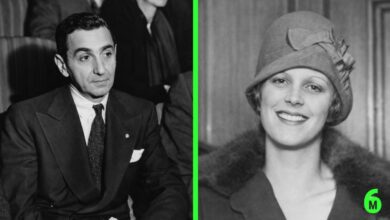
Evelyn Ella Almond and Jodie Foster: The Quiet Architect Behind a Public Icon


Few figures in modern cinema have balanced early stardom, intellectual rigor, and artistic longevity as deftly as Jodie Foster. A prodigy who transitioned from child actor to two-time Academy Award winner, Foster’s career is often cited as a rare example of Hollywood success unmarred by scandal or creative stagnation. Yet behind that carefully steered ascent stood a woman who deliberately avoided the spotlight herself: Evelyn Ella Almond, better known as Evelyn “Brandy” Foster.
This article examines Evelyn Ella Almond not as a celebrity, but as a private individual whose influence was profound precisely because it was exercised away from public attention. Drawing only from verifiable public records, interviews, and historical reporting, the goal here is not to romanticize or speculate, but to understand how her background, values, and decisions shaped one of the most disciplined careers in American film. In doing so, the piece also explores a larger theme: how privacy, when consciously maintained, can be a source of power rather than obscurity.
Quick Bio
| Detail | Information |
|---|---|
| Full Name | Evelyn Ella Almond |
| Also Known As | Evelyn “Brandy” Foster |
| Relationship | Mother of Jodie Foster |
| Public Profile | Private individual; former manager |
| Birth Year | 1928 |
| Place of Birth | Illinois, United States |
| Death | May 2019 (Los Angeles) |
| Children | Jodie Foster, Buddy Foster |
| Profession | Big band singer, Hollywood publicist, talent manager |
| Known Interests | Child advocacy in entertainment, education-focused roles |
| Social Media Presence | None (never maintained public accounts) |
Who Is Evelyn Ella Almond?
Evelyn Ella Almond occupies a rare position in Hollywood history: widely acknowledged, profoundly influential, and yet personally elusive. Publicly, she is best known as the mother and early manager of Jodie Foster. Substantively, she functioned as a strategic gatekeeper during a period when child actors were routinely overworked, underprotected, or poorly guided.
Her significance lies not in celebrity, but in authorship—authorship of boundaries, career choices, and long-term planning. Unlike many parents of child stars, Almond did not seek visibility for herself. Interviews from directors, agents, and journalists consistently portray her as assertive but controlled, deeply protective, and unusually selective. These traits, observable through outcomes rather than self-promotion, define her public significance.
The Private Life of Evelyn Ella Almond
Evelyn Almond’s private life is notable less for what is known than for how intentionally little is known. She rarely gave interviews, avoided publicity unrelated to her children’s work, and declined the quasi-celebrity status often afforded to parents of successful child performers. This restraint was not accidental. It reflected a clear philosophy: attention should remain on the work, not the manager.
Public records confirm that she divorced Lucius Foster in the early 1960s and later shared a long-term domestic partnership with Josephine Dominguez Hill. Beyond these facts, Almond maintained firm boundaries. There are no memoirs, no talk-show appearances, and no personal narratives offered for public consumption. In an industry fueled by exposure, this level of discretion stands out as a deliberate ethical stance rather than mere reticence.
Early Life and Background of Evelyn Ella Almond
Born in Illinois in 1928, Evelyn Almond came of age during the waning years of the significant band era. She worked as a singer before transitioning into Hollywood publicity, a move that placed her adjacent to—but not consumed by—the entertainment industry. This dual background mattered. As a performer, she understood artistic vulnerability. As a publicist, she understood contracts, optics, and leverage.
These experiences provided her with a rare skill set: empathy paired with negotiation acumen. When she later managed her children’s careers, she was neither naïve about industry pressures nor dazzled by its promises. Public accounts suggest that this grounding informed her insistence on education, selective roles, and controlled exposure for Jodie Foster from an early age.
A Professional Partnership: Evelyn Almond and Jodie Foster
Rather than a conventional parent-child dynamic, the relationship between Evelyn Almond and Jodie Foster evolved into a disciplined professional partnership. Almond managed Foster’s career from her earliest commercial work through her transition into adult roles, concluding around the release of The Silence of the Lambs.
This partnership was defined by strategy rather than volume. Almond prioritized scripts with intellectual or dramatic substance and resisted typecasting. Directors and producers have recalled her insistence on respect—both contractual and interpersonal—for her daughter. The result was a body of work that emphasized longevity over immediate profit, an approach that proved prescient in an industry notorious for burning out young talent.
Evelyn Almond’s Role Behind the Scenes
Evelyn Almond’s influence is most visible in the absences she engineered: fewer roles, fewer interviews, fewer compromises. She functioned as a de facto producer, evaluating projects not just for commercial viability but for developmental impact. Her decisions aligned with long-term thinking—education was non-negotiable, and time away from acting was treated as healthy, not risky.
This behind-the-scenes role demonstrates a form of leadership often overlooked in celebrity narratives. Almond did not create art directly, but she curated the conditions under which art could be made sustainably. In doing so, she challenged the prevailing assumption that constant visibility is essential to success.
Family Life: Raising Children in the Public Eye
Managing two child actors—Jodie and Buddy Foster—while maintaining family stability required deliberate structure. Public reporting indicates that Almond ran a tightly organized household where work did not eclipse normalcy. Schooling, routine, and privacy were emphasized, even as professional demands increased.
The contrast between the Foster children’s outcomes and those of many contemporaries is instructive. While Buddy Foster later spoke publicly about tensions and challenges, Jodie Foster’s trajectory suggests that Almond’s methods. At the same time, firms were effective in shielding at least one child from the more destructive patterns of child stardom.
Philanthropy and Community Values
Evelyn Almond did not attach her name to foundations or public causes, but her values are indirectly visible through her daughter’s later work. Jodie Foster has consistently supported education, civil liberties, and thoughtful storytelling—priorities that align with the standards Almond enforced during her managerial years.
Rather than public philanthropy, Almond’s legacy reflects a quieter investment: advocating for ethical treatment within entertainment and modeling restraint in an environment of excess. This form of contribution is more complex to quantify but no less consequential.
The Power of Privacy: Influence Without Publicity
Almond’s commitment to privacy stands in contrast to the modern tendency toward self-branding. By refusing visibility, she preserved autonomy—hers and her daughter’s. This choice limited public scrutiny, reduced external pressure, and allowed decisions to be made without performative justification.
In retrospect, this approach appears not defensive but strategic. Privacy functioned as a tool, enabling influence without exposure. Almond’s career demonstrates that leadership does not require recognition to be effective.
Public Curiosity and Persistent Misconceptions
Public curiosity about Evelyn Almond often fills gaps with assumption—overstating control, understating care, or mischaracterizing her as domineering. These narratives typically lack sourcing and ignore outcomes. What is verifiable suggests a manager who was firm, informed, and unusually forward-thinking for her era.
Misconceptions persist largely because Almond never corrected them. Her silence, consistent with her values, left interpretations uncontested. For historians and journalists, this underscores the importance of relying on documented behavior rather than anecdote.
Legacy and Future Perspective
Evelyn Ella Almond’s legacy is inseparable from Jodie Foster’s success, yet it extends beyond one career. She represents a model of guardianship grounded in preparation, limits, and respect. As conversations around child labor and exploitation in entertainment continue, her example offers a historically grounded counterpoint.
Future reassessments of Hollywood’s child-star system will likely recognize Almond not as an anomaly, but as an early practitioner of ethical management—one whose influence was amplified precisely because it remained unseen.
Conclusion
Evelyn Ella Almond never sought acknowledgment, but acknowledgment has found her nonetheless. Through restraint, foresight, and disciplined advocacy, she shaped conditions that allowed talent to mature without being consumed by its own visibility. Her story complicates the mythology of Hollywood success by reminding us that not all architects stand in the spotlight.
In examining Evelyn Almond’s life through verified facts and observable outcomes, a clear picture emerges: influence does not always announce itself. Sometimes, it works quietly, persistently, and with enduring effect.
Read this too:Beau Dermott Net Worth: A Fact-Based Profile of Talent, Privacy, and Early Success
(FAQs)
1. Who was Evelyn Ella Almond?
She was the mother and early career manager of Jodie Foster and a former singer and publicist.
2. Was Evelyn Almond a public figure?
No. She deliberately maintained a private life despite her professional influence.
3. Did she manage Jodie Foster’s career?
Yes, from childhood through the early 1990s.
4. What was her professional background?
She worked as a big band singer and later as a Hollywood publicist.
5. Why is information about her limited?
She consistently avoided media exposure and public commentary.
6. Did she influence Jodie Foster’s education?
Publicly known decisions indicate education was a priority during Foster’s career.
7. Was Evelyn Almond involved in philanthropy?
No public philanthropic organizations are associated with her personally.
8. When did Evelyn Almond pass away?
She died in May 2019 in Los Angeles at age 90.