Lenny Hirshan and Susan Dey: A Study in Power, Privacy, and a Life Largely Lived Offstage

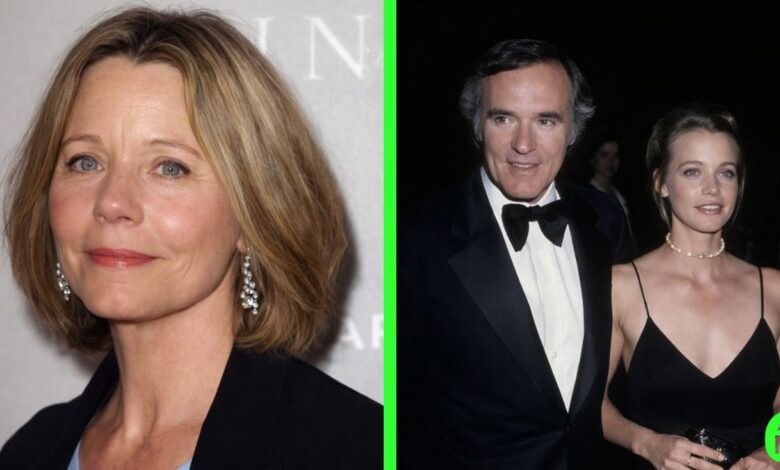
In the public imagination, Susan Dey occupies a familiar place. She emerged in the early 1970s as a television star, first as the wholesome Laurie Partridge and later, more consequentially, as a respected dramatic actress whose work on L.A. Law reshaped how women were portrayed in prime-time television. Her career is well chronicled, her accolades documented, her cultural impact widely discussed.
Far less visible is Leonard Hirshan, the powerful Hollywood agent she married in the mid-1970s. Known professionally as Lenny Hirshan, he operated not in front of the camera but in the closed offices where careers were shaped, contracts negotiated, and reputations guarded. This article does not attempt to mythologize Hirshan or fill gaps with conjecture. Instead, it examines what is publicly known about him, analyzes the significance of his deliberate privacy, and explores his role during a formative period in Susan Dey’s life and career—an influence felt more through structure and stability than public narrative.
Profile Summary
| Key Detail | Information |
|---|---|
| Full Name | Leonard “Lenny” Hirshan |
| Relationship | Former husband of Susan Dey |
| Profession | Hollywood talent agent |
| Agency | William Morris Agency |
| Birth–Death | 1927–2014 |
| Public Profile | Extremely private, industry-facing |
| Children | One daughter, Sarah (born 1978) |
| Residence | United States (historically Los Angeles–based) |
| Known Philanthropy | Not publicly documented in detail |
| Social Media Presence | None |
Who Is Lenny Hirshan?
Lenny Hirshan was a senior talent agent whose professional life unfolded almost entirely behind closed doors. He was associated with the William Morris Agency for decades, one of Hollywood’s most influential representation firms. His reputation rests not on self-promotion but on the caliber of the clients he represented and the longevity of those professional relationships. Among them was Clint Eastwood, a figure whose career trajectory in the 1970s and beyond mirrored the rise of agent-driven power in Hollywood.
Outside of his marriage to Susan Dey, Hirshan rarely appeared in mainstream media. That absence is not accidental; it reflects a professional culture in which discretion was currency. His significance lies less in what he said publicly and more in the access, leverage, and trust he maintained within the industry.
The Private Life of Lenny Hirshan
Hirshan’s private life is notable precisely because it remained so effectively private. Unlike many industry figures whose marriages and divorces became fodder for tabloids, his personal affairs rarely surfaced beyond basic public records. This restraint suggests a conscious separation between professional authority and individual identity. For an agent representing A-list talent, privacy was not merely a preference but a professional necessity. It protected clients, preserved negotiating leverage, and insulated family life from the volatility of celebrity culture.
The scarcity of personal anecdotes should not be read as an absence of substance. Instead, it underscores how thoroughly Hirshan adhered to an older Hollywood ethic: influence without visibility. His marriage to a rising television star did not alter that posture.
Early Life and Background of Lenny Hirshan
Publicly available information about Hirshan’s early life is limited to verifiable facts: his birth year (1927) and his eventual ascent within a central talent agency. This absence of detail is itself revealing. Unlike entertainers, agents were neither expected nor encouraged to craft origin stories. Their authority derived from networks, institutional memory, and deal-making skill, not from public narratives.
By the time Hirshan became professionally prominent, the agent-client relationship had become one of the most powerful dynamics in Hollywood. His background, while undocumented in popular biographies, can be understood within this broader historical context: the rise of agencies as kingmakers in post-studio-system America.
Marriage and Partnership with Susan Dey
Hirshan married Susan Dey in November 1976, at a moment when her career stood at a crossroads. Having achieved early fame on The Partridge Family, Dey was working to redefine herself as a serious actress. Their marriage coincided with this transitional phase, a period marked by deliberate career choices and a retreat from teen-idol visibility.
They welcomed a daughter, Sarah, in 1978. The marriage ended sometime between 1981 and early 1983, depending on the source. The lack of a single, definitive public date reflects how quietly the separation unfolded. There were no public disputes, no press tours, and no competing narratives—an outcome consistent with both parties’ evident desire for discretion.
Lenny Hirshan’s Role Behind the Scenes
While there is no public evidence that Hirshan directly managed Susan Dey’s career, it would be misleading to ignore the structural support such a partnership could provide. As an experienced agent, he understood the long-term consequences of typecasting, overexposure, and contractual entanglements. Dey’s post-Partridge Family choices—selective roles, long gaps, and eventual critical acclaim—align with a philosophy that prioritized longevity over immediacy.
This is not speculation about influence but an analysis of context. Hirshan’s professional worldview emphasized restraint, leverage, and timing—values that appear consistent with Dey’s career evolution during and after their marriage.
Family Life: Raising the Next Generation
Their daughter, Sarah, born in 1978, has been kept almost entirely out of the public eye. This was a deliberate choice made long before celebrity children became a recurring media subject. Both parents demonstrated a shared commitment to shielding family life from public consumption. That decision reflects not only personal values but also an acute awareness of how early exposure can shape—and sometimes distort—a child’s development.
In this sense, Hirshan’s influence as a father aligns with his professional ethos: protection, discretion, and long-term thinking.
Philanthropy and Community Engagement
There is no extensive public record detailing Hirshan’s philanthropic activities. This absence should not be misinterpreted as disengagement. Many industry figures of his generation contributed privately, without press releases or named foundations. I observe a pattern of low-profile engagement consistent with his broader approach to life and work.
In contrast to celebrity-driven philanthropy, which often doubles as branding, Hirshan’s apparent preference for anonymity reinforces the theme that runs through his life: impact without attribution.
The Power of Privacy: Influence Without Publicity
Hirshan’s life illustrates a counter-narrative to modern celebrity culture. Influence does not require visibility, and authority does not demand recognition. In an era increasingly defined by personal branding, his career serves as a reminder that some of the most consequential figures operate beyond public scrutiny.
For Susan Dey, this environment may have offered a rare form of stability—a private sphere insulated from the expectations placed on public figures. Their relationship, while finite, exemplifies how privacy can serve both as a personal choice and a professional strategy.
Public Curiosity and Misconceptions About Lenny Hirshan
Public curiosity about Hirshan often stems from his association with Susan Dey rather than his own career. This framing risks misunderstanding his significance. He was not a footnote to her success; he was a central figure in a parallel power structure within Hollywood. The misconception lies in equating visibility with importance.
His absence from interviews and retrospectives is not an omission but a reflection of a life lived according to different metrics of success.
Legacy and Future
Lenny Hirshan died in 2014, leaving behind a legacy defined less by headlines than by professional respect. His influence persists indirectly, through the careers he helped steward and the family he protected from public intrusion. In evaluating his life, the challenge is not to fill in gaps but to recognize that those gaps are integral to his story.
Conclusion
Lenny Hirshan’s life resists easy summarization. He was powerful without being public, influential without being visible. His marriage to Susan Dey offers a lens through which to examine not scandal or spectacle, but the quieter dynamics of support, discretion, and mutual respect. In an industry built on exposure, Hirshan represents an alternative model of success—one rooted in trust, privacy, and long-term impact. His story reminds us that not all meaningful lives leave extensive public records, and that absence, when intentional, can itself be a form of legacy.
Read this too:Elly Castle: A Private Life Lived Alongside a Public Hollywood Career
(FAQs)
1. Who was Lenny Hirshan?
He was a prominent Hollywood talent agent associated with the William Morris Agency.
2. How was Lenny Hirshan connected to Susan Dey?
He was married to Susan Dey from 1976 until their divorce in the early 1980s.
3. Did Lenny Hirshan manage Susan Dey’s career?
There is no public evidence that he directly acted as her agent.
4. Who were Lenny Hirshan’s notable clients?
His most famous client was Clint Eastwood.
5. Did Lenny Hirshan and Susan Dey have children?
Yes, they had one daughter, Sarah, born in 1978.
6. Why is so little known about Lenny Hirshan’s personal life?
He maintained strict privacy, consistent with his professional role as an agent.
7. When did Lenny Hirshan die?
He passed away in 2014.
8. Why does public information vary on their divorce date?
The separation was handled privately, and records were not widely publicized.