Standing inside the barracks at Auschwitz-Birkenau, I felt the weight of history press against my chest in a way no book had ever managed. That moment didn’t just teach me about the Holocaust – it fundamentally rewired how I understand human capacity for both cruelty and resilience. Educational travel – travel intentionally designed around learning, cultural immersion, and intellectual growth – does exactly that. It reaches into your assumptions and quietly rearranges them. In 2026, more travelers than ever combine tourism with structured education: study abroad programs, heritage tours, volunteer expeditions, and immersive cultural exchanges. You don’t just see the world differently after this kind of travel. You think differently. Here are 5 transformative ways educational travel reshaped my worldview – and why it might reshape yours too.
1. It Expanded My Cultural Empathy and Broke My Biases
Before I traveled with intention, my understanding of other cultures came from textbooks and documentaries – useful, but flat. The moment I sat in a family home in rural Morocco, sharing tea I hadn’t asked for and conversation I barely understood, something shifted. I stopped seeing “different” as distant. Face-to-face cultural encounters challenge stereotypes more effectively than any media can. Psychologists call this the contact hypothesis – direct, meaningful interaction with people from other groups reduces prejudice. Educational travel puts that theory into practice every single day.
The Shift From “Otherness” to Shared Humanity
When you navigate a local market or share a meal in someone’s home, you stop categorizing and start connecting. I discovered that my assumptions about how people in other countries lived, thought, or valued were almost always incomplete – and often completely wrong. A friendship I built in Kyoto in 2023 still shapes how I interpret news from Japan today. That’s the long-term impact educational travel offers – a permanent upgrade to your human lens.
2. It Gave Me a Deeper Understanding of History and Global Issues
Sitting in a traditional classroom, global events can easily feel like detached dates on a timeline, or abstract chapters memorized solely to pass a standardized AP World History Exam. However, standing in the shadow of ancient architecture or tracing old trade routes firsthand forces you to realize these were living, breathing civilizations, transforming flat historical text into a tangible reality.
Reading about a historical event and standing where it happened are two completely different experiences. I learned more about World War II in one afternoon at a memorial site than in years of reading. The emotional weight of place activates memory and understanding in ways a classroom simply cannot replicate. War memorials, ancient ruins, civil rights landmarks, colonial-era sites – all carry meaning that only activates when you’re physically present.
History You Feel, Not Just Read
A detailed first-person account published on benimarco.es blog captures exactly this experience – visiting Auschwitz from Kraków and confronting history through direct, personal encounter. Reading it reinforced for me that educational travel isn’t just tourism with a syllabus. It’s an emotional reckoning with reality.
“You don’t just visit a place like Auschwitz. It visits you.”
Witnessing economic inequality or environmental degradation firsthand transforms abstract concern into informed empathy. When you walk through a neighborhood without reliable clean water, you stop thinking about these issues as statistics. They become real, urgent, and personal. That shift moves you from passive observer of world news to engaged, informed global citizen.
3. It Accelerated My Personal Growth and Independence
Nobody grows inside their comfort zone. Educational travel removes you from yours – completely and often without warning. Missed trains, language barriers, unexpected detours, unfamiliar food: these aren’t problems. They’re the curriculum. The most consistent thing travel teaches is flexibility. Plans change. Expectations collapse. What matters is how quickly you adjust and what you learn in the process.
Discomfort Builds Real Confidence
Problem-solving in an unfamiliar environment builds a specific kind of confidence that daily routine simply cannot develop. When you successfully navigate a crisis in a foreign country – a rerouted flight, a lost wallet, a medical question in a language you don’t speak – you carry that capability home with you. Employers consistently cite adaptability as one of the most valued skills in 2026’s labor market. Educational travel builds it organically, through lived experience rather than workshops. After spending time in communities where people owned very little but maintained deep social bonds, I returned home questioning my relationship with consumption and success. I changed career directions. I simplified. That kind of internal disruption doesn’t come from a self-help book.
4. It Connected Me to Places That Made History Tangible
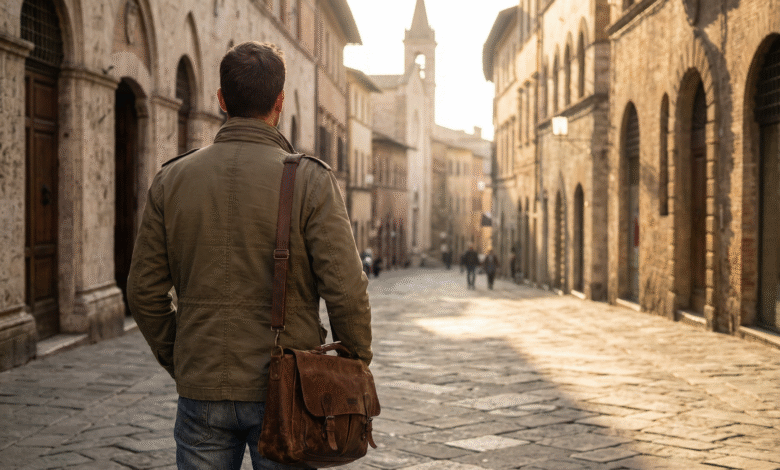
One of the underrated gifts of educational travel is specificity. Abstract history becomes a specific street, a specific face, a specific smell. When I visited Kraków, I didn’t just see a beautiful European city. I saw a place where layers of history – Jewish culture, Nazi occupation, communist rule, modern revival – existed simultaneously in the same cobblestones. KrakowDirect made navigating those layers accessible, offering organized transfers and guided access to historically significant sites including Auschwitz-Birkenau. That kind of logistical support matters when you want to engage deeply rather than just check boxes on a tourist itinerary. Understanding how historical forces continue to shape modern societies makes you a more thoughtful reader of current events and a more nuanced thinker overall.
5. The Changes Stayed – and They Compound Over Time
Everything I’ve described – expanded empathy, deeper historical understanding, personal growth, and tangible connection to place – doesn’t fade after the trip ends. It compounds. Every news story I read now carries a face I’ve met somewhere. Every conversation about inequality references something I’ve seen firsthand. Educational travel doesn’t just change a trip. It changes the person taking all the future trips – including the metaphorical ones.
If you haven’t pursued intentional educational travel yet, the entry points have never been more accessible:
- Study abroad programs – available not just for university students but increasingly for professionals and retirees
- Volunteer travel – combining skill-sharing with cultural immersion in communities that benefit from outside expertise
- Cultural immersion tours – structured programs built around language, food, history, or traditional arts
- Heritage travel – tracing personal or cultural ancestry through direct site visits
The key isn’t budget or age. It’s intention. Decide in advance that you’re going to learn, not just look. That single decision changes everything about the experience you’ll have.
Conclusion
Educational travel changed how I see the world in ways I’m still discovering. It expanded my empathy, grounded my understanding of history, challenged me to grow, and permanently connected me to places and people I would otherwise have only read about. The world in 2026 is complex, fast-moving, and deeply interconnected. Understanding it requires more than a news feed. It requires presence – physical, emotional, and intellectual – in places that make that complexity real. Go. Travel with purpose. Bring questions, not just a camera. Come back ready to see your own life differently.