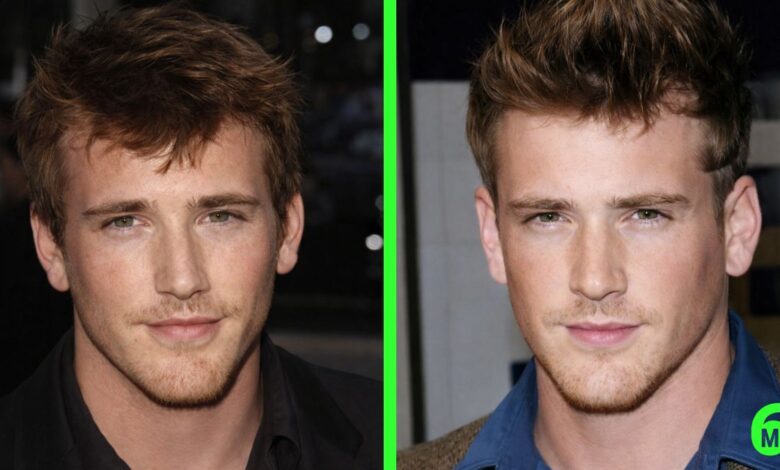
William Lee Scott belongs to a particular kind of Hollywood story: the working actor whose face is instantly recognizable, even if his name is not always the first on a cast list. Born in Hudson, New York, on July 6, 1973, Scott broke through in the 1990s and became best known as Stanley “Bullethead” Kuznocki on The Steve Harvey Show. From there, he built a career that moved comfortably between television and film, with roles in Gattaca, The Opposite of Sex, October Sky, Gone in 60 Seconds, Pearl Harbor, and The Butterfly Effect. Public records about his private life are limited, but the outline that does exist is consistent: a long-running career, a marriage to actress Charlene Bloom since 2002, and a family life kept largely outside celebrity culture. This article examines William Lee Scott through the public record available, focusing on both his career and the privacy that has shaped how the public sees him.
The basic facts of William Lee Scott’s public biography are well established, but the deeper personal profile often expected of celebrity coverage is not. This contrast is important, setting the tone for how he is viewed. Reliable public sources consistently confirm his birth details, marriage, children, acting background, and major screen credits, yet they offer relatively little about lifestyle branding, personal promotion, or constant media visibility. In a celebrity culture shaped by exposure, that absence is itself revealing and paves the way for a more focused examination of his life and work.
Quick Bio
| Detail | Information |
|---|---|
| Full Name | William Lee Scott |
| Profession | Actor and writer |
| Born | July 6, 1973 |
| Birthplace | Hudson, New York, U.S. |
| Best Known For | Stanley “Bullethead” Kuznocki on The Steve Harvey Show |
| Years Active | 1996–present |
| Spouse | Charlene Bloom |
| Marriage | Married since 2002 |
| Children | Two |
| Training | Studied acting with William Esper |
| Public Profile | Working film and television actor with a comparatively private personal life |
| Residence | Not clearly established in reliable public sources reviewed |
| Known Philanthropic Interests | No clearly documented personal philanthropic platform found in major public biographical sources reviewed |
| Social Media Presence | No prominently documented verified public account surfaced in the major public sources reviewed |
Who Is William Lee Scott?
William Lee Scott is an American actor whose career took off in the mid-1990s after he was discovered while working as a waiter in New York City and encouraged to study acting with teacher William Esper. He soon began booking work, first in commercials and then in television and film. His widest television recognition came through The Steve Harvey Show, where “Bullethead” became one of the sitcom’s memorable comic personalities. In film, Scott developed a résumé that combined studio pictures with character-driven projects, appearing in titles ranging from science fiction and teen-adjacent drama to war films and thrillers. He is not a tabloid-era celebrity in the modern sense; he is better understood as a durable character actor whose work has outlasted trends. Publicly, he is also known for a long marriage to actress Charlene Bloom and for maintaining a notably low-profile personal life despite decades in the entertainment business.
The Private Life of William Lee Scott
The most striking feature of William Lee Scott’s public image is how little of it is built on self-exposure. In an industry where many performers cultivate constant visibility through interviews, social media, and lifestyle coverage, Scott’s public record remains anchored overwhelmingly in his work. Reliable sources repeat a concise set of personal facts—his birth, his marriage, his children—but do not expand them into a highly monetized celebrity narrative. That does not make his story less substantial; it simply means the available portrait is narrower and, in some ways, more disciplined. As a result, this creates a different kind of biography—one shaped less by confession and more by continuity. The through line is not spectacle but steadiness: a long career, recurring public recognition for specific roles, and a home life he has not turned into entertainment content, leading naturally to an examination of his early life and path into acting.
Early Life and Background of William Lee Scott
Public biographical sources place William Lee Scott’s birth in Hudson, New York, and add a few grounded details about his family and training. Encyclopedia.com, drawing on reference-book material, identifies his father as a real estate broker and his mother as a librarian, and notes that Scott studied acting with William Esper. Other biographical sources describe him as having been raised in Manhattan and discovered by chance while working in a restaurant, when a talent manager noticed him and urged him to pursue acting lessons. What matters here is not a dramatic myth of overnight stardom, but the opposite: the beginning of his career appears to have depended on professional training, representation, and steady work rather than instant celebrity. That kind of entry point helps explain his later career pattern. Scott emerged not as a manufactured teen idol but as an actor who moved into the business through craft, coaching, and early commercial work.
Marriage and Partnership with Charlene Bloom
The public record on Scott’s marriage is concise but consistent. Multiple major entertainment databases state that he has been married to actress Charlene Bloom since 2002 and that they have two children. Bloom herself has screen credits, including Gone in 60 Seconds, The Steve Harvey Show, and Hang Time, which places both partners within the same professional world. What the record does not show is also notable: there is little sign of a publicity-driven celebrity couple strategy. Their marriage appears in biographical summaries, not in a long archive of red-carpet headlines or reality-style self-documentation. That suggests a partnership largely insulated from the machinery of fame, at least in public-facing terms. For a performer whose career spans decades, a marriage of that length stands out as a point of continuity, especially in an industry where relationships are often made visible only when they become unstable.
William Lee Scott’s Role Behind the Scenes
Because William Lee Scott has kept his domestic life private, the best way to understand his role behind the scenes is through the shape of his public career. He has continued to work across decades without building a persona around off-screen controversy or constant self-marketing. His filmography shows a professional who moved from series regular work on The Steve Harvey Show into a broad range of supporting and character roles in movies such as October Sky, Gone in 60 Seconds, Pearl Harbor, Identity, The Butterfly Effect, and The Magnificent Seven. That record suggests reliability, adaptability, and a willingness to serve ensemble storytelling rather than compete for permanent tabloid centrality. In practical terms, actors with careers like this often become the connective tissue of film and television: recognizable, dependable, and able to move between genres. Scott’s behind-the-scenes significance, then, is less about public branding than about professional durability.
Family Life: Raising the Next Generation
The confirmed public facts are limited but clear: William Lee Scott and Charlene Bloom have two children. Beyond that, trustworthy sources do not offer many details; that restraint should be respected rather than filled in with invention. Still, the absence of extensive public commentary says something meaningful about how the family has operated. In contemporary entertainment culture, children of actors are often introduced to the public early, whether through interviews, social posts, or curated family coverage. That pattern is not prominent here. The result is that Scott’s children remain protected from the level of scrutiny that often attaches to celebrity families. From a biographical standpoint, that suggests an intentional boundary between career visibility and home life. It does not invite speculation about parenting style; it does, however, indicate that privacy has been treated not as secrecy for scandal control, but as an ordinary part of family structure.
Philanthropy and Community Engagement
No major public biography reviewed here lays out a distinct philanthropic platform under William Lee Scott’s name, and that matters because it sets a limit on what can responsibly be said. A careful biographical approach does not turn a lack of publicity into a made-up charitable narrative. What can be said is narrower: Scott’s public profile has remained centered on acting rather than on cause-based branding, ambassador roles, or heavily publicized nonprofit affiliation. That does not prove the absence of charitable activity; it simply means that such activity is not clearly documented in the reliable public sources examined. For readers used to celebrity biographies padded with vague claims about “giving back,” this narrower approach is more honest. The public footprint William Lee Scott leaves is primarily artistic and professional, not philanthropic in a prominently advertised sense.
The Power of Privacy: Influence Without Publicity
William Lee Scott’s career offers a useful reminder that influence in entertainment does not always require omnipresence. He became known to audiences through memorable performances, especially as Bullethead on The Steve Harvey Show, and later remained visible through a succession of recognizable roles. He even resurfaced in public nostalgia cycles, including a reunion appearance tied to Steve Harvey’s birthday show and a later screen reunion with Cedric the Entertainer on The Neighborhood. Those moments show that Scott’s work retained cultural memory long after his breakthrough in his original sitcom. What is unusual is that this recognition coexists with a comparatively quiet personal profile. His example challenges the assumption that modern relevance must be maintained through constant personal disclosure. In Scott’s case, remembered performances have done much of the work that personal publicity might otherwise do.
Public Curiosity and Misconceptions About William Lee Scott
One common misconception about actors like William Lee Scott is that a lower public profile means their career has faded. His filmography argues the opposite. While he may not generate the volume of celebrity coverage associated with franchise stars, public databases document work spanning the 1990s and beyond, including a role in The Magnificent Seven and a 2021 television appearance on The Neighborhood. Another misconception arises from the scarcity of personal information: when audiences cannot easily find interviews, social media feeds, or family updates, they often assume there must be hidden drama. The evidence reviewed here does not support that kind of conclusion. The simpler explanation is often the better one—Scott appears to have chosen, or at least maintained, a career model where the work is public and much else is not.
Legacy and Future
William Lee Scott’s legacy is already visible in two ways. First, he belongs to the generation of 1990s and early-2000s actors whose work continues to circulate through reruns, streaming, and audience nostalgia. Second, he represents a durable model of screen acting that does not depend on celebrity overexposure. His best-known role on The Steve Harvey Show remains central to how many viewers remember him, but it is only one piece of a larger body of work that includes science fiction, war drama, thrillers, and television guest appearances. The future of his legacy will likely rest on that accumulated body of performances rather than on memoir-like public revelation. For many actors, fame burns hot and briefly. Scott’s public story is different: quieter, steadier, and built to last through the work itself.
Conclusion
William Lee Scott is not difficult to recognize, but he is harder to categorize under current celebrity rules. He has the résumé of a familiar screen presence, the breakthrough role that anchored a generation of sitcom viewers, and the film credits to prove a long career across genres. At the same time, he has left only a modest public trail in terms of personal disclosure. That is not a deficiency in his story; it is part of the story. The known facts are straightforward: born in Hudson, New York; discovered while working in New York; trained in acting; steadily employed since the mid-1990s; married to Charlene Bloom since 2002; father of two. Around those facts sits a career defined less by spectacle than by endurance. In a media culture that often mistakes oversharing for importance, William Lee Scott stands as a reminder that a public life can still be substantial without becoming completely public.
Read this too:Broderick Harvey Jr.: The Private Son in Steve Harvey’s Public World
(FAQs)
1. Who is William Lee Scott?
William Lee Scott is an American actor best known for playing Stanley “Bullethead” Kuznocki on The Steve Harvey Show.
2. When was William Lee Scott born?
He was born on July 6, 1973.
3. Where is William Lee Scott from?
Public sources identify him as being born in Hudson, New York.
4. How did William Lee Scott get into acting?
Biography sources say he was discovered while working as a waiter in New York City and then studied acting with William Esper.
5. Is William Lee Scott married?
Yes. Public entertainment databases state that he has been married to actress Charlene Bloom since 2002.
6. Does William Lee Scott have children?
Yes. Public biographical sources say he and Charlene Bloom have two children.
7. What movies is William Lee Scott known for?
He is known for films including Gattaca, The Opposite of Sex, October Sky, Gone in 60 Seconds, Pearl Harbor, Identity, The Butterfly Effect, and The Magnificent Seven.
8. Is William Lee Scott still active in acting?
His public filmography extends into the 2020s, including a 2021 appearance on The Neighborhood, so his career has remained active across decades.