Woody Harrelson has spent decades in the public eye, building one of Hollywood’s most distinctive careers. Behind that fame is a far more private figure: his mother, Diane Lou Oswald. Public information about her is scarce, but her life is meaningful. She has been called a legal secretary, a devout Presbyterian, and the parent who largely raised Woody and his brothers alone after divorcing Charles Harrelson. The family lived in Lebanon, Ohio, where Woody spent much of his youth. He has spoken about the values his mother instilled in him.
Diane Lou Oswald is important not for seeking publicity but for shaping a family story under difficult conditions. In a culture that rewards visibility, her significance lies in her work, faith, consistency, and influence, as shown through her son’s public reflections rather than her own media presence. This is a fact-based look at Diane Lou Oswald and why her quiet role matters.
Quick Bio
| Detail | Information |
|---|---|
| Full Name | Diane Lou Oswald |
| Relationship | Mother of Woody Harrelson |
| Related Public Figure | Woody Harrelson |
| Public Profile | Private family figure known through her son’s biography |
| Occupation | Legal secretary / secretary |
| Religious Background | Presbyterian |
| Marital History | Married Charles Voyde Harrelson; divorced in 1964 |
| Children | Woody Harrelson, Brett Harrelson, and Jordan Harrelson |
| Residence (general, publicly associated) | Lebanon, Ohio; also connected to Texas in family history |
| Social Media Presence | No widely known public social media presence |
Who is Diane Lou Oswald?
Diane Lou Oswald is best known as the mother of actor Woody Harrelson. That simple description does not fully explain her importance. Public accounts describe her as the parent who provided stability in a family story marked by hardship and notoriety. Woody Harrelson was born to Diane Lou Oswald and Charles Harrelson. Charles’ later criminal convictions made him infamous. After Diane and Charles divorced in 1964, she raised Woody and his brothers mainly as a single mother. Sources describe her as religious, disciplined, and hardworking. Woody has publicly credited his mother with instilling his core values.
Her significance, then, is not based on celebrity in her own right. Instead, it rests on the role she played in helping shape one of Hollywood’s most recognizable actors while remaining largely outside the spotlight herself. This distinction, between public celebrity and steady influence, is part of what keeps public interest in Diane Lou Oswald alive as the narrative progresses.
The Private Life of Diane Lou Oswald
The most striking thing about Diane Lou Oswald’s public profile is how little of it is public at all. Unlike many relatives of famous actors, she has not built a visible media presence, public brand, or ongoing celebrity identity. Instead, what is known about her comes mostly through profiles of Woody Harrelson, archival captions, and retrospective reporting on his parents. This privacy matters, as it suggests that Diane Lou Oswald’s role in the Harrelson family was never performed for public attention. Her significance is thus evident in context rather than through self-promotion.
Her privacy has protected her story from becoming a mere spectacle. The Harrelson family history features a painful contrast: a respected actor raised by a deeply religious and grounded mother, and a father infamous for violent crime. Diane Lou Oswald’s private life has remained mostly out of public view, likely preserving her dignity amid a narrative often overshadowed by scandal.
Early Life and Background of Diane Lou Oswald
Publicly verified biographical details about Diane Lou Oswald’s early life are limited, but available sources connect her strongly with Lebanon, Ohio, which Woody Harrelson has also been linked to in accounts of his upbringing. Reports describe Lebanon as her native city, and it became the place where she returned with her children after her marriage ended. That detail matters because it places Diane not as a drifting figure in a chaotic story, but as someone who returned to a familiar community and rebuilt family life there. Reliable public sources describe her as a secretary or legal secretary and as a devout Presbyterian. Those facts offer a grounded sense of identity: steady work, structured belief, and a life centered more on family and responsibility than on status. There is no strong public evidence for a detailed, fully documented early-life narrative beyond those points. A trustworthy profile of Diane Lou Oswald must avoid turning limited facts into invented backstory.ry.
Marriage and Partnership with Woody Harrelson’s Father
Diane Lou Oswald married Charles Voyde Harrelson, and public records indicate the marriage ended in 1964. That divorce became a defining turning point in the family’s history. Afterward, Diane raised their three sons while Charles Harrelson’s life moved increasingly toward crime, prison, and eventual infamy. When people search for Diane Lou Oswald, they often do so because of that dramatic contrast. Yet the most meaningful fact may be the simplest one: after the marriage ended, she became the stable parent in the children’s day-to-day lives. Very little public material shows Diane and Charles as a conventional public couple. That absence shapes how their marriage should be understood in biographical writing. This is not a story illuminated by glamorous appearances or mutual interviews. It is understood in retrospect, through the different lives each parent came to represent. Charles Harrelson became a notorious public figure through criminal proceedings. Diane Lou Oswald remained associated with work, religion, and caregiving. That contrast is supported by the record and does not require embellishment to be powerful.ul.
Diane Lou Oswald’s Role Behind the Scenes
Behind nearly every public success story is a private structure that made it possible, and in Woody Harrelson’s case, Diane Lou Oswald appears to have been central to that structure. People’s reporting describes her as the parent who raised Woody and his brothers in a strict religious household, and Woody has openly credited his mother with instilling values that stayed with him into adulthood. In a 2018 interview, he said she was a “great role model” who taught him to treat people well and behave honorably. That is a useful way to understand Diane Lou Oswald’s role. She is not just a background figure who appears in a family tree. She is an ethical influence whose effect became visible in her son’s words. Public biographies tend to focus on famous fathers, dramatic scandals, or inherited notoriety. In this case, the more durable influence seems to come from the mother. She maintained order, routine, and values in circumstances that could easily have produced only instability.ty.
Family Life: Raising the Next Generation
Public sources identify Diane Lou Oswald as the mother of Woody, Brett, and Jordan Harrelson. They also make clear that money was tight and that she supported the family through her work. Woody’s early years included Texas and, later, Ohio, where he attended Lebanon High School after the family’s move. Those details help explain why Diane’s role remains central in accounts of Woody Harrelson’s upbringing: she was the one who maintained continuity.
Raising three boys alone is a major feat in itself, especially within a family overshadowed by the crimes of an absent father. The public record does not need embellishment here. Diane Lou Oswald’s family life was important because it involved ordinary but demanding labor: earning money, maintaining a home, enforcing values, and carrying emotional responsibility. The celebrity outcome came later. The foundational work happened much earlier.
Philanthropy and Community Engagement
There is no strong public record of Diane Lou Oswald as a philanthropist, unlike celebrities or foundation leaders. A factual article should clearly state this, not imply a documented charitable portfolio that does not exist. Instead, Woody Harrelson is closely linked to activism and public causes, especially environmental and social issues. Reporters often attribute his values to the women who raised him. While this does not prove Diane’s direct involvement in public philanthropy, it highlights family influence in conversations about values.
So the most responsible reading is this: Diane Lou Oswald’s public legacy is not one of branded charity campaigns or high-profile nonprofit leadership. It is closer to the quieter civic influence that many parents have, where values are transmitted privately and become visible later in the public life of the next generation. That is an analysis grounded in the known facts, not a claim that she personally led documented public initiatives.
The Power of Privacy: Influence Without Publicity
Diane Lou Oswald is a strong example of how influence does not always travel through visibility. Public culture often assumes that the most important person in a famous family must be the one most often photographed or quoted. Her case suggests the opposite. The available record is thin on interviews and rich in consequences: a son who repeatedly credits his mother’s influence, a childhood shaped by her work, and a family story in which stability is associated with her rather than with public acclaim. Privacy can also be understood as a form of control. In a story that could easily have been dominated by tabloid fascination with Charles Harrelson’s crimes, Diane Lou Oswald’s withdrawal from publicity seems to have kept attention on what mattered most in her life: raising her children. That is not speculation about motive. It is an observation about outcomes. The less she made herself into a public character, the more her influence appears through the testimony of those who knew her role best.st.
Public Curiosity and Misconceptions About Diane Lou Oswald
A common misconception in celebrity-adjacent biography is that a private relative must have a hidden public story waiting to be uncovered. With Diane Lou Oswald, the better approach is restraint. Most internet searches about her are really searches about Woody Harrelson’s family background, particularly the contrast between his parents. That can create distortions, treating Diane only as the opposite of Charles Harrelson rather than as an individual whose life was marked by work, faith, and parental responsibility.
Another misconception is that limited information invites imaginative filling-in. It does not. In fact, the ethical standard is the reverse. Because Diane Lou Oswald is a private person, fact-based writing should become more careful, not less. The trustworthy portrait is narrower but more honest: she was Woody Harrelson’s mother, a secretary or legal secretary, a Presbyterian, a divorced parent who raised three sons, and a woman her son has described as a source of moral example. That is enough to establish real significance without pushing beyond the record.
Legacy and Future
The legacy of Diane Lou Oswald rests less in public recognition than in generational effect. Woody Harrelson’s career is his own, but the framework of discipline, belief, and resilience described in public accounts points back to the environment his mother created. In celebrity biographies, that kind of legacy is easy to overlook because it lacks spectacle. Yet it may be the most durable kind.
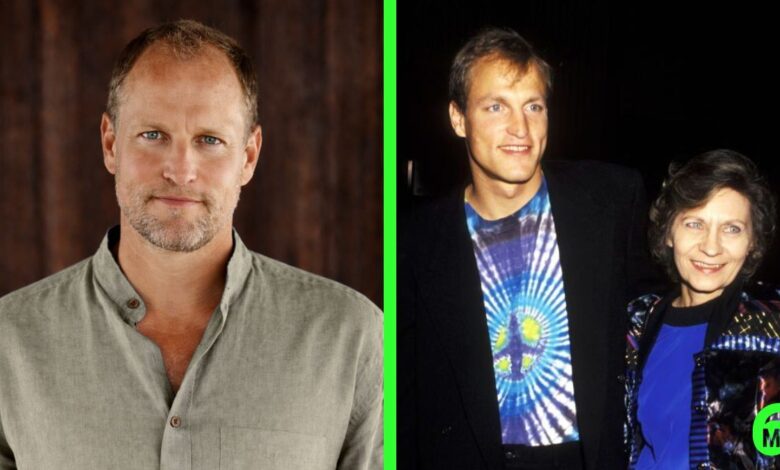
As for the future, Diane Lou Oswald is unlikely to become a highly public figure, and nothing in the available record suggests she has sought that role. Her place in public memory will likely continue to be shaped by Woody Harrelson’s biography, family histories, and occasional archival images, such as her appearance with him at the 1992 White Men Can’t Jump premiere. That may be fitting. Her legacy is already established in the clearest way a private parent’s legacy can be: through the life and words of her son.
Conclusion
Diane Lou Oswald occupies a rare place in celebrity-related biography. She is connected to one of America’s best-known actors, yet she remains mostly outside the celebrity machinery that surrounds him. The public facts are limited but meaningful. She worked as a secretary, practiced a strong Presbyterian faith, divorced Charles Harrelson in 1964, and raised Woody Harrelson and his brothers largely as a single mother. Woody has publicly credited her with shaping his values and with honoring the example she set.
That is why Diane Lou Oswald continues to matter. Not because she courted attention or because public records are expensive, but because the parts of her life that are known point to steadiness under pressure. In a family history marked by hardship, notoriety, and public fascination, her role reads as the quiet center. For many readers, that may be the most compelling part of her story.
Read this too:Simone Bienne: The Relationship Therapist, Broadcaster, and Former Wife of Simon Monjack
(FAQs)
Who is Diane Lou Oswald?
Diane Lou Oswald is the mother of actor Woody Harrelson and the former wife of Charles Harrelson. She is publicly described as a secretary or legal secretary and a devout Presbyterian.
Is Diane Lou Oswald Woody Harrelson’s mother?
Yes. Multiple biographical sources identify Diane Lou Oswald as Woody Harrelson’s mother.
Was Diane Lou Oswald married to Charles Harrelson?
Yes. Public records and biographies state that she married Charles Voyde Harrelson and divorced him in 1964.
How many children did Diane Lou Oswald have?
Public sources identify three sons: Woody, Brett, and Jordan Harrelson.
Where is Diane Lou Oswald associated with living?
She is publicly associated with Lebanon, Ohio, which sources describe as her native city and the place where she moved with her children after the divorce.
What did Woody Harrelson say about his mother?
Woody Harrelson has said his mother was a great influence and a role model who instilled good values in him.
Is Diane Lou Oswald a public celebrity?
No. She is best understood as a private family figure whose public profile exists mainly through Woody Harrelson’s biography and a small number of archived appearances and references.
Did Diane Lou Oswald appear publicly with Woody Harrelson?
Yes. She was photographed with Woody Harrelson at the 1992 premiere of White Men Cannot Jump in Westwood.