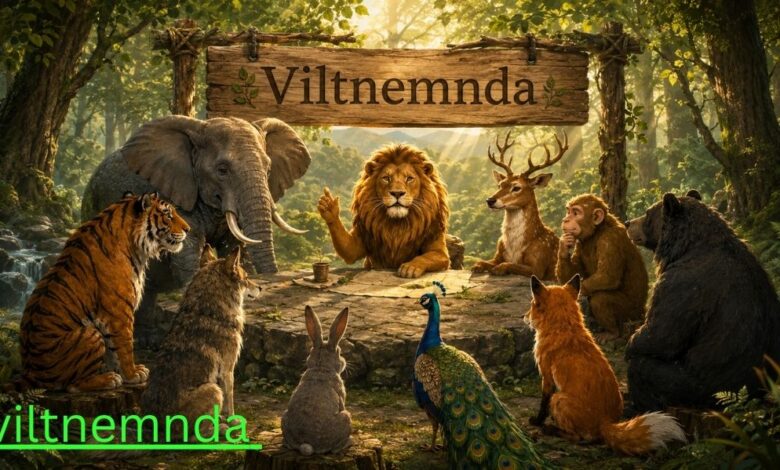
Viltnemnda refers to a local wildlife committee responsible for wildlife management, hunting administration, and practical responses to wildlife interactions with people or infrastructure in Norway. With its large landscapes and active hunting traditions, municipal wildlife bodies address situations involving wild animals—injured, displaced, hunted, or involved in traffic accidents. Since 1993, responsibility has shifted to municipalities, which now organize wildlife management differently, using names such as Viltnemnda, fallviltgruppe, or ettersøkskorps.
What Is Viltnemnda?
Viltnemnda is a local committee responsible for wildlife administration within a municipality. Originating from Norwegian words for wildlife and committee, it handles care, regulation, and management of wild animal populations. Municipal duties include supervising resources, responsible hunting, responding to injured wildlife, and managing human-animal conflicts under Norway’s wildlife and hunting laws.
Why Viltnemnda Is Important
Viltnemnda’s significance arises because wildlife management affects animals, people, roads, farms, forests, safety, conservation, and local accountability. In Norway, where nature is integrated with daily life, wild animals frequently enter villages, highways, farmland, and recreational sites. If an animal is wounded in a traffic accident, if a hunting issue needs local attention, or if wildlife causes harm or poses a risk, municipalities need a prompt response system. Viltnemnda, or its local replacement, connects public authorities, hunters, landowners, police, and residents. This role makes it vital to community-based wildlife management, as decisions and actions occur close to the incident site.
Historical Background of Viltnemnda
Viltnemnda originally served as a state-related wildlife body at the municipal level. In 1993, responsibilities were transferred to municipalities, enabling a more flexible organization. The term now refers to various structures: formal committees, practical response groups, or general local authorities, depending on the municipality.
Main Responsibilities of Viltnemnda
Viltnemnda’s responsibilities vary by municipality but are always tied to wildlife management. Typical duties include handling injured animals, fallen game, hunting matters, population control, and conservation. Municipalities describe Viltnemnda as responsible for wildlife permits and managing wildlife funds.
Viltnemnda and Injured Wildlife
A key role of Viltnemnda is handling injured wildlife, especially after traffic accidents. Teams track, assess, and, if needed, end the suffering of injured animals, ensuring animal welfare and public safety. Where political committees are discontinued, practical duties are handled by specialized wildlife response teams.
What Should People Do After Hitting a Wild Animal?
A key public duty linked to Viltnemnda is reporting wildlife accidents. If a driver hits a wild animal, the incident should be reported promptly so the animal can be found and assisted, or humanely put down if necessary. This is not only about legal responsibility; it is also about animal welfare. Leaving an injured animal unreported after an accident can lead to unnecessary suffering. Several Norwegian municipalities explain that people should contact the police or the relevant municipal wildlife response service when they find injured wildlife or are involved in a wildlife collision. Tromsø municipality advises people to notify the police if they find injured wildlife, while other municipalities provide local wildlife response numbers for fallvilt or animal search teams.
Viltnemnda and Hunting Management
Viltnemnda is also involved in hunting administration. Wildlife management in Norway must balance hunting traditions with conservation, animal welfare, landowner rights, and sustainable population control. Hunting is regulated through laws, permits, quotas, and local oversight. Municipal wildlife bodies handle hunting areas, felling permits, game populations, and the responsible use of wildlife. Dictionary definitions link Viltnemnda to proper wildlife management in municipalities, and municipal pages reference felling permits and wildlife funds.
Viltnemnda and Human-Wildlife Conflict
Human-wildlife conflict is another area where Viltnemnda becomes relevant. In rural and semi-rural areas, wild animals may damage crops, threaten livestock, enter residential areas, or pose traffic hazards. In urban areas, citizens may report injured birds, deer near roads, or animals behaving in an unusual way. The local wildlife authority must determine the necessary action, whether observation, public notification, relocation, controlled culling, or no intervention. These decisions require knowledge of animal behavior, local conditions, public safety, and law. Therefore, Viltnemnda serves not only an administrative function but is also a component of practical environmental governance.
Viltnemnda as a Municipal Responsibility
Today, the meaning and structure of Viltnemnda vary from municipality to municipality. Since responsibilities shifted to municipalities after 1993, local organizations vary: some have a political committee called Viltnemnda, while others assign field tasks to a fallviltgruppe or ettersøkskorps, or absorb duties into environmental departments. The name and structure differ, but all municipalities must have systems in place for wildlife management, especially regarding public safety and animal welfare.
Skills and Knowledge Needed in Viltnemnda Work
Work connected to Viltnemnda requires practical experience, local knowledge, and sound judgment. Individuals involved in wildlife response teams need to understand animal tracks, injuries, seasonal animal movement, hunting regulations, safe firearm use, public communication, and emergency procedures. Cooperation with police, road authorities, farmers, landowners, hunters, and municipal offices may be necessary. In cases involving injured animals, quick decisions are required, but these must be responsible and lawful. Thus, work related to Viltnemnda combines field experience, public service, conservation awareness, and responsibility for animal welfare.
Viltnemnda and Animal Welfare
Animal welfare is a central reason why Viltnemnda matters. When wild animals are injured, they cannot express their suffering or request assistance. A system must exist to respond rapidly and humanely. This is particularly important after road accidents, where an animal may appear to escape but may actually be severely injured. The purpose of a wildlife-response team is not only to remove hazards from roads, but also to prevent prolonged suffering and protect people from further danger. This demonstrates the ethical and administrative roles of Viltnemnda.
Viltnemnda and Conservation Balance
Good wildlife management is always about balance. Too little control can lead to overpopulation, road danger, crop damage, and disease risk. Too much control can harm biodiversity and weaken natural ecosystems. Viltnemnda sits within this balance by supporting local wildlife decisions that consider both people and nature. Norway’s wildlife management tradition is closely tied to sustainable use, meaning that hunting and animal control must be managed to protect future wildlife populations. Local knowledge is especially valuable because wildlife conditions can differ greatly from one municipality to another.
Common Misunderstandings About Viltnemnda
A common misunderstanding is that Viltnemndaa is identical across all Norwegian municipalities. In reality, the structure can differ. Another misunderstanding is that Viltnemndaa only deals with hunting. Hunting may be part of the work, but so are injured wildlife, traffic accidents, animal welfare, and public safety. Some people may also think Viltnemndaa is always a formal committee, but in many municipalities,s the old political committee has been replaced by practical response teams or other municipal arrangements. This is why it is best to check the local municipality’s current system when dealing with a real wildlife issue.
Why Citizens Should Know About Viltnemnda
Citizens should know about Viltnemndaa because wildlife incidents can happen unexpectedly. A driver may hit a deer at night, a person may find an injured bird, or a landowner may face damage caused by wild animals. Knowing that the municipality has a responsibility for wildlife helps people act appropriately. Instead of ignoring the issue or trying to handle a dangerous animal alone, citizens can contact the proper authority. This protects the animal, the public, and the person reporting the incident.
Conclusion
Viltnemnda is an important Norwegian wildlife-management concept that connects local government, animal welfare, hunting regulation, public safety, and conservation. Although the old state-linked viltnemnda structure was changed in 1993 and responsibility moved to municipalities, the term is still widely used in many places to describe local wildlife duties. Today, viltnemnda may refer to a formal municipal committee, a practical wildlife-response group, or the broader local system that handles injured animals, felling permits, wildlife funds, and human-wildlife conflicts. Its value lies in creating a responsible local response when wild animals and human communities meet. For Norway, where nature is deeply connected to daily life, viltnemnda remains a meaningful part of protecting both wildlife and people.
(FAQs)
1. What does viltnemnda mean?
Viltnemnda is a Norwegian term that generally refers to a local wildlife committee or municipal wildlife authority responsible for matters related to wild animals, hunting management, injured wildlife, and local wildlife control.
2. What is the main role of viltnemnda?
The main role of viltnemnda is to support responsible wildlife management at the local level. This may include handling injured animals, following up wildlife accidents, helping with hunting-related administration, and protecting both animal welfare and public safety.
3. Is viltnemnda the same in every municipality?
No. The structure can vary from one municipality to another. Some places may still use the name viltnemnda, while others may use terms such as wildlife response group, fallviltgruppe, or ettersøkskorps for practical field work.
4. When should someone contact viltnemnda?
A person may need to contact viltnemnda or the local wildlife authority if they find an injured wild animal, hit a wild animal with a vehicle, see a dangerous wildlife situation, or need guidance about local wildlife issues.
5. Does viltnemnda deal only with hunting?
No. Hunting administration can be part of its work, but viltnemnda is also connected to injured wildlife, animal welfare, road accidents involving animals, public safety, and local conservation concerns.
6. What should I do if I hit a wild animal on the road?
You should stop safely, mark the place if possible, and report the accident to the police or the local wildlife authority. This allows trained people connected to viltnemnda or wildlife-response services to track the animal and prevent unnecessary suffering.
7. Why is viltnemnda important for animal welfare?
Viltnemnda helps ensure that injured or sick wild animals are handled responsibly. When an animal is badly hurt, quick action can reduce suffering and protect people from dangerous situations.
8. Is viltnemnda a government body?
In modern Norway, wildlife management is primarily handled by municipalities. In some places, Viltnemnda may be a formal municipal committee, while in others the work is handled by a different local wildlife unit.
9. Can viltnemnda decide to put down an injured animal?
In serious cases, trained wildlife personnel may decide that an animal must be put down to prevent suffering or protect public safety. Such actions are usually handled in accordance with local rules, animal welfare principles, and legal procedures.
10. Why do people search for viltnemnda?
People often search for viltnemnda because they need help with injured wildlife, road accidents involving animals, hunting permits, local wildlife rules, or general information about how wildlife is managed in Norway.