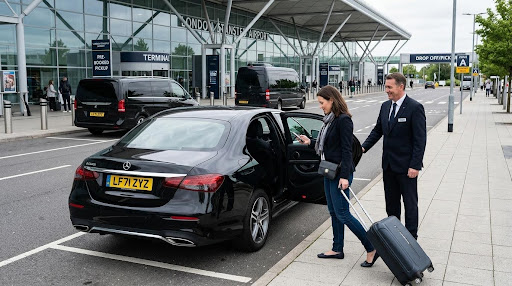
There was a time, not particularly long ago, when “I’ll just grab a taxi when I get there” was a perfectly reasonable travel plan. That sentence has quietly disappeared from how experienced travellers approach Stansted journeys. Pre-booking — selecting an operator, locking in a price, and confirming a driver before the trip begins — has become the default approach rather than the premium one.
This shift is more interesting than it first appears. It isn’t simply a small habit change. It represents a deeper recalibration of how UK travellers approach travel decisions generally — a move away from improvisation and toward planning, away from price-shopping at the point of need and toward securing certainty in advance. This article looks at the specific behavioural shift, the conditions that drove it, when spontaneous booking still works, and why the cultural change around pre-booking Stansted airport taxis is likely to be permanent.
The End of “I’ll Just Grab a Taxi When I Get There”
Understanding the shift requires acknowledging what was lost — or rather, what was deliberately abandoned. For most of the past three decades, casual airport taxi booking was completely standard.
When Spontaneous Booking Was Normal
Through the 1990s and 2000s, the dominant pattern was simple: arrive at Stansted, head to the taxi rank or pickup zone, take whatever was available. Outbound transfers were booked the day before by phone, or sometimes the morning of departure. The expectation was that availability would always exist, the price would be roughly fair, and the journey would happen. For most travellers most of the time, this expectation was met. Inevitably, some weren’t.
The Specific Moment the Shift Happened
The shift wasn’t a sudden event. It was a slow accumulation of factors — surge pricing at peak moments, no-show drivers at unsociable hours, the unpredictability of metered fares, the difficulty of comparing options on the spot — that gradually convinced most regular travellers that advance preparation was simply easier. By the early 2020s, the tipping point was visible across most UK airport catchments. Stansted, with its high proportion of regular leisure and business travellers, led the change rather than followed it.
What Travellers Now Default to Instead
The new default is recognisable in any experienced traveller’s pre-trip routine. Within hours of booking a flight, the airport taxi is researched, compared, and booked. The pickup time is confirmed. Vehicle category selected. Confirmation received. Then, with the transfer settled, attention returns to packing, work, or whatever else needs handling before the trip. The fifteen-minute pre-booking task has displaced the half-hour of post-arrival friction it used to involve.
The Hours and Days That Define the New Pre-Booking Window
How far in advance travellers book has become surprisingly consistent across the experienced Stansted user base.
The 48-Hour Rule
Forty-eight hours has emerged as the minimum responsible lead time for most Stansted airport taxi bookings. It’s enough notice for the operator to allocate optimal vehicles, enough time for the traveller to review confirmation details, and enough buffer to absorb any necessary adjustments. Bookings made inside the 48-hour window still work for routine journeys but increasingly feel rushed to the modern traveller, who is acclimatising to the comfort of earlier confirmation.
The Week-Ahead Sweet Spot
For travellers who can plan further out, the week-ahead window has become the genuinely comfortable lead time. By this point, premium vehicles are reliably available, peak-period bookings are secured, and the transfer feels settled rather than provisional. Most return trips are booked at this point alongside the outbound, locking in both legs of the journey before other travel arrangements consume attention. Edge cases at either extreme still exist and still work, but the centre of the booking distribution has shifted decisively earlier.
Why Pre-Booking Has Become More Attractive Than Ever
The shift hasn’t happened in a vacuum. Specific structural changes have made pre-booking substantially more attractive than it was even five years ago.
Apps Made Comparing Easy
A decade ago, comparing Stansted airport taxi operators required phone calls during business hours. Today, three operator websites can be checked in five minutes — quotes obtained, vehicles compared, policies reviewed, all asynchronously. The friction that once made pre-booking feel onerous has been almost entirely engineered out. Modern mobile booking interfaces are designed for thumb-and-screen research, with quote tools that respond in seconds.
Fixed Pricing Made Comparing Worthwhile
Comparison is only valuable if the compared prices are real. Fixed-fare pricing — now standard across reputable operators — makes the comparison genuine. The £35 quote you see at booking is the £35 you pay. No surge multipliers, no hidden surcharges, no peak-time adjustments. Well-regarded Stansted airport taxi providers have leaned into fixed pricing precisely because it makes pre-booking psychologically easier — the certainty has value independent of the actual amount.
Bad Experiences Trained Travellers to Plan Ahead
Most experienced Stansted travellers have a specific story behind their pre-booking habit — the ride-hailing app that surged to triple normal price at 4 AM, the no-show driver before a critical morning flight, the cancellation that left them stranded in a queue. These experiences function as personal lessons. Travellers who’ve been through one rarely repeat the gamble.
How the Pre-Booking Shift Differs Between Traveller Types
The shift has been universal but not uniform. Different traveller categories adopted advance booking at different speeds, for different reasons.
Business Travellers Led the Trend
Frequent business travellers were the first to move decisively toward pre-booking. The economics favoured them earliest — the cost of a missed meeting or delayed presentation substantially exceeded the small premium of advance booking, and corporate travel policies began mandating pre-booked transfers for time-critical journeys. By the late 2010s, pre-booking had become standard practice among serious business travellers. The rest of the market has been catching up since.
Leisure Travellers Caught Up Quickly
Leisure travellers followed within a few years, often driven by similar (if less expensive) experiences with ride-hailing failures. Holiday-makers who’d faced surge pricing or unavailable vehicles at the start or end of trips quickly adapted to advance booking. Couples, retirees, and solo leisure travellers all increasingly research and book their Stansted transfers alongside their flights and accommodation.
Family and Group Travellers Made It the New Norm
Family and group travellers were the most decisive in adopting advance booking, for the simplest reason: the alternative is genuinely worse for them. Coordinating three or four ride-hailing vehicles for a group of six is impractical. Securing a pre-booked MPV or minibus solves the problem in a single transaction. As family travel grew post-pandemic, this segment effectively cemented pre-booking as the dominant pattern for Stansted transfers overall.
What Operators Did to Make Pre-Booking Easy
Mobile-First Booking Interfaces
Operators that took the pre-booking shift seriously invested heavily in mobile-first booking interfaces — touch-optimised, designed for thumb input, integrated with Apple Pay and Google Pay, with instant quote tools that respond in seconds. The booking process that once took ten minutes by phone now takes two minutes by app. This compression of effort is essential to the shift; without it, advance booking would still feel like the high-friction option.
Free Cancellation as Standard
Free cancellation up to 24 hours before pickup has become standard practice across reputable Stansted operators. This matters more than it might appear: it removes the only psychological barrier to advance booking — the fear of locking in a decision before circumstances stabilise. With free cancellation, the question “what if my plans change?” loses its weight. Booking early becomes a low-risk action rather than a commitment.
The Confirmation Chain That Earned Trust
Multi-channel confirmation — instant on-screen confirmation, email within seconds, SMS within minutes, driver details an hour before pickup — has built the trust that advance booking requires. Travellers booking days or weeks ahead need confidence that the booking is real, monitored, and will execute. The confirmation chain provides exactly that confidence in a form that older taxi operations simply couldn’t match.
When Spontaneous Booking Still Works
Despite the pre-booking shift, casual booking hasn’t disappeared, and shouldn’t. There are still specific scenarios where the older approach makes sense — and pretending otherwise would be dishonest.
Solo Daytime Trips Without Time Pressure
A single traveller heading to Stansted on a weekday afternoon with hours of buffer time before a flight is well-suited to spontaneous booking. The downside risk is low, surge pricing is rarely extreme during these windows, and the convenience of opening an app and grabbing whatever’s available is genuine. For this specific use case, the pre-booking premium isn’t really earning its keep.
Familiar Routes for Familiar Travellers
Travellers who use the same Stansted route weekly or monthly often develop relationships with individual drivers and dispatchers that effectively replace formal pre-booking. A text message, a phone call, an informal arrangement — these work because the underlying relationship makes them reliable. The booking has become so trusted that the formal mechanics are unnecessary. This isn’t spontaneous booking in the conventional sense; it’s relationship-based booking that bypasses the formal process.
When Surge Risk Is Acceptable
For short trips of modest value, the surge risk that haunts ride-hailing apps is sometimes acceptable. A traveller heading to a nearby hotel for a non-critical meeting might reasonably shrug at a £15 surge above a £25 baseline. The risk-adjusted expected cost is still low. It’s the high-stakes airport journeys — early flights, late returns, group transfers, time-critical business meetings — where surge risk becomes unacceptable and pre-booking becomes essential.
The Implications of the Pre-Booking Default
When advance booking becomes the cultural norm rather than the careful choice, the implications extend beyond individual travellers.
How It’s Changing Operator Economics
Pre-booked work is more profitable than spot work, with predictable revenue, optimised dispatch, and reduced operational waste. Operators receiving most of their volume in advance can plan fleet deployment, driver schedules, and capacity decisions with much greater accuracy. This has shifted investment toward operators capable of capturing advance bookings — direct booking platforms, account infrastructure, customer relationship systems — and away from operators reliant on spot volume from aggregators.
What It Means for Walk-Up Services
Walk-up taxi services at airports have visibly contracted as pre-booking has grown. The economic model that supported substantial walk-up presence — high volume of unbooked travellers needing transport — no longer reflects demand patterns. Most reputable operators now prioritise pre-booked work and treat walk-up customers as a secondary segment. This change has been gradual but structural, and is unlikely to reverse.
Why the Cultural Shift Is Probably Permanent
Cultural shifts of this kind rarely reverse, particularly when underpinned by structural changes in the supporting infrastructure. The booking technology, operator economics, traveller habits, and customer expectations have all aligned in favour of pre-booking. No plausible future event makes the spontaneous-arrival-at-the-rank model better than the planned-and-confirmed approach. Pre-booking has won — and its position will likely strengthen rather than weaken from here.
How to Make Pre-Booking Genuinely Painless
Book at the Time You Book the Flight
The single most effective pre-booking habit is sequencing: as soon as the flight is confirmed, book the taxi. This timing serves multiple purposes — the trip is fresh in mind, dates and times are at hand, decisions are made together rather than separately, and the taxi booking is removed from the to-do list immediately. Travellers who adopt this routine rarely find pre-booking burdensome; it becomes a five-minute follow-up to flight booking rather than a separate task.
Build a Relationship With One Operator
Repeat travellers benefit substantially from concentrating their bookings with a single trusted Stansted operator. Account-based booking remembers preferences. Drivers may be the same across multiple bookings. Issues are resolved faster because the operator knows the customer. Saved addresses, preferred vehicle categories, standing payment methods, and one-click rebooking all reduce the advance-booking task to under a minute. At this point, the friction has effectively been removed.
Frequently Asked Questions
How far in advance should I pre-book a Stansted airport taxi?
Forty-eight hours is the responsible minimum for most journeys, with a week or more for peak periods, premium vehicles, or specific requirements (pets, child seats, long-distance routes). Most reputable operators offer free cancellation up to 24 hours before pickup, so booking earlier carries minimal risk.
Is pre-booking really cheaper than booking on the day?
Often yes, particularly during peak demand periods when ride-hailing apps apply surge pricing. Pre-booked fixed-fare quotes don’t change between booking and travel, while same-day booking via apps can produce variable pricing. For weekday daytime travel the differential narrows, but for early mornings, late evenings, weekends, and holidays, pre-booking consistently produces lower total costs.
What happens if I need to cancel a pre-booked Stansted airport taxi?
Reputable operators allow free cancellation up to 24 hours before pickup. Within 24 hours, some operators apply modest cancellation fees, while others remain flexible. The free cancellation window has become standard precisely because it removes risk from advance booking — most operators publish their policies clearly at booking.
Can I change pickup details after pre-booking?
Yes, in most cases. Address changes, time adjustments, and vehicle upgrades are typically handled with a single phone call or email up to 24 hours before pickup, usually without charge. Operators running account-based booking systems often allow self-service amendments through the booking dashboard. This flexibility further reduces the perceived risk of early booking.
Where’s the best place to pre-book a Stansted airport taxi?
Directly through an established operator’s own website typically produces the best combination of price, vehicle choice, and customer service. A modern operator’s online booking platform offers instant fixed-fare quotes, vehicle selection, immediate confirmation, and free cancellation up to 24 hours before pickup. Aggregator platforms work but add a layer of intermediation that can complicate issues; direct booking is generally cleaner for travellers who plan to use the same operator regularly.
Conclusion
Pre-booking a Stansted airport taxi has shifted from a thoughtful precaution to the default approach — and the shift has been driven by genuine improvements in how operators support advance booking, alongside accumulated traveller experience with the alternatives. The cultural change is deep enough that returning to the spontaneous-booking model now feels reckless to most experienced travellers, in a way that would have seemed odd a decade ago.
For travellers still defaulting to last-minute booking, the practical advice is straightforward: try the pre-booked approach next time and compare. The reasons the shift has happened aren’t theoretical — they’re felt in the calm of arriving at the airport knowing the transfer is settled, in the absence of surge pricing surprises, and in the ease of a journey that begins before the journey itself.