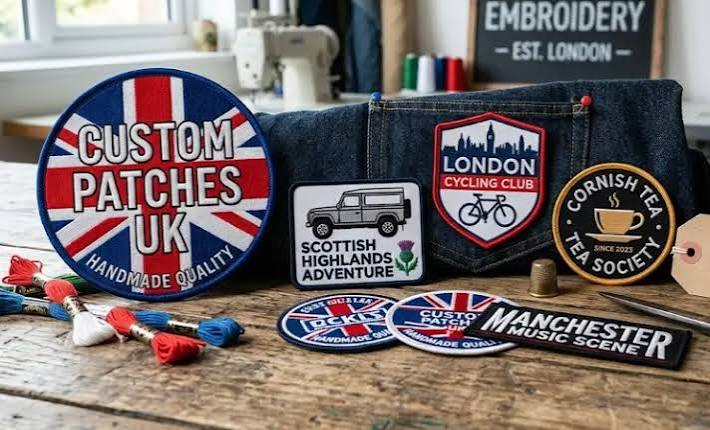
Custom patches have moved far beyond traditional military badges and club emblems. Today, businesses, organisations, sports teams, emergency services, retailers, and community groups use patches for branding, identification, decoration, and practical uniform applications. The demand for custom patches for UK industries reflects this versatility. A single patch can display a company logo, identify a staff member, represent membership, reinforce a brand identity, or add functional information to workwear.
Different industries require different materials, backing options, designs, and levels of durability. An embroidered patch that works well on a hospitality uniform may not be the best choice for outdoor equipment. A PVC patch used on tactical gear serves a different purpose from a woven badge attached to fashion clothing.
Understanding these differences helps explain why custom patches remain relevant across such a wide range of UK sectors.
Why Do UK Businesses and Organisations Use Custom Patches?
Custom patches provide a physical way to communicate identity.
A company uses a logo patch to display its brand. A sports club uses a badge to represent its team. A security company uses an identification patch to distinguish personnel. A clothing brand uses a decorative patch to change the appearance of a garment.
The function varies between industries, but the underlying principle remains consistent. Patches connect people, clothing, equipment, and organisations through visible identification.
They also offer flexibility because manufacturers can produce patches in different shapes, colours, thread types, materials, sizes, and attachment methods. Embroidered patches create a traditional stitched appearance. Woven patches reproduce finer details. PVC patches offer a flexible rubber-like finish. Printed patches reproduce complex graphics and colour gradients.
The correct construction depends on where the patch will be used.
Workwear and Corporate Uniforms
Businesses frequently use custom patches on employee uniforms, jackets, polo shirts, work shirts, aprons, and outerwear.
A branded uniform helps connect an employee with an organisation. A company logo placed on workwear makes the business identity visible without requiring the entire garment to be custom manufactured.
Name patches provide another function. They identify individual employees, job roles, departments, or teams.
For example, a facilities company may use one patch for its corporate logo and another for an employee’s name. A maintenance contractor may use patches to identify engineers working at customer sites. Cleaning companies, delivery businesses, warehouses, and trade contractors can use similar systems.
Embroidered logo patches are common where businesses want a traditional textile appearance. Sew-on backing provides a permanent attachment, while hook-and-loop backing allows patches to be removed or replaced when required.
The patch therefore becomes part of the wider workwear system rather than a simple decoration.
Construction and Trade Industries
Construction workers, electricians, plumbers, engineers, maintenance teams, and other trades often work in environments where employee identification matters.
Custom uniform patches can display a contractor’s company name, logo, department, role, or site function. This makes it easier to distinguish employees from visitors, subcontractors, and other personnel.
Durability is important in this environment.
A patch attached to workwear may experience frequent washing, abrasion, outdoor exposure, dust, and physical movement. The patch material and attachment method should therefore match the garment and working conditions.
Sew-on embroidered patches offer a strong option for permanent workwear branding. PVC patches may suit equipment or outer garments where moisture resistance and surface durability are priorities.
This is why businesses should select patches according to application rather than appearance alone.
Hospitality and Food Service
Hotels, restaurants, cafés, catering companies, pubs, and event venues often rely on staff presentation as part of the customer experience.
Custom patches can support this presentation by adding logos, names, job titles, or department identifiers to uniforms.
A hotel may use patches for housekeeping, maintenance, catering, and front-of-house employees. A restaurant may use a small embroidered logo on chef jackets or aprons. An events company may use staff patches to make team members easier to identify.
Patch design usually needs to complement the uniform rather than dominate it. Clean lettering, controlled colour combinations, and compact logo designs often work well in professional hospitality environments.
Washability also matters because hospitality uniforms can require frequent cleaning. Secure attachment and suitable materials become practical considerations alongside appearance.
Security and Event Management
Security companies and event-management organisations use patches primarily for visible identification.
Security personnel often need to be recognisable quickly. A clearly positioned patch can display a company name, staff role, team identifier, or other approved wording.
Event organisers may also use removable patches for stewards, crew members, supervisors, production staff, and temporary teams.
Hook-and-loop patches are particularly useful when roles change between events. The base garment remains the same while the identification patch changes.
For example:
- A jacket remains permanent.
- The role changes.
- The removable patch changes with the role.
This system reduces the need for separate garments for every function.
Any wording, insignia or identification used in regulated or official-looking contexts should, of course, follow the relevant organisation’s policies and applicable requirements.
Emergency and Response Organisations
Patches are closely associated with emergency-response clothing because identification needs to remain clear in busy environments.
Fire, ambulance, medical response, rescue, volunteer response, and support organisations may use patches to communicate team names, units, roles, or organisational identity.
Visibility and legibility become important attributes.
A detailed artistic design may look impressive at close range, but emergency identification often benefits from simpler layouts and strong lettering. The intended viewing distance should therefore influence the design.
Colour contrast, patch size, letter height, backing type, and placement all affect readability.
In these situations, design serves a functional purpose. The patch communicates information rather than acting only as decoration.
Sports Clubs and Teams
Sports patches combine branding, membership, achievement, and identity.
Football clubs, rugby teams, cricket clubs, martial arts schools, boxing gyms, cycling clubs, university teams, and amateur sports organisations can use custom badges on kits, tracksuits, jackets, bags, and merchandise.
A club crest identifies the team. A tournament patch records participation. A championship badge represents achievement. A sponsor patch displays commercial branding.
Different designs may require different manufacturing methods.
Traditional club crests often work well with embroidery. Designs containing smaller lettering or detailed lines may benefit from woven construction. Promotional merchandise may use printed patches when artwork contains complex colours or gradients.
Martial arts organisations also use patches to display school names, styles, affiliations, teams, and achievements on uniforms and training clothing.
The patch acts as a visual connection between the individual athlete and the wider organisation.
Motorcycle Clubs and Riding Groups
Motorcycle culture has a long association with jacket patches, back patches, badges, rockers, and embroidered emblems.
Riding groups may use patches to represent membership, location, group identity, events, or personal interests. Large embroidered designs can be attached to denim or leather garments, while smaller patches can appear on the front, sleeves, or accessories.
The construction must suit the garment.
A heavy embroidered patch may work effectively on a robust jacket. A thinner woven patch may suit a lighter garment. Sew-on attachment is often selected when the patch is intended to remain permanently in place.
Designers also need to consider how the patch interacts with seams, pockets, curved areas, and other existing garment features.
A successful motorcycle patch therefore combines visual identity with practical placement.
Tactical, Airsoft and Outdoor Applications
Tactical patches are commonly used on bags, vests, jackets, pouches, plate carriers, and outdoor equipment that already contains hook-and-loop panels.
The removable attachment system is one of the main advantages.
Users can replace a name patch, team patch, morale patch, callsign, identification label, or decorative design without altering the equipment itself.
PVC is widely suited to this type of application because the material creates raised designs and works well on outdoor equipment. Embroidered patches provide a more traditional fabric appearance, while woven patches support smaller graphical details.
Airsoft teams and outdoor groups may use patches for team recognition and personalisation. Morale patches add another dimension by using symbols, slogans, illustrations, or humorous designs.
The equipment provides the mounting surface. The backing provides removability. The patch provides identity.
Fashion and Streetwear
Fashion brands use patches differently from uniform-based industries.
In streetwear, patches become part of the garment design itself.
Brands may apply embroidered, chenille, woven, leather, printed, or sequin patches to jackets, hoodies, jeans, hats, bags, and accessories. The patch adds texture and creates a visual feature that standard printing cannot always reproduce.
Chenille patches are particularly associated with varsity and letterman-inspired styles. Embroidered patches create raised thread texture. Leather patches can create a more understated appearance. Woven patches reproduce fine lines and small typography.
Fashion designers can also use patches to create limited editions or update existing garments without redesigning the entire product.
This makes patches both a branding element and a creative textile component.
Retail Brands and Promotional Merchandise
Retailers and consumer brands can use patches as merchandise as well as branding tools.
A patch can be sold individually, included with a product, distributed at an event, added to branded clothing, or provided as part of a promotional campaign.
Unlike a printed leaflet, a patch has a physical use after the campaign ends. Customers can attach it to bags, jackets, hats, uniforms, or collections.
For organisations with distinctive logos or strong visual communities, patches can therefore become collectible promotional products.
Scouts, Clubs and Community Organisations
Scouting organisations, hobby groups, university societies, charities, associations, community organisations, and membership clubs can use patches to represent belonging and achievement.
A patch may identify a group, location, event, skill, programme, membership level, or completed activity.
These organisations often use multiple patches rather than a single design because each badge communicates a different piece of information.
The garment becomes a record of participation.
This explains why patches remain especially effective in organisations built around community identity. Members do not simply wear a logo; they display their connection with the group.
Which Patch Type Works Best for Different Industries?
There is no single patch type that works best for every sector.
Embroidered patches suit organisations that want a classic stitched appearance and strong textile texture. They are widely applicable to uniforms, clubs, workwear, jackets, sports clothing, and branded garments.
Woven patches use finer threads and can reproduce smaller details. They suit intricate logos, fine lettering, and designs where clarity is more important than a raised embroidered texture.
PVC patches create a flexible moulded surface. They are suitable for tactical equipment, outdoor gear, bags, workwear, and designs requiring a modern three-dimensional appearance.
Printed patches reproduce detailed artwork, photographs, gradients, and complex colour combinations that may be difficult to achieve with thread.
Chenille patches create a soft, raised finish commonly associated with varsity jackets, sports apparel, initials, numbers, and fashion applications.
Leather patches provide a distinctive material finish and are often used on denim, hats, bags, workwear, and lifestyle products.
The industry does not determine the material by itself. The final choice depends on the design, garment, environment, attachment method, required detail, and expected use.
How Backing Options Affect Patch Use
Backing determines how a patch connects to a garment or piece of equipment.
Sew-on patches use stitching to create a permanent attachment. This method works well for uniforms, jackets, workwear, and garments that will carry the same patch for a long period.
Iron-on or heat-applied patches use adhesive activated by heat. They can provide a convenient attachment method for suitable fabrics.
Hook-and-loop backing supports removable patches. Tactical equipment, security clothing, airsoft gear, and interchangeable uniforms frequently benefit from this system.
The correct backing depends on the application.
A permanent corporate logo has different requirements from a removable security role patch. An outdoor equipment patch has different requirements from a fashion badge applied to a lightweight garment.
Backing should therefore be considered during the design stage rather than after production.
Good Patch Design Starts With Its Intended Use
A successful custom patch begins with a clear purpose.
The designer needs to know who will wear the patch, where it will be attached, how large it needs to be, how often the garment will be washed, whether the patch needs to be removable, and how much visual detail the design contains.
These attributes influence each other.
Small patches require simpler lettering. Detailed artwork may require woven or printed construction. Outdoor use increases the importance of durable materials. Permanent uniforms favour secure attachment. Interchangeable roles favour removable backing.
A patch should therefore be designed as a functional product rather than simply reducing an existing logo to a smaller size.
Custom Patches Continue to Serve Different UK Sectors
Custom patches remain useful because the same basic product can serve many different purposes.
Businesses use patches for branding. Employers use them for staff identification. Sports clubs use them for team identity. Security organisations use them for visible roles. Fashion brands use them as design features. Tactical users attach them to equipment. Community organisations use them to represent membership and achievement.
The material, backing, shape, size, colours, and production method may change, but the central function remains consistent: a patch connects an identity or message with a person, garment, organisation, or piece of equipment.
That flexibility explains why custom patches continue to appear across so many UK industries. They are small textile or moulded products, but they can perform several roles at once, branding a uniform, identifying a wearer, representing a community, and giving clothing or equipment a distinctive visual identity.