A shipment described simply as “bulk cargo” may need very different equipment depending on what is being moved. Liquid products and dry powders present different loading, transport and discharge requirements, even when both travel in containers designed for intermodal logistics. For shippers comparing equipment, the starting point is therefore not the container’s appearance but the cargo’s properties and the conditions under which it must be handled.
ISO tank containers are associated with the movement of compatible liquids, while silo containers are designed for certain dry bulk materials. Neither description is enough to approve a shipment. Product specifications, equipment compatibility, cleaning needs and the rules that apply along the route must be checked before a container is selected.
What is an ISO tank container used for?
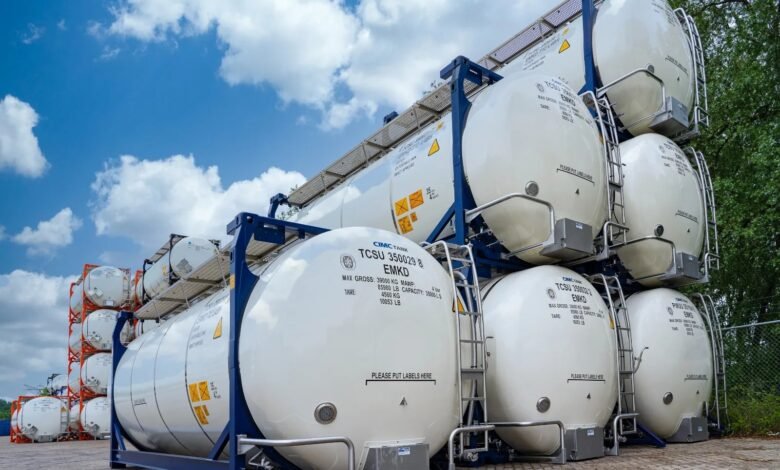
An ISO tank container combines a tank with a frame intended for handling within container transport systems. It can allow suitable liquid cargo to move across different modes of transport without being transferred into a new vessel at every stage. That potential advantage depends on the equipment matching the product and the planned journey.
Shippers researching an iso tank container should establish what the cargo requires before asking whether a particular unit is available. Relevant questions may include the product’s characteristics, the intended loading and discharge methods, temperature requirements, and whether the cargo is classified as dangerous goods. The tank’s specification and current condition must be assessed against those requirements.
“ISO tank” is a broad description, not a guarantee that any one unit can carry any liquid. Tank configuration, fittings and permitted uses can differ. Previous cargo and cleaning documentation may also matter, particularly where product contamination would be a concern. A shipper should seek confirmation for the specific product rather than rely on a general equipment label.
How do silo containers differ?
Silo containers address a different handling problem: the movement of suitable dry bulk products. Powders and granules do not load or discharge in the same way as liquids. Their flow behaviour, sensitivity to moisture and potential to leave residues can affect both equipment choice and operating procedures.
A business considering silo containers should describe its product and how it will be handled at each end of the journey. The receiving site’s discharge arrangements are especially important. If the equipment arrives but cannot connect to the facility’s process, the shipment may face avoidable delays regardless of how smoothly it travelled.
Dry bulk cargo also needs attention to cleanliness and product separation. The appropriate preparation depends on the material and its intended use. Rather than assuming that all powders can share the same handling process, shippers should confirm the equipment requirements with the parties responsible for loading, transport and receipt.
Why does the entire route matter?
Container selection cannot be separated from the route the cargo will take. Road access, terminal handling, onward transport and receiving-site capabilities all affect whether a proposed plan is workable. A container suited to the product still needs to be compatible with the facilities and procedures used throughout the journey.
Shippers can reduce uncertainty by identifying who will load the container, who will arrange each transport leg and who will manage discharge. The same discussion should cover any documentation and checks needed before release. For a shipment crossing borders or involving regulated products, the applicable requirements must be established for that particular cargo and route.
This coordination is particularly important when several organisations share responsibility for a shipment. A carrier may receive the container only after loading, while the consignee may have specific conditions for accepting it. Agreeing on those conditions early gives each party an opportunity to identify a mismatch before cargo is dispatched.
What should be checked before booking?
A useful equipment enquiry includes more than the words “liquid” or “powder.” The shipper should be prepared to provide an accurate product description, relevant technical information, the planned quantity, origin and destination, and the intended loading and discharge processes. If the cargo has special handling requirements, those should be raised at the outset.
When comparing tank containers, businesses can ask which equipment specifications are relevant to their cargo and what information is needed to confirm suitability. They should also clarify how condition, cleaning and any required documentation will be verified. These questions help turn a general equipment search into a shipment-specific plan.
It is worth checking operational details with both the dispatching and receiving sites. Are the necessary connections and handling arrangements available? Is the receiving team prepared for the proposed discharge method? Who will confirm that the container is ready for the next use? Answers may influence the schedule as well as the equipment choice.
The right choice begins with the product
ISO tank and silo containers can both support bulk transport, but they solve different cargo-handling problems. The appropriate choice depends on the material being shipped and the full set of loading, transport and discharge conditions—not on a generic preference for one container type.
For logistics teams, the practical approach is to define the cargo, verify the proposed equipment and coordinate every handover before booking. That work may be less visible than the journey itself, but it is what makes a container plan fit the product from departure through delivery.