Bucket Elevator Parts Explained: A Complete Glossary Every US Industrial Buyer Should Bookmark

When a bucket elevator goes down, the ripple effect through a facility is immediate. Conveyance stops, production halts, and the cost of unplanned downtime accumulates quickly. For plant managers, procurement specialists, and maintenance supervisors working in grain handling, cement, fertilizer, mining, or bulk chemical processing, knowing the specific components that make up a bucket elevator — and understanding what each one does — is not an academic exercise. It is a practical requirement for keeping operations consistent and repair timelines short.
The terminology used when sourcing replacement or maintenance components is not always standardized across manufacturers and regions. A purchasing manager sourcing from a new supplier for the first time can easily face confusion when part names differ slightly, or when a catalog lists a component by function rather than common name. This glossary is designed to cut through that ambiguity. Each entry reflects how these components function in real operating conditions and why they matter to the overall reliability of the system.
Understanding the Core Components of a Bucket Elevator
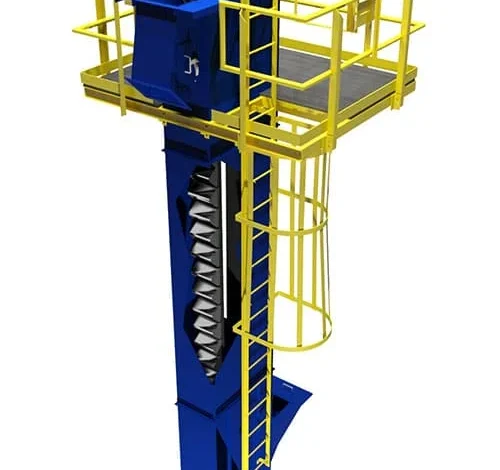
A bucket elevator is a vertically oriented mechanical conveyor designed to carry bulk materials — grain, minerals, powders, pellets — from a lower collection point to a higher discharge point. The system works through the coordinated function of several distinct parts, each of which contributes to throughput capacity, structural integrity, and operational continuity. When sourcing bucket elevator parts, buyers benefit from understanding not just the name of a component but what failure in that component looks like and what it costs downstream.
The major components can be grouped into structural, drive, conveying, and sealing categories. Each group serves a different function, and wear patterns within each group tend to follow predictable patterns depending on the material being handled and the duty cycle of the equipment.
The Boot Section
The boot section is the lowest housing of the elevator, positioned at ground level or below. It is the intake point where bulk material enters the elevator system. The boot houses the tail pulley or tail sprocket, depending on whether the system uses belt or chain as its conveying medium. In most facilities, the boot section is where material accumulates during startup, shutdown, or conveyor slowdowns, making it a high-wear zone prone to buildup and impact stress.
Maintenance teams frequently inspect the boot for material packing, which increases drag on the conveying element and places unnecessary load on the drive components. A boot that is not cleaned regularly or that is undersized for the material volume being handled will cause premature wear across multiple connected components.
The Head Section
The head section sits at the top of the elevator and is where material is discharged through centrifugal, continuous, or positive discharge, depending on the bucket type and speed. The head houses the drive pulley or head sprocket and is where the drive shaft connects to the power transmission assembly. It also carries the discharge chute or spout through which material exits.
The head section experiences significant mechanical stress because it bears the tension of the conveying element and absorbs vibration from the drive system. Inspection of head section bearings, shaft seals, and housing integrity is a routine priority in preventive maintenance schedules.
The Conveying Element: Belt vs. Chain
The conveying element is what carries the buckets between the boot and the head. In most US industrial applications, this is either a rubber or synthetic belt or a steel chain, and the choice between them significantly affects every other component selection in the system.
Elevator Belts
Elevator belts are fabric-reinforced rubber or synthetic products engineered specifically for vertical conveying. They are flexible, absorb impact well, and operate quietly at higher speeds. Belt systems are common in grain elevators, food processing, and dry powder handling where the material is relatively light and abrasion is not extreme.
A belt that is improperly tensioned — either too loose or too tight — will cause uneven bucket loading, accelerated wear at the bucket bolt points, and potential belt slippage on the drive pulley. Tensioning adjustments are made at the boot section, which is why boot take-up mechanisms are a critical maintenance point in belt-driven systems.
Elevator Chains
Chain-driven bucket elevators handle heavier, more abrasive, or higher-temperature materials such as cement clinker, sand, minerals, and hot materials where rubber belting would degrade. Steel chains are selected for their strength and dimensional stability under tension. They run on sprockets rather than pulleys and operate at lower speeds than belt systems.
Chain systems require more frequent lubrication and are sensitive to contamination with fine particles that can pack into chain links and cause premature elongation. Chain stretch is one of the most common operational issues in heavy-duty bucket elevators and directly affects bucket spacing and discharge accuracy.
Buckets: Shapes, Materials, and Selection Logic
The bucket is the carrying vessel attached to the belt or chain. It is the most frequently replaced component in any elevator system, and bucket selection has a direct impact on capacity, material degradation, and system wear. According to the Conveyor Equipment Manufacturers Association, CEMA, bucket shape and spacing are the primary determinants of elevator throughput and discharge behavior.
Centrifugal Discharge Buckets
These are the most widely used bucket style in grain and dry bulk handling. They are spaced apart on the belt so that centrifugal force at the head pulley throws material out of the bucket and into the discharge chute. They are light, cost-effective, and appropriate for free-flowing materials. However, they are not suited for materials that are sticky, wet, or prone to packing, as centrifugal force alone may not be sufficient to cleanly discharge the load.
Continuous Discharge Buckets
Continuous buckets are mounted close together and rely on gravity-assisted discharge as the conveying element wraps around the head. They are well-suited for fragile or wet materials where centrifugal action could cause material degradation or inconsistent discharge. The tight spacing means the descending side of the belt acts as a guide for material falling from the buckets, reducing spillage.
Bucket Materials
Bucket material selection depends on what is being conveyed. Mild steel buckets work for most general-purpose applications. High-density polyethylene buckets are used when corrosion resistance or reduced weight is necessary. Cast iron or hardened steel buckets are specified for abrasive or high-temperature materials where softer materials would wear quickly. Mismatching bucket material to the application accelerates wear cycles and increases replacement frequency beyond what is operationally sustainable.
Pulleys, Sprockets, and Shafts
The drive pulley or head sprocket is the primary mechanical interface between the motor system and the conveying element. It transfers rotational force from the drive shaft to the belt or chain. The tail pulley or boot sprocket at the lower end serves as the return point and tensioning element.
Pulley lagging — the rubber or ceramic material bonded to the surface of a drive pulley — increases friction between the pulley and belt, reducing slip. In high-humidity environments or where the belt surface may become contaminated with dust or moisture, adequate lagging is essential for consistent power transmission.
Shafts must be appropriately sized for the torque load of the application. An undersized shaft will flex under load, causing misalignment between the pulley or sprocket and the conveying element. Shaft misalignment is a leading cause of premature bearing failure and belt tracking problems in bucket elevator systems.
Bearings, Seals, and Housing Assemblies
Bearings support the rotating shafts at both the head and boot sections. In most elevator configurations, pillow block bearings are used because they allow for field alignment adjustments and are accessible for inspection without disassembling the housing. Bearings in elevator applications are subject to radial and axial loads, vibration from the conveying element, and environmental contaminants including dust and moisture.
Seal selection around the shaft penetration points matters significantly in dusty environments. Poor shaft sealing allows fine material to migrate into the bearing housing, contaminating lubrication and accelerating wear. In grain and flour handling, this also presents a dust accumulation risk within the housing structure that must be managed for fire and explosion prevention.
Drive Systems and Backstops
The drive system includes the motor, reducer, and any intermediate components connecting motor output to the drive shaft. The reducer steps down motor speed to the appropriate shaft RPM for the elevator’s operating speed. Selection of gear ratio affects capacity, torque availability, and starting characteristics of the system.
Backstops — also called anti-runback devices — are safety components mounted on the drive shaft that prevent the elevator from reversing direction if power is lost. Without a functional backstop, a loaded elevator will run backward under the weight of material in the buckets, potentially damaging the boot section, spilling product, and in worst cases causing structural failure. Backstop maintenance is often overlooked in routine inspections but is a critical safety and operational reliability element.
Casing, Inspection Doors, and Access Points
The elevator casing encloses the conveying element and buckets along the full vertical run of the machine. It contains dust, reduces spillage, and in many configurations is required by safety and environmental codes. The casing is typically made from bolted steel panels that allow sections to be removed for access during maintenance.
Inspection doors placed at intervals along the casing allow maintenance personnel to visually monitor belt or chain condition, bucket integrity, and material buildup without full disassembly. The number and placement of inspection doors affect how efficiently a maintenance crew can perform routine inspection cycles, which directly influences how quickly emerging problems are identified before they escalate into unplanned failures.
Closing Perspective: Why Component Literacy Reduces Operational Risk
Bucket elevator systems are not complex in principle, but the interaction between components is precise enough that a failure in one area tends to propagate through adjacent parts quickly. A worn tail pulley accelerates belt degradation. A contaminated bearing creates shaft misalignment. An undersized backstop fails under reverse load. Understanding how these components relate to each other allows maintenance teams and procurement personnel to make better decisions at every stage — from routine replacement to emergency sourcing.
For US industrial buyers working across grain handling, mining, fertilizer, cement, or chemical processing, the ability to correctly identify and specify bucket elevator parts is a core operational competency. Equipment reliability depends not just on having replacement components available, but on having the right ones — sourced to the correct specification, installed with the correct tolerances, and monitored with an understanding of how that part behaves under real working conditions.
Keeping this glossary as a reference during procurement reviews, supplier conversations, or maintenance planning sessions is a practical step toward reducing the ambiguity that often slows down sourcing decisions and extends downtime unnecessarily.