Sonji Roi and Muhammad Ali: A Marriage at the Crossroads of Fame, Faith, and Freedom

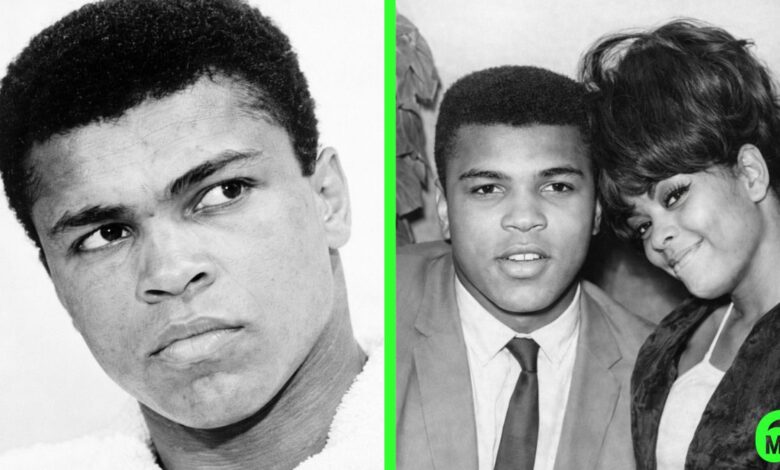
In the story of Muhammad Ali, the arc is often told through championship belts, political defiance, and spiritual transformation. Less frequently examined are the individuals who stood close to him at pivotal moments—people whose lives were reshaped by proximity to greatness. One such figure is Sonji Roi, Ali’s first wife, whose brief marriage coincided with one of the most turbulent transitions of his life.
Ali married Sonji Roi in August 1964, only months after becoming heavyweight champion and shortly after embracing a new religious identity. Their union lasted less than two years, yet it unfolded during a period when Ali was redefining himself before the world. This article explores Sonji Roi’s life and historical significance strictly through verifiable public records, court documents, interviews, and contemporary reporting. Rather than speculation, the focus is on what is known—and what her relative privacy itself reveals—about a woman whose marriage placed her at the center of cultural, religious, and personal change.
Quick Bio
| Key Detail | Information |
|---|---|
| Full Name | Sonji Roi |
| Born | 1945 |
| Died | 2005 |
| Relationship | First wife of Muhammad Ali |
| Marriage Date | August 14, 1964 |
| Divorce | 1966 |
| Public Profile | Private individual |
| Profession | Cocktail waitress, model |
| Children with Ali | None |
| Religious Affiliation (publicly noted) | Not aligned with Nation of Islam |
| Social Media Presence | None |
Who Is Sonji Roi?
Sonji Roi is best known historically as the first wife of Muhammad Ali, but reducing her identity to that single fact misses the deeper context. She entered Ali’s life at a moment when he was transitioning from Cassius Clay, brash Olympic champion, to Muhammad Ali, a global figure shaped by faith and activism. Roi was not a public personality in her own right, nor did she seek celebrity after her marriage ended.
Her significance lies in timing. The marriage placed her alongside Ali as he publicly aligned himself with the Nation of Islam, a commitment that profoundly altered his worldview. Roi’s refusal to conform to the group’s strict expectations became central to the dissolution of their marriage, making her story inseparable from Ali’s spiritual and ideological evolution.
The Private Life of Sonji Roi
Sonji Roi maintained a largely private life both during and after her marriage to Ali. Unlike later spouses of public figures who embraced media attention, Roi did not cultivate interviews, memoirs, or public platforms. Contemporary accounts describe her as independent-minded, stylish, and unwilling to surrender personal autonomy.
This privacy is not an absence of character; it is evidence of choice. In an era when association with a heavyweight champion could open doors to fame, Roi stepped away from the spotlight after the divorce. Her limited public record underscores a boundary she maintained between personal life and public curiosity—a stance that contrasts sharply with the celebrity culture surrounding Ali.
Early Life and Background of Sonji Roi
Publicly available information about Sonji Roi’s early life is limited but consistent. Born in 1945, she grew up in the United States and worked as a cocktail waitress and model in her early adulthood. These professions placed her in social spaces where athletes, entertainers, and public figures often circulated, providing context for how she met Ali.
What stands out is not the scarcity of detail, but the absence of self-promotion. Unlike many individuals connected to famous partners, Roi did not later frame her early life as a narrative of ambition or destiny. The historical record presents her background plainly, without embellishment—a reminder that not every figure adjacent to fame seeks legacy through publicity.
Marriage and Partnership with Muhammad Ali
Sonji Roi married Muhammad Ali on August 14, 1964, just 41 days after they met. At the time, Ali was 22 years old and newly crowned heavyweight champion of the world. The speed of the marriage reflected Ali’s impulsive confidence and intense personal momentum following his victory over Sonny Liston.
The marriage quickly encountered strain due to religious differences. Ali’s commitment to the Nation of Islam brought expectations regarding dress, social behavior, and gender roles. Court records and Ali’s own later statements confirm that Roi resisted these requirements, particularly those involving modest dress and social restrictions.
Their divorce in 1966 was not the result of scandal or infidelity but of incompatible worldviews. In that sense, the marriage serves as a historical marker of Ali’s full immersion into his faith—and the personal sacrifices that accompanied it.
Sonji Roi’s Role Behind the Scenes
During their marriage, Sonji Roi occupied a complex position. She was married to a man undergoing a public religious transformation while being expected to adapt privately. Her resistance was not a public protest but a personal refusal. This quiet defiance is one of the few aspects of her role that are clearly documented.
Rather than shaping Ali’s public image, Roi inadvertently highlighted the rigidity of the Nation of Islam’s social codes by declining to conform. Her stance did not alter Ali’s path, but it exposed the personal cost of ideological absolutism. In historical terms, her role is defined not by the influence she exerts, but by the boundaries she maintains.
Family Life: Children and Domestic Choices
Sonji Roi had no children with Muhammad Ali. This fact, often overlooked, is significant. Later in life, Ali became a father to nine children across several marriages and frequently spoke about family and legacy. Roi’s marriage predates this phase, occurring when Ali’s primary focus was self-definition rather than domestic stability.
The absence of children further contributed to Roi’s ability to exit the marriage cleanly and privately. Without shared parenting responsibilities, she was able to withdraw from public association with Ali and reclaim a life outside his expanding fame.
Philanthropy and Community Engagement
There is no public record of Sonji Roi engaging in organized philanthropy or community leadership. Rather than interpreting this as a lack, it reflects her overall withdrawal from public life. Unlike Ali, whose charitable work was highly visible, Roi’s contributions—if any—were not documented in the press.
This contrast reinforces a central theme of her life: impact does not always require visibility. In historical analysis, silence can be as intentional as speech, particularly when sustained over decades.
The Power of Privacy: Influence Without Publicity
Sonji Roi’s enduring legacy is tied to her refusal to be absorbed into Ali’s narrative. She did not write a tell-all, seek interviews, or position herself as a victim or insider. In doing so, she preserved personal dignity while allowing history to focus on verifiable facts.
For biographers, this restraint complicates storytelling but enhances credibility. Roi’s privacy stands as a counterpoint to modern expectations that proximity to fame demands disclosure. Her life illustrates that withdrawal can itself be a form of agency.
Public Curiosity and Misconceptions About Sonji Roi
Public curiosity about Sonji Roi often centers on what she “could have been” had she stayed with Ali. This framing misunderstands her choices. The historical record suggests not loss, but clarity: Roi declined a life that required surrendering autonomy.
Misconceptions arise when silence is mistaken for insignificance. In reality, her brief marriage offers rare insight into Ali’s early struggles to balance personal relationships and ideological commitment.
Legacy and Historical Significance
Sonji Roi’s legacy is subtle but enduring. She represents the human dimension of a public transformation—one that demanded conformity and left little room for compromise. Her decision to leave rather than submit preserved her individuality and left behind a quiet but powerful example.
In biographies of Muhammad Ali, Roi often appears in a few paragraphs. Yet those paragraphs mark a turning point, reminding readers that every public ascent carries private consequences.
Conclusion
Sonji Roi occupies a unique place in the history of Muhammad Ali—not as a celebrity spouse, but as a witness to his transformation. Their marriage, brief and ultimately incompatible, unfolded at a moment when Ali was redefining faith, identity, and purpose. Roi’s refusal to conform, followed by her retreat from public life, underscores a commitment to personal autonomy that remains consistent throughout her story.
In an age fascinated by exposure, Sonji Roi’s legacy rests in restraint. Her life demonstrates that significance is not measured by visibility, and that history can honor those who choose privacy without erasing their impact.
Read this too:Johnny McClain and Laila Ali: A Quiet Figure in the Early Life of a Boxing Champion
(FAQs)
- Who was Sonji Roi?
She was the first wife of Muhammad Ali, married from 1964 to 1966. - When did Sonji Roi marry Muhammad Ali?
They married on August 14, 1964. - Why did Sonji Roi and Muhammad Ali divorce?
Due to irreconcilable differences related to Ali’s devotion to the Nation of Islam. - Did Sonji Roi have children with Muhammad Ali?
No, they had no children together. - What was Sonji Roi’s profession?
She worked as a cocktail waitress and model. - Was Sonji Roi part of the Nation of Islam?
No, she did not adopt its practices. - Did Sonji Roi remarry after divorcing Ali?
There is no verified public record confirming remarriage. - Why is Sonji Roi historically significant?
Her marriage coincided with Ali’s religious transformation and highlights its personal impact.