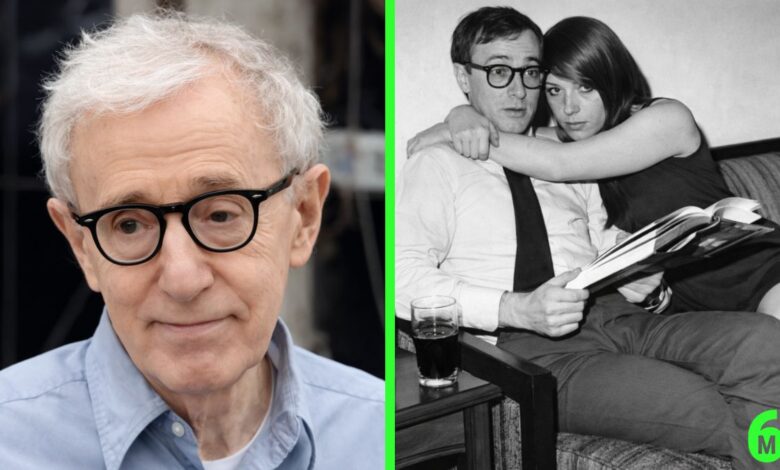
Before Woody Allen became an Oscar-winning writer-director, he was a very young New York joke writer trying to make his way in television and stand-up. In that early chapter, Harlene Rosen was not a sidebar to a famous career; she was part of the life Allen was living before the fame arrived. Public records and biographical accounts agree on the essentials: Rosen was Allen’s first wife, they married in 1956 when both were very young, and the marriage ended in the early 1960s. Later, after Allen turned parts of that marriage into comedy material, Rosen sued him for defamation.
That may sound like the outline of a celebrity backstory, but Rosen’s case is different because the public record is so thin. She did not build a public career from the connection, did not become a familiar interview subject, and did not turn private pain into a memoir. That absence matters. It shapes how she appears in cultural memory: less as a fully public figure than as someone glimpsed through biographies, old routines, and a few later references that show just how little she chose to say.
Harlene Rosen Quick Bio
| Detail | Information |
|---|---|
| Full Name | Harlene Rosen |
| Relationship | Woody Allen’s first wife |
| Public Profile | Private citizen known through Allen biographies and later reporting about his early life |
| Age | Not firmly established in strong public records; contemporary summaries place her at 16 or 17 when she married Allen in 1956, implying a birth year around 1939–1940 |
| Residence | Public sources place the marriage in early New York life; later residence is not firmly documented in reliable public reporting |
| Children | No children with Allen are documented in standard public biographical accounts |
| Known Philanthropic Interests | No well-sourced public record located |
| Social Media Presence | No verified public social-media presence located |
Who is Harlene Rosen?
Harlene Rosen is best known as Woody Allen‘s first wife, but that description is both accurate and incomplete. It is accurate because most verifiable public references to her come through Allen’s biography: the 1956 marriage, the divorce, and the later defamation dispute after Allen used material about his ex-wife in public comedy. It is incomplete because Rosen’s significance lies in what her story reveals about the cost of fame before fame fully arrives. She was part of Allen’s formative years, when he was still a freelance gag writer and aspiring performer, and later became one of the first people in his orbit to feel the force of his public persona once private experience became stage material.
What distinguishes Rosen from many people attached to celebrity history is not a large public footprint but the opposite: a small one. David Evanier’s 2015 biography was notable in part because promotional material stressed that he had spoken with Rosen, who had not publicly commented on Allen since the end of their marriage in the 1960s. That detail says a great deal: she did not remain in public circulation as a recurring witness to Allen’s life. She mostly vanished from view.
The Private Life of Harlene Rosen
The most responsible way to write about Rosen is to begin with limits. The public record does not support a richly detailed portrait of her private routine, later career, inner life, or family life after the divorce. That is not a failure of reporting so much as a fact about the life she appears to have chosen. Biographies of Allen consistently preserve her place in his early chronology, but they do not turn her into a continuing public personality. In celebrity culture, that is unusual. Many former spouses become commentators, memoirists, or secondary public figures. Rosen, as far as the reliable record shows, did not.
That privacy has shaped her reputation. Because there is so little first-person material from Rosen, she is often flattened into a stock figure: “the first wife,” “the teenage bride,” “the woman sued over jokes.” Yet the archive’s thinness makes another point. A person can be historically relevant without being publicly expansive. Rosen’s importance comes not from self-promotion, but from the way her brief visibility illuminates the ethics of public humour, the imbalance between celebrity and private citizens, and the long afterlife of early relationships in cultural memory.
Early Life and Background of Harlene Rosen
Firm, high-quality public information about Rosen’s childhood and family background is scarce. What can be said with confidence is modest: she was very young when she married Allen, and one later account based on Allen’s own recollection described her as a philosophy student. That small detail matters because it adds a little texture to the historical record. It suggests an intellectually engaged young woman, not merely a name attached to a future celebrity. Allen himself later linked his early interest in philosophy to that marriage, recalling her textbooks spread across the dinner table in their small apartment.
Beyond that, caution is necessary. Many recent web articles supply vivid but weakly sourced details about her birthplace, parents, profession, or artistic life. Those claims are repeated too often and sourced too poorly to be considered reliable. A trustworthy account should resist the temptation to fill silence with decorative biography. In Rosen’s case, the silence is part of the story. The lack of detail tells us less about her worth than about how unevenly history records people who did not seek public attention.
Marriage and Partnership with Woody Allen
The marriage belongs to Allen’s pre-fame years. Reliable accounts place it in 1956, when Allen was around 20 and Rosen was about 16 or 17. Later descriptions portray the pair as very young New Yorkers trying to build an adult life before either had much life experience. Allen was then a freelance gag writer, not yet the towering film figure he would become. In that sense, Rosen was present before the legend hardened. She belonged to the apprenticeship years.
The public record does not give a gallery of glamorous public appearances or a trove of shared interviews. What it gives instead is a harsher kind of visibility: the marriage resurfaced through Allen’s stand-up and television remarks after the relationship had ended. He referred to Rosen in his act as “the Dread Mrs Allen,” and he publicly repeated a cruel joke about her after news coverage of an assault. Those comments became serious enough that Rosen sued him for defamation. The marriage, in other words, moved from private youth into public comedy, and that change is central to why Rosen remains part of Allen’s story.
Harlene Rosen’s Role Behind the Scenes
Because Rosen left so little on the record, “behind the scenes” has to be understood carefully. There is no strong public documentation of her acting as a manager, collaborator, producer, or visible architect of Allen’s later career. What is visible is subtler. She appears in accounts of Allen’s early intellectual development, especially in connection with philosophy, and in the domestic setting of his pre-fame life. That does not justify overstating her influence, but it does show that she was part of the intimate world from which Allen’s early identity as a writer and performer emerged.
This is where biography often becomes distorted. Famous men are often portrayed as if the people around them were merely background furniture until their careers took off. Rosen’s case argues against that habit. Even the little that survives shows a marriage taking place in cramped, formative circumstances: youth, money worries, ambition, education, and the rough conversion of private experience into comedy. Her role behind the scenes is not reducible to career labour. It is the role of a real person caught up in a young artist’s self-making.
Family Life: Raising the Next Generation
This is one of the sections where public evidence imposes hard boundaries. There is no well-sourced public record of Rosen and Allen raising children together, and standard biographical summaries of Allen’s family life place his children in much later relationships. That matters because it keeps the historical record clean. Rosen’s marriage to Allen is part of his early biography, but not part of the family structure that later became publicly known around him.
Still, the absence of children in the documented record has interpretive weight. It means Rosen’s place in public memory rests almost entirely on the marriage itself, not on a continuing shared family life. Many ex-spouses of famous people remain visible because children keep them tied to a celebrity’s public narrative. Rosen did not occupy that role. Her withdrawal from the spotlight was therefore more complete and perhaps easier to maintain than it would have been otherwise. That, too, helps explain why she appears as an early chapter rather than a continuing public presence.
Philanthropy and Community Engagement
No strong public source I found establishes a philanthropic profile or community platform for Rosen herself. In a profile of a private person, that is not a blank to be filled with generic praise. It is simply where the public trail ends. The temptation in celebrity-adjacent writing is to supply benevolent activities because they sound plausible. A more careful approach is to say that no reliable public philanthropic record surfaced in the materials examined.
That lack of evidence also reinforces a broader point about privacy. Public worth is often measured by what can be easily found, indexed, and branded. Rosen’s case reminds us that not every life connected to fame has been turned into a public portfolio. Some people leave an impact in ways that are not searchable. In factual writing, though, that idea must remain a reflection on public culture, not a claim about undocumented deeds.
The Power of Privacy: Influence Without Publicity
Privacy is not merely the condition of Rosen’s story; it is one of its main themes. The public knows her because Allen became famous, but it still knows very little about her because she did not build a second career out of that connection. Evanier’s biography was marketed partly on the fact that she had not commented publicly on Allen since the 1960s. That suggests a remarkably sustained refusal to join the endless retrospective industry around a major cultural figure.
In a media environment that rewards disclosure, that kind of silence can look mysterious. It may be better understood as a discipline. Rosen’s example shows that privacy can itself be a form of authorship: not publishing a memoir, not becoming a permanent witness, not handing over every detail for public consumption. The result is frustrating for gossip, but revealing for biography. It shows how firmly a person can decline the role history seems ready to assign.
Public Curiosity and Misconceptions About Harlene Rosen
Because Rosen is obscure, the internet has been quick to overproduce facts about her. Recent low-quality pages routinely assign her a precise birth date, a confirmed profession, named parents, later residences, and polished emotional narratives that do not appear to rest on strong sourcing. The pattern is familiar: a thin historical record gets padded until uncertainty disappears. In Rosen’s case, that process is especially misleading because uncertainty is the central fact.
The better-supported points are narrower. She was Allen’s first wife. They married young. The marriage ended. Allen later publicly joked about her, leading to a defamation suit. Decades later, biographical material indicated that Rosen had spoken to David Evanier after many years of silence. Those facts are enough to tell a serious story. They do not need decorative invention.
Legacy and Future
Rosen’s legacy is quiet, but it is not slight. She survives in the public record as a reminder that fame has collateral biographies. Long before Allen’s major films, awards, and controversies, there was a very young marriage that later became public material. Rosen’s presence in that history exposes a tension that still feels current: when does an artist’s use of private life constitute an injury to someone who did not consent to public treatment? Her defamation suit keeps that question alive.
As for the future, the record may remain thin. Unless new archival material or direct testimony emerges, Rosen will likely remain in public memory as a partially seen figure: foundational to Allen’s early life, yet largely inaccessible on her own terms. That is not a failure of biography. It may simply be the last expression of a life lived outside publicity’s demands.
Conclusion
Harlene Rosen’s story does not fit the usual celebrity-spouse template. There is no dependable public trail of brand-building, no long interview circuit, no elaborate public reinvention. What remains instead is something more austere and, in its way, more revealing: a young marriage in 1950s New York, a painful transition from private life to comic material, a defamation suit that fixed her place in Allen’s early public history, and then decades of near-silence.
That silence should not be mistaken for insignificance. On the contrary, it gives Rosen’s story its shape. She matters because she stands at the edge of a famous life while resisting its absorption. The public can identify her, date the marriage, and trace the legal fallout. It cannot fully claim her. In a culture that often mistakes visibility for importance, Harlene Rosen remains important precisely because she stayed, as much as possible, her own private person.
Read this too:Cicely Johnston and Demond Wilson: A Fact-Based Look at a Private Life Beside a Public Career
(FAQs)
1. Who is Harlene Rosen?
Harlene Rosen is best known as Woody Allen’s first wife.
2. When did Harlene Rosen and Woody Allen marry?
Reliable public summaries place their marriage in 1956.
3. How old was Harlene Rosen when she married Woody Allen?
Strong public summaries place her at about 16 or 17 when they married, while Allen was about 19 or 20.
4. Why is Harlene Rosen still discussed today?
Mostly because her marriage to Allen became part of his early public story and later his comedy material.
5. What was “the Dread Mrs Allen”?
It was Allen’s public label for Rosen in his stand-up material.
6. Did Harlene Rosen sue Woody Allen?
Yes. Public biographical summaries state that she sued him for defamation after he publicly made remarks about her.
7. Did Harlene Rosen speak publicly about Woody Allen later in life?
Promotional material for David Evanier’s 2015 biography indicated that he spoke with Rosen, who had not publicly commented on Allen since the 1960s.
8. What is publicly known about Harlene Rosen’s later life?
Very little from strong public sources. Her later life appears to have remained deliberately private.