Shelley Long became one of television’s defining faces in the 1980s through Cheers, where her portrayal of Diane Chambers earned major industry recognition and made her a household name. Long’s public career also features film roles and recurring television appearances, but her story also includes a much more private figure: Bruce Tyson. Public records on Tyson are limited, making any responsible profile of him distinct from that of a typical celebrity. He is primarily known from verified sources as Long’s former husband, an investment adviser, and Juliana’s father. Beyond that, the information narrows, emphasizing his significance in Long’s life without embellishment. The approach here relies on documented facts, not recurring rumors. This article considers who Bruce Tyson is and what his privacy illustrates about the line between public and private lives.
Quick Bio
| Field | Details |
|---|---|
| Full Name | Bruce Tyson |
| Relationship | Former husband of actress Shelley Long |
| Public Profile | Private individual known publicly through his marriage to Long and occasional event appearances |
| Age | Not reliably confirmed in strong public sources |
| Residence | Not reliably confirmed in strong public sources |
| Children | One daughter, Juliana Long Tyson |
| Profession | Investment adviser / investment counselor / financial adviser in public source descriptions |
| Known Philanthropic Interests | No standalone public philanthropic profile is clearly established; he and Long are documented at charity-related events benefiting Saint John’s Hospital and at the Big Sisters Gala |
| Social Media Presence | No verified public profile located in the sources reviewed |
Who is Bruce Tyson?
Bruce Tyson is best known in the public record as Shelley Long’s former husband and the father of their daughter, Juliana Long Tyson. Verified sources describe him as working in finance, with reference points such as “investment adviser,” “investment counselor,” or “financial adviser,” while image archives place him alongside Long at entertainment and charity events across the 1980s and 1990s. Their marriage began in October 1981 and ended in divorce in 2004 after more than two decades together. That span overlaps almost exactly with Long’s rise to national fame, from Cheers into her film years and later television work. What stands out, though, is how little Tyson appears to have sought public recognition. In a celebrity culture that often turns spouses into secondary public brands, Tyson’s record looks unusually restrained. The facts suggest not a public personality in his own right, but a private partner whose significance is clearest in relation to family, stability, and a life kept mostly outside the entertainment press.
The Private Life of Bruce Tyson
Bruce Tyson’s privacy is not an empty space to be filled with rumor; it is itself one of the clearest facts about him. Unlike many people in the vicinity of Hollywood fame, he did not build a parallel media identity through interviews, memoirs, lifestyle branding, or recurring press appearances. What survives publicly are a handful of biographical references, event photographs, and coverage connected to Shelley Long’s career and their family life. That pattern matters. It suggests a person whose public trace remained functional rather than self-promotional: he appeared when accompanying Long, when family status became part of a standard actress biography, or when press coverage around Long’s personal difficulties briefly widened to include him. In practical terms, that means any serious profile of Tyson must remain modest in its claims. The privacy here is not a mystery to solve. It is evidence of a line he appears to have kept between professional life, family life, and celebrity culture.
Early Life and Background of Bruce Tyson
Publicly verifiable information about Bruce Tyson’s early life is scarce. The stronger sources reviewed here do not establish a confirmed birth date, hometown, educational history, or detailed family background. What can be said with confidence is narrower but still meaningful: by the time he entered the public record through his marriage to Shelley Long, he was being identified as an investment adviser or investment counselor, placing him in a professional world far removed from television stardom. That contrast is important. Tyson entered public view not as an entertainer, producer, or publicity figure, but as someone from finance. In biographies of celebrities, a spouse’s profession can easily become a footnote. In Tyson’s case, it is one of the few confirmed anchors available. It helps explain why public descriptions of him tend to feel restrained and occupational rather than dramatic. The record points more toward a private professional life, intermittently visible because of marriage to a famous actress, than toward celebrity biography.
Marriage and Partnership with Shelley Long
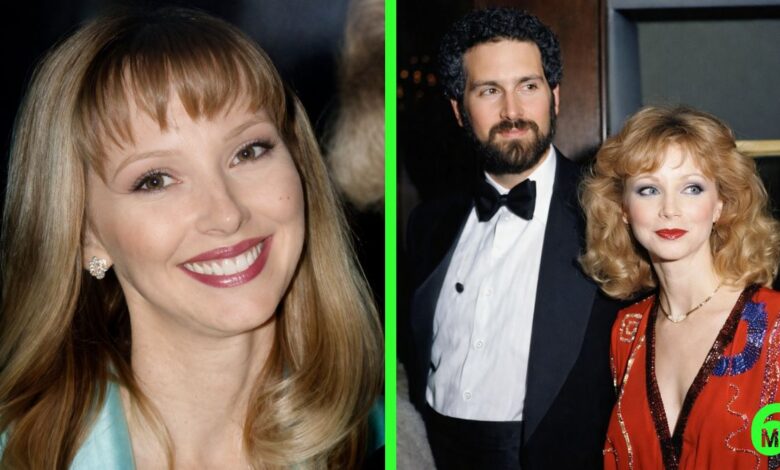
Bruce Tyson and Shelley Long married on October 16, 1981, according to public records, and remained together until 2004. Their marriage coincided with Long’s prominence on Cheers and other projects. Archives show Tyson with Long at events including the People’s Choice Awards, Producers Guild Awards, and benefits. These appearances highlight a public dimension to the marriage—Tyson was present but not prominent. Their partnership, as the record shows, balanced Long’s Hollywood visibility with Tyson’s more private career. The marriage ended after over two decades, surfacing in reports during Long’s challenges in 2004.
Bruce Tyson’s Role Behind the Scenes
Because Tyson did not narrate his own public role, any responsible discussion of his behind-the-scenes role must stay close to observable facts. Those facts are these: he was married to Long during her rise and long stretch of fame, he worked in finance rather than entertainment, and he and Long raised a daughter during years when Long was balancing high-profile acting with family life. Long later said that one reason she left Cheers was a desire to spend more time with her daughter, which places family priorities squarely within the household context Tyson shared with her. That does not license grand claims about who did what in private. It does, however, show that the family unit mattered enough to shape one of the most discussed career decisions in Long’s life. Tyson’s importance, then, is best understood not through dramatic mythology but through structure: he was part of the domestic world against which Long measured work, motherhood, and fame.
Family Life: Raising the Next Generation
Bruce Tyson and Shelley Long had one daughter, Juliana Long Tyson. That fact appears consistently across the stronger public sources. Juliana’s presence also helps explain the tone of the family’s public profile: even when Long discussed career choices, family was often treated as something to protect rather than display. Public material about Tyson does not turn fatherhood into a media identity, but the consistency with which Juliana appears in basic biographical records shows that parenthood is one of the central documented facts of his life. This is an important distinction. For many celebrity-adjacent figures, public visibility expands through family branding. That does not appear to have happened here. Juliana is acknowledged, but the family did not become a regular public narrative. The result is a record that confirms the family’s importance while preserving its boundaries, which may be one reason the Tyson-Long household remains more respected than sensationalized in retrospect.
Philanthropy and Community Engagement
There is not enough strong public evidence to build a standalone philanthropic biography of Bruce Tyson. What can be said is more limited and therefore more trustworthy. Photo archives place Tyson and Long at events tied to charitable or benefit causes, including one benefiting Saint John’s Hospital in Santa Monica and another honoring Kathleen Kennedy at a Big Sisters Gala. Those appearances do not prove a broad, well-documented philanthropic portfolio, and they should not be stretched to create one. Still, they show that Tyson’s public appearances with Long were not confined to premieres and industry celebrations; some were held in civic and charitable settings. That matters because it situates the couple within the customary public-service circuit common to entertainment figures and their spouses in Los Angeles at the time. The careful conclusion is not that Tyson was a major public philanthropist, but that his documented appearances suggest participation in a social world where charity, community prestige, and Hollywood visibility often overlapped.
The Power of Privacy: Influence Without Publicity
Bruce Tyson’s low profile illustrates something increasingly rare in celebrity-adjacent narratives: influence without self-advertisement. Modern audiences are used to the idea that proximity to fame creates its own public platform. Yet Tyson’s documented footprint remains narrow, even though he was married for more than twenty years to one of television’s most recognizable actresses. That restraint helps explain why so many later articles about him are inflated with unverified dates, net-worth claims, and invented personality sketches. Privacy creates a vacuum, and the internet often fills it badly. The more disciplined reading is simpler. Tyson appears to have chosen, or at least maintained, a life in which professional identity and family identity were not constantly offered to the public. In that sense, his privacy is not absent. It is a form of authorship. By leaving behind so little promotional material, he shaped how little can honestly be said—and that itself is part of his public legacy.
Public Curiosity and Misconceptions About Bruce Tyson
The scarcity of verified information has led to widespread careless rewriting online. One recurring problem is the confident publication of exact ages, birthplaces, residences, and financial estimates without strong sourcing. Another is the tendency to turn Tyson into either a glamorous Hollywood insider or a fully mapped finance executive with a publicly documented life story. The sources reviewed do not support either portrait. What they support is more modest: Tyson was Long’s husband for over two decades, worked in finance, appeared publicly with her at selected events, and is the father of Juliana Long Tyson. Reporting from 2004 also places him briefly in the news during the period surrounding Long’s hospitalization, while subsequent accounts emphasize that Long later described herself as doing better. Beyond those points, caution is not a weakness. It is the difference between biography and fabrication. Public curiosity is understandable, but it does not turn rumor into record.
Legacy and Future
Bruce Tyson’s legacy, at least in public view, is a quiet one. He is not remembered through an entertainment résumé or a cultivated public persona. He is remembered through relationship, fatherhood, profession, and the unusual durability of his privacy. For that reason, his story works best not as a celebrity profile in the usual sense, but as a reminder that many lives connected to fame are not lived for public consumption. Tyson’s place in the Shelley Long story is real and historically relevant, even if it is lightly documented. He was there during the years when Long’s career was at its most visible, during the years they raised a daughter, and during a marriage that lasted more than twenty years. The future public record may remain thin, and that would be consistent with everything already known. In an age of overexposure, that kind of consistency has its own dignity.
Conclusion
Bruce Tyson occupies an unusual place in celebrity biography: important to a famous life, yet only lightly present in the public archive. The verified record does not support sensational claims, but it does support something more interesting and more durable. He was Shelley Long’s husband during the defining decades of her public career, a finance professional rather than a Hollywood personality, and the father of their daughter, Juliana. He appears in photographs from public events, in biographical summaries, and briefly in reporting tied to a painful chapter in Long’s life. Beyond that, he remains largely private. That should not be treated as a gap to be patched with gossip. It should be treated as a fact in its own right. Bruce Tyson’s story is ultimately less about celebrity than about distance from celebrity: how someone can stand beside a very public figure and still leave behind a record marked by discretion, family, and a refusal to become a performance for strangers.
Read this too:Enrica Cenzatti: the private chapter in Andrea Bocelli’s public story
(FAQs)
1. Who is Bruce Tyson?
Bruce Tyson is publicly known as Shelley Long’s former husband, a finance professional described in sources as an investment adviser or investment counselor, and the father of Juliana Long Tyson.
2. Was Bruce Tyson married to Shelley Long?
Yes. Public biographical sources list their marriage as beginning on October 16, 1981, and ending in divorce in 2004.
3. Did Bruce Tyson and Shelley Long have children?
Yes. They had one daughter, Juliana Long Tyson.
4. What did Bruce Tyson do professionally?
Public sources describe him as an investment adviser, investment counselor, or financial adviser.
5. Is Bruce Tyson a public figure in his own right?
Not in the usual celebrity sense. His public visibility comes mainly through his marriage to Shelley Long and a small number of documented event appearances.
6. Are there reliable public details about Bruce Tyson’s age or early life?
Not in the stronger public sources reviewed here. Many websites publish such details, but they often do so without solid sourcing.
7. Was Bruce Tyson involved in public charity events with Shelley Long?
Documented image archives show Tyson and Long attending at least some benefit-related events, including one for Saint John’s Hospital and a Big Sisters Gala.
8. Why is so little known publicly about Bruce Tyson?
Because the public record around him is limited, and he appears to have maintained a private life despite his long marriage to a famous actress.