Jennifer Lynton: A Fact-Based Look at Anthony Hopkins’s Former Wife and Her Quiet Place in a Very Public Story

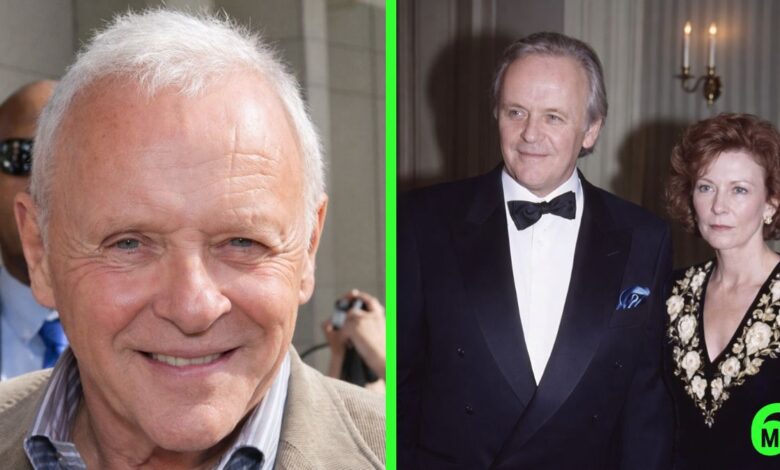
Sir Anthony Hopkins has spent decades in the public eye, building one of the most decorated acting careers of his generation. The Welsh actor is widely known for films such as The Silence of the Lambs and The Father, and official sources show he has won two Academy Awards for Best Actor.
Jennifer Lynton belongs to a very different category of public figure. She is known primarily because of her long marriage to Hopkins, which lasted from 1973 until their divorce in 2002. Public records on her are comparatively thin, and that fact shapes any trustworthy account of her life. Britannica’s facts page on Hopkins lists Lynton as one of his spouses, while memoir-era coverage in 2025 renewed attention on their marriage after Hopkins wrote about his infidelity and said she “deserved better.”
That makes Jennifer Lynton an interesting biographical subject precisely because she was never a celebrity in the usual sense. She appears in the public record in photographs, marriage history, and later memoir reflections, but not as someone who courted media attention in her own right. A careful article about her, then, has to do two things at once: stick to what can be verified, and explain what her privacy itself reveals about the limits of fame-adjacent storytelling.
Quick Bio
| Field | Details |
|---|---|
| Full Name | Jennifer Lynton |
| Relationship | Former wife of Sir Anthony Hopkins; his second wife |
| Public Profile | Private figure known largely through her marriage to Hopkins and a limited archive of public-event appearances |
| Age | Not confirmed by a high-authority public source located for this article |
| Residence | Private; recent, independently confirmed public location not established |
| Children | No publicly documented children with Anthony Hopkins; Hopkins’s only widely documented child is Abigail Hopkins from his first marriage. |
| Known Philanthropic Interests | No substantial standalone public philanthropic record located under her own name |
| Social Media Presence | No verified public-facing social media presence identified in major-source coverage reviewed for this article |
Who is Jennifer Lynton?
Jennifer Lynton is best known as the second wife of actor Sir Anthony Hopkins. Their marriage lasted roughly twenty-nine years, making it the longest of Hopkins’s three marriages listed in major reference sources. Publicly, she appears less as an independent celebrity profile than as a steady presence alongside Hopkins at industry events over a long stretch of his career, from the 1970s through at least the 1990s and early 2000s. Getty’s archival captions place the couple at the 36th Golden Globe Awards in 1979, the Variety Club Show Business Awards in 1994, and the 68th Academy Awards in 1996.
The Private Life of Jennifer Lynton
Her significance, then, is not built on interviews, self-promotion, or a curated public brand. It rests on duration, proximity, and context. She was part of Hopkins’s life during the years when his film career expanded internationally, and during a period he later described with striking frankness in his memoir. That does not make her a public personality on the same scale as Hopkins, but it does make her a consequential figure in the documented story around him.
The most reliable thing one can say about Jennifer Lynton’s private life is that it has remained private. That may sound obvious, but it matters in a media culture that often treats proximity to stardom as an invitation to fill in gaps with rumor. In Lynton’s case, the public record is narrow: a marriage, a divorce, red-carpet appearances, and retrospective references in Hopkins’s own account of his life.
Early Life and Background of Jennifer Lynton
Publicly verified details about Lynton’s early life are limited. Several secondary-profile articles describe her as having worked in the British film industry and connect her to the making of When Eight Bells Toll, the 1971 film that starred Hopkins. A Getty archive caption also places Hopkins and Lynton together at the film’s London premiere in March 1971, indicating that their relationship was already evident by then.
What can be said with confidence is narrower than what many celebrity-bio sites claim. The strongest support points to her having been part of the production environment around Hopkins before their marriage. That matters because it places her not simply as “the wife of a star,” but as someone who moved within the professional world from which the relationship emerged. The deeper lesson here is methodological: with private figures, background should be drawn from durable, corroborated traces, not endlessly recycled profile copy.
Marriage and Partnership with Anthony Hopkins
Jennifer Lynton and Anthony Hopkins married in 1973 and divorced in 2002, according to Britannica’s reference record. Their public life together can be traced in scattered but meaningful ways through photo archives. Getty captions show them attending the Golden Globes in 1979, the Variety Club Show Business Awards in 1994, and the 68th Academy Awards in 1996.
That restraint changes how her biography should be written. Rather than padding the story with unsupported claims, a trustworthy portrait has to accept that some lives are documented mainly at the edges of bigger public narratives. Jennifer Lynton’s life is one of those cases. The scarcity of self-disclosure suggests not the absence of substance, but the absence of performance. She did not turn herself into a media product. What survives publicly is a record of association, not self-exhibition. That distinction is central to understanding her.
Those appearances matter because they show a long partnership that was visible at key moments of Hopkins’s professional life. In 1992, Hopkins won Best Actor for The Silence of the Lambs at the 64th Academy Awards, and his career remained high-profile through the following decade. Lynton’s role in the public record is not that of a co-star, but of a long-term companion during a period of major artistic recognition. Later, Hopkins’s 2025 memoir altered the public tone of how that marriage is remembered. He wrote that Lynton “turned a blind eye” to his “infidelities” and that she “deserved better,” framing the marriage less as a glossy celebrity union than as a relationship marked by private strain.
Jennifer Lynton’s Role Behind the Scenes
“Behind the scenes” is often a lazy phrase in celebrity writing, but here it has a concrete meaning. Lynton’s public footprint suggests support without self-advertisement. She was present at industry events and in the orbit of a major actor, yet she left behind no comparable trail of interviews, branding, or personal publicity.
That makes her role legible mostly through contrast. Hopkins became ever more famous; Lynton did not. Hopkins later described his own flaws in the marriage in unusually blunt terms. Put together, those facts invite a restrained conclusion: whatever her daily role was, it was not one designed for public applause. In biographies of highly visible men, women in their lives are often reduced either to glamour or grievance. Lynton’s documented place in the story resists both simplifications. She appears instead as someone whose importance was real but mostly unpublicized.
Family Life: Raising the Next Generation
This is one area where precision matters. There is no strong, high-authority public record showing that Jennifer Lynton and Anthony Hopkins had children together. The child most consistently documented in reputable coverage is Abigail Hopkins, Anthony Hopkins’s daughter from his first marriage. A 2025 review of Hopkins’s memoir again referred to him walking out on “his first wife and their infant daughter, Abigail.”
So any discussion of “family life” around Jennifer Lynton has to avoid inventing a domestic narrative that public evidence does not support. What can fairly be said is that she was part of Hopkins’s middle chapter: after his first marriage and before his current one. She occupied the longest span of his married life on the public record. That alone gave her a durable place in the family history attached to his name, even if many intimate details remain rightly outside public view.
Philanthropy and Community Engagement
No substantial, well-sourced public philanthropic program appears under Jennifer Lynton’s own name in the material reviewed for this article. That does not prove an absence of private generosity; it simply means there is no responsible basis for assigning causes, foundations, or campaigns to her. For a private person, that distinction is essential.
What can be analyzed instead is the difference between public charity and private life. In celebrity ecosystems, philanthropy often becomes part of public identity because press offices, galas, and nonprofits create a visible paper trail. Lynton’s profile does not show that kind of trail. The absence of a branded philanthropic persona is consistent with the broader pattern of her public life: limited self-display, sparse self-documentation, and a reluctance to become a recognizable media figure in her own right.
The Power of Privacy: Influence Without Publicity
Jennifer Lynton’s story is a useful reminder that influence does not always produce a loud public record. Her name survives in the archive because she was married to a celebrated actor for nearly three decades and because she appears in important visual records of that era. Yet her scarcity in interviews, profiles, and personal media suggests a clear boundary between participation in a public world and surrender to it.
That boundary itself is meaningful. Fame tends to pull everyone nearby into the narrative. Privacy pushes back. Lynton’s case shows that a person can be adjacent to one of the most recognizable actors in the English-speaking world and still remain only partially legible to the public. For biographers, that is not a problem to be solved by invention. It is a fact to respect.
Public Curiosity and Misconceptions About Jennifer Lynton
Because Jennifer Lynton is not a conventional public figure, curiosity about her often gets funneled through sensational or low-quality celebrity-bio content. That creates two common misconceptions: first, that every repeated detail online must be true; second, that the lack of abundant public information invites guesswork. Neither is sound.
The memoir coverage in 2025 sharpened public interest by adding emotionally charged lines from Hopkins about infidelity and regret. But even that material is still largely Hopkins’s perspective. It tells readers something important about how he now frames the marriage. It does not erase the fact that Lynton herself has not turned her life into a public testimony. The result is a familiar imbalance: the famous partner narrates, the private partner is narrated about. The best corrective is disciplined reporting.
Legacy and Future
Jennifer Lynton’s legacy is quiet, but it is not negligible. She occupies a lasting place in the documented personal history of Anthony Hopkins, the longest of his marriages, and one that now appears in sharper emotional outline because of his later memoir. Her public image, such as it exists, is preserved less in statements than in glimpses: award-show arrivals, archival photographs, and the enduring fact of a long partnership lived partly in the glare of celebrity culture.
The future of her public story will likely remain much the same unless she chooses otherwise. That is not a deficiency. In an age of constant exposure, a person who remains largely undocumented can seem mysterious. More often, the simpler explanation is the right one: she kept her own life largely to herself. For a private individual connected to a famous man, that may be the most important fact of all.
Conclusion
Jennifer Lynton is not easy to summarize in the usual celebrity-biography style, and that is exactly why she deserves careful treatment. The verifiable record shows that she was Anthony Hopkins’s second wife, that their marriage lasted from 1973 to 2002, and that she accompanied him at prominent public events throughout his career. It also shows that, in his 2025 memoir, Hopkins looked back on that marriage with regret and acknowledged wrongdoing.
Beyond that, the story becomes less about missing gossip than about the meaning of privacy. Jennifer Lynton’s public significance lies not in self-promotion, but in endurance, proximity, and the dignity of remaining largely outside the machinery of celebrity. That makes her role quieter than Hopkins’s, but not irrelevant. In fact, the quietness is the point. It is the clearest, most consistent feature of life that the public can honestly see.
Read this too:Bruce Tyson and Shelley Long: A Fact-Based Look at a Private Life Beside Public Fame
(FAQs)
1. Who is Jennifer Lynton?
Jennifer Lynton is best known as the second wife of actor Sir Anthony Hopkins.
2. How long were Jennifer Lynton and Anthony Hopkins married?
They were married from 1973 until 2002, a span of about twenty-nine years.
3. Was Jennifer Lynton Anthony Hopkins’s longest marriage?
Yes. Among the marriages listed by Britannica, the marriage to Jennifer Lynton lasted the longest.
4. Did Jennifer Lynton attend public events with Anthony Hopkins?
Yes. Getty archives place them together at events including the 36th Golden Globe Awards in 1979, the Variety Club Show Business Awards in 1994, and the 68th Academy Awards in 1996.
5. Did Anthony Hopkins discuss Jennifer Lynton in his memoir?
Yes. Coverage of We Did OK, Kid reported that Hopkins admitted infidelity during their marriage and wrote that she “deserved better.”
6. Did Jennifer Lynton and Anthony Hopkins have children together?
No publicly documented cases of children together were found in the sources reviewed for this article. Hopkins’s only widely documented child is Abigail Hopkins from his first marriage.
7. What is publicly known about Jennifer Lynton’s own career?
Reliable public reporting is limited, but available sources indicate that she was part of the film-production environment around When Eight Bells Toll before her marriage to Hopkins.
8. Why is there so little public information about Jennifer Lynton?
She appears to have maintained a private life despite her connection to a major public figure. The surviving public record is mostly archival and relationship-based rather than self-disclosed.