William Hurt’s career is easy to summarize in headline form. He was one of the most recognizable actors of his generation, won the Academy Award for Kiss of the Spider Woman, and built a screen résumé that included Body Heat, The Big Chill, Children of a Lesser God, and Broadcast News. Heidi Henderson enters the public record through that orbit because she was Hurt’s second wife and the mother of two of his children. But the verified record also shows something else: Henderson has her own longstanding professional life in dance, rooted in teaching, choreography, and regional arts work rather than celebrity culture.
That distinction matters. Henderson is not a public figure in the usual entertainment-industry sense, and the available information about her is thinner than that for a major movie star. A careful account, therefore, has to resist the temptation to turn absence into myth. What can be said, based on public sources, is that Henderson has sustained a serious career as a choreographer and educator, lived largely outside tabloid visibility, and remains most publicly documented through her professional dance work and a handful of references connected to Hurt’s personal life.
Quick Bio
| Field | Verified information |
|---|---|
| Full name | Heidi Henderson |
| Relationship | Former wife of actor William Hurt; married in 1989 and divorced in 1993 according to multiple public sources reviewed here |
| Public profile | Choreographer, dance educator, artistic director of elephant JANE dance, professor at Connecticut College |
| Age | Not established in the sources reviewed here |
| Residence | Wakefield, Rhode Island, according to Connecticut College and recent arts coverage |
| Children | Two sons with William Hurt: Samuel and William Jr. |
| Known philanthropic interests | No clearly documented personal philanthropic portfolio was identified in the sources reviewed; public-facing records emphasize arts work and teaching instead |
| Social media presence | No verified, official public social-media account was clearly established in the sources reviewed here |
Who is Heidi Henderson?
Heidi Henderson is an American choreographer and dance professor. Her public identity is grounded more in the arts than in celebrity biography. Connecticut College lists her as a faculty member teaching modern technique, composition, improvisation, anatomy, and dance writing. She is also the artistic director of Elephant Jane Dance. Regional arts profiles highlight her career, which includes performing in New York City with notable dance artists and building work in New England for many years. Her name appears in wider public searches mainly because of her marriage to William Hurt. Still, the strongest verifiable material about her is professional: choreography, teaching, criticism, and continued participation in the dance community.
The private life of Heidi Henderson
The most striking thing about Heidi Henderson’s public record is its restraint. There is no large archive of celebrity interviews, no regular tabloid trail, and no obvious effort to cultivate fame through association with William Hurt. In practice, that means the public sees her mostly through institutional biographies, arts coverage, and occasional archival references to red-carpet appearances. That pattern is significant in itself. It suggests a person whose visible legacy is tied to sustained work rather than public performance of private life. In a media culture that often rewards oversharing, Henderson’s record reads almost as the opposite: a professional life documented where it needs to be documented, and little beyond that.
Early life and background of Heidi Henderson
Publicly available biographical details about Henderson’s early years are limited but not absent. Connecticut College says she grew up in Skowhegan, Maine, later spent time in New York City, and now lives in Wakefield, Rhode Island. Separate public references identify her as the daughter of the musician and conductor Skitch Henderson, founder of the New York Pops and longtime television bandleader. Those details place her within an artistic lineage, but they do not by themselves explain her career. The more revealing professional sources show a dance life built through training, company work, choreography, and teaching. In other words, the public evidence supports inheritance of artistic environment, not a shortcut to public attention.
Marriage and partnership with William Hurt
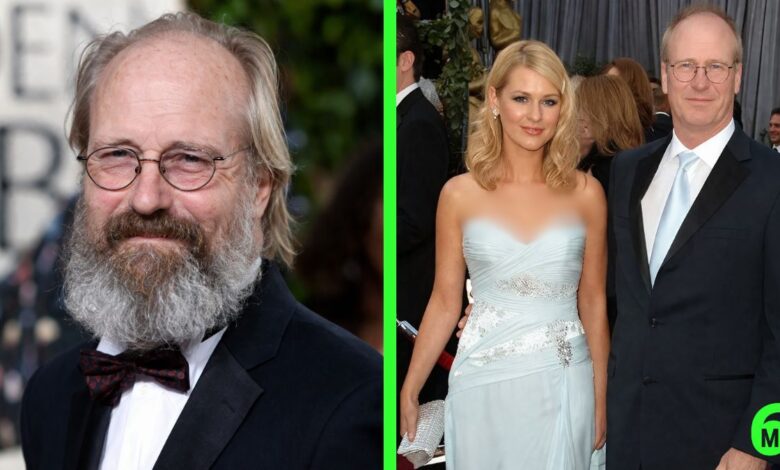
William Hurt and Heidi Henderson married in 1989. Contemporary reporting from that period identified her as Skitch Henderson’s daughter, while later coverage and obituaries consistently list her as Hurt’s second wife and the mother of two of his children. There is also evidence that, even after their divorce, they sometimes appeared together in public; image archives and later news coverage show them at the 2006 Academy Awards and the 2012 Golden Globes, where Henderson was described as Hurt’s ex-wife. Those appearances do not prove an inner narrative, but they do complicate any simplistic account of a celebrity marriage ending in total public estrangement. The record supports a more measured conclusion: their marriage ended, but their shared family connection remained publicly visible at times.
The divorce itself drew public attention because of a reported prenuptial agreement tied to sobriety and rehabilitation. The South China Morning Post reported in 1993 that the divorce proceedings involved an agreement linking compensation formulas to remaining clean from drug and alcohol abuse. That detail has often been repeated because it is unusual, but it is worth handling carefully. It tells readers more about how the marriage became legible to the press than about the full emotional reality of the relationship. Public records preserve the legal oddity; they do not provide a full domestic history.
Heidi Henderson’s role behind the scenes
Because Henderson is not a celebrity memoirist and has not publicly narrated her family life in detail, the most responsible way to understand her “role behind the scenes” is through the pattern of her professional and biographical record. Folger and regional arts materials describe a choreographer who worked in New York, later taught, raised children, and continued making dances in Rhode Island. That sequence points to a life organized around long-duration commitments rather than high visibility. It also helps explain why her public image does not resemble that of a Hollywood spouse orbiting premieres and profiles. The available record suggests a working artist who maintained an independent vocation while family life unfolded alongside it.
Family life: raising the next generation
On family, the verified public record is narrow but clear on one essential fact: William Hurt had two sons with Heidi Henderson, identified in major obituaries as Samuel and William Jr. Beyond that, responsible reporting has to stop where the evidence thins out. There is no rich public archive of Henderson discussing motherhood, and there is little value in pretending otherwise. Still, even the sparse record says something meaningful. When public biographies repeatedly emphasize Henderson’s teaching, choreography, and regional residence rather than celebrity exposure, they frame a life in which children were raised at some distance from the machinery of fame. That is not a romantic claim; it is a conclusion drawn from what the sources choose to document.
Philanthropy and community engagement
The public materials reviewed here do not establish a distinct philanthropic brand around Heidi Henderson, as is sometimes seen with entertainment families. What they do show is repeated involvement in cultural institutions and arts communities: teaching at Connecticut College, receiving multiple Rhode Island State Council on the Arts choreography fellowships, contributing to Contact Quarterly, and continuing to create and present work in New England. In a strict factual sense, that is better described as artistic and educational engagement than philanthropy. It matters because it keeps the article honest. Henderson’s public footprint is community-based and arts-centered, and the evidence for her influence lies in practice, mentoring, and cultural production rather than in a highly publicized charitable persona.
The power of privacy: influence without publicity
Heidi Henderson’s case is a good reminder that privacy can itself shape public meaning. The verified record shows that she has remained accessible for work and largely inaccessible for personal narrative. That choice, whether deliberate strategy or simply temperament, changes how she is perceived. Public curiosity gravitates toward the William Hurt connection because that is the easiest story to tell. Yet the more durable story may be that Henderson built a career that does not depend on that connection for legitimacy. Her institutional biographies do not lead with celebrity marriage; they lead with teaching, choreography, and artistic direction. In that sense, privacy has not erased her public identity. It has narrowed and clarified it.
Public curiosity and misconceptions about Heidi Henderson
The biggest misconception about Heidi Henderson is that she is knowable mainly through William Hurt. Search results often foreground the marriage first and the dance career second. But official and arts-based sources reverse that hierarchy. They present Henderson as a professor, choreographer, artistic director, and longtime New England arts figure. Another recurring problem is the casual inflation of uncertain details—age, personal beliefs, philanthropy, or inner family dynamics—into apparent fact. A trustworthy account has to resist that habit. With a private person, the discipline is simple: say what the record supports, and let the silences remain silences. In Henderson’s case, those silences are not a void to be filled; they are part of the story.
Legacy and future
Heidi Henderson’s legacy, as the record presently stands, is dual but unevenly remembered: publicly, she is still linked to William Hurt; substantively, she is documented as a dance artist and educator with a long regional and academic presence. That imbalance is common when a private professional is connected to a famous actor. Over time, though, the materials most likely to endure are the institutional and artistic ones: faculty profiles, performance records, fellowships, and the continuing work of elephant JANE dance. Those are the sources that anchor her biography in something sturdier than celebrity adjacency. If the public memory of Henderson becomes more accurate, it will likely be because her own body of work is taken as the center of the story rather than the footnote to someone else’s fame.
Conclusion
Heidi Henderson occupies an unusual place in the public record: visible enough to attract curiosity, private enough to resist easy storytelling. The facts that can be verified are modest but substantial. She is a choreographer, professor, and artistic director with a durable professional identity in dance. She was married to William Hurt, had two sons with him, and remained connected enough to appear with him publicly years after their divorce. Beyond that, the record narrows, and that narrowing is itself revealing. Henderson’s life in public has been defined less by disclosure than by work. That does not make her story smaller. It makes it more disciplined to tell. In the case of a private person linked to a famous actor, accuracy matters most when the archive is thin. Here, the clearest legacy is not celebrity, but steadiness: a career in art, teaching, and community that stands on its own.
Read this too:Janet Condra and Larry Bird: A Fact-Based Look at the Private Life Behind a Public Basketball Story
(FAQs)
1. Who is Heidi Henderson?
Heidi Henderson is a choreographer, dance educator, professor at Connecticut College, and artistic director of elephant JANE dance.
2. Was Heidi Henderson married to William Hurt?
Yes. Multiple public sources identify her as William Hurt’s second wife; they married in 1989 and divorced in 1993.
3. How many children did Heidi Henderson and William Hurt have?
They had two sons together, identified in major obituaries as Samuel and William Jr.
4. What does Heidi Henderson do professionally?
She teaches dance, choreographs, and leads elephant JANE dance. Her work has been documented by Connecticut College and regional arts organizations.
5. Where is Heidi Henderson based?
Public biographies place her in Wakefield, Rhode Island.
6. Is Heidi Henderson the daughter of Skitch Henderson?
Yes. Contemporary and later public sources identify her as the daughter of conductor and bandleader Skitch Henderson.
7. Did Heidi Henderson and William Hurt appear together after their divorce?
Yes. Public image and news archives show them together at the 2006 Academy Awards and the 2012 Golden Globes.
8. Is there a lot of public information about Heidi Henderson’s private life?
No. Compared with William Hurt, the public record on Henderson is limited, focusing mostly on her dance career and a few family-related references.