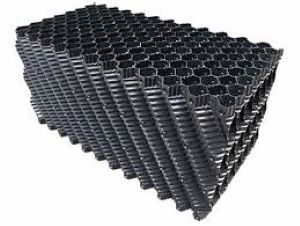
A cooling tower fill replacement is needed when the fill can no longer transfer heat efficiently due to fouling, damage, or age. Warning signs include higher energy use, rising approach temperatures, and visible fill damage like warping.
While cleaning can fix minor issues, severe degradation requires replacement to restore cooling tower thermal performance and prevent higher operating costs. Ignoring cooling tower fill fouling can lead to system inefficiency and equipment failure, so a proactive replacement strategy is crucial for operational stability.
Table of Contents
- Introduction to Cooling Tower Fill Replacement
- Why Cooling Tower Fill Failure Is a Critical System Risk
- The 3 Categories of Fill Failure Signals
3.1 Thermal Performance Signals
3.2 Mechanical & Visual Signals
3.3 Operational & System Signals - Early vs Late-Stage Fill Degradation
4.1 Early-Stage
4.2 Mid-Stage
4.3 Late-Stage - Fill Condition vs Required Action
- The Hidden Causes of Fill Failure
6.1 Cooling Tower Fill Fouling
6.2 Chemical & Thermal Degradation
6.3 Poor Water Quality
6.4 Natural Aging & Material Fatigue - Cooling Tower Fill Lifespan: When Time Alone Demands Replacement
- Clean vs Replace vs Upgrade: The Decision Framework
8.1 When Cleaning Is Enough
8.2 When Replacement Is Necessary
8.3 When Upgrading Fill Type Is Smarter - Final Insight
- Frequently Asked Questions
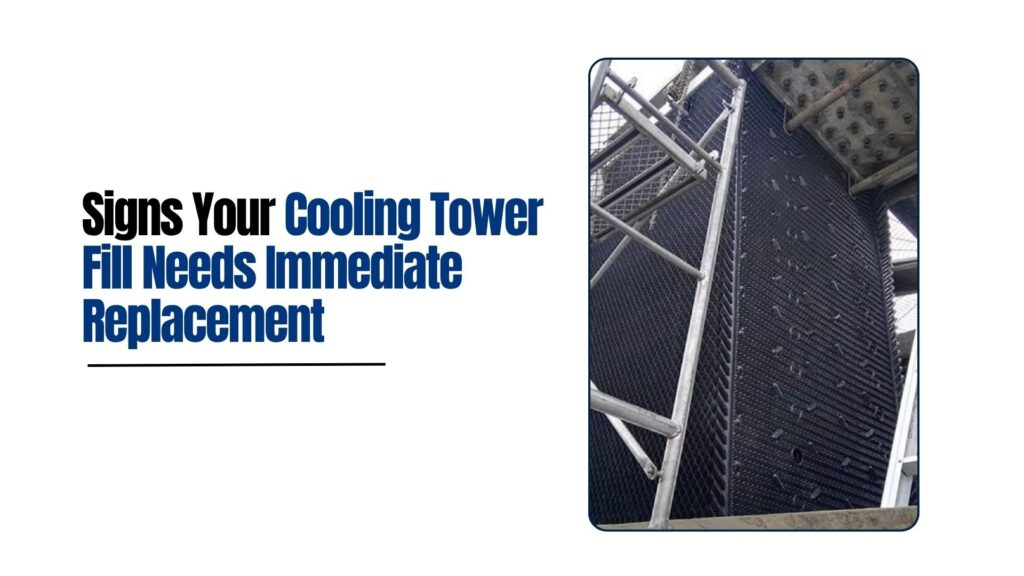
Why Cooling Tower Fill Failure Is a Critical System Risk
Fill is not just a component; it is the core heat exchange surface. When this surface degrades, the entire plant’s efficiency suffers. Operators must recognize that a loss of surface area directly equals a loss of cooling capacity.
Cooling Tower Fill directly determines heat transfer performance in cooling towers. The condition of the fill dictates how well the water and air mix. A compromised fill media forces the system to work harder, accelerating wear on motors and pumps.
The 3 Categories of Fill Failure Signals
1. Thermal Performance Signals
Performance decline appears before physical damage becomes visible. You must track temperature changes to catch issues early. Look for these specific thermal indicators:
- Rising cold water temperature exiting the tower.
- Increasing approach temperature compared to the wet-bulb temperature.
- Reduced overall heat rejection capacity during peak loads.
Fouled or degraded fill reduces heat transfer efficiency. The water cannot spread into a thin film, which limits the evaporative cooling process.
2. Mechanical & Visual Signals
Physical inspections often reveal the extent of the damage, showing when a cooling tower fill replacement might be necessary. Aging causes brittleness and structural failure over time. Watch for these physical changes during your routine inspections:
- Brittle or cracked fill sheets that break under light pressure.
- Sagging or warped fill packs that distort the internal geometry.
- Discoloration or surface damage indicating chemical attack.
Aging causes brittleness and structural failure. Once the physical structure compromises, the water channels collapse, completely ruining the airflow paths.
3. Operational & System Signals
Operators often compensate for poor fill unknowingly. The control systems automatically adjust to maintain setpoints. Pay attention to these operational shifts:
- Increased fan runtime to achieve the required cooling.
- Higher pump load due to restricted water flow.
- Rising chemical usage to combat stubborn biological growth.
Operators often compensate for poor fill unknowingly. By the time the system triggers an alarm, the efficiency loss has already cost the facility significant energy expenses.
Early vs Late-Stage Fill Degradation
Not all problems will require an immediate cooling tower fill replacement. You must assess the severity of the degradation to make the right choice.
Early-Stage
Early intervention can save the existing media. You can often correct these minor issues with standard maintenance procedures. Look for these early warning signs:
- Superficial Fouling: Noticeable but light buildup of sediment or biological growth on the outer edges of the fill packs.
- Minor Scaling: A thin layer of mineral deposits that can be easily brushed off without damaging the fill material.
- Localized Blockage: Small, isolated areas within the fill media where water flow is partially obstructed, while the majority of the tower remains clear.
Mid-Stage
Mid-stage degradation serves as a critical warning, where the system begins to show measurable performance drops and the need for a cooling tower fill replacement becomes more apparent.
You will typically notice these conditions:
- Noticeable Dry Spots: You’ll see uneven water distribution across the fill material, leading to dry patches where cooling efficiency is lost.
- Persistent Fouling: Fouling reappears soon after routine cleanings, indicating that the underlying cause is not being resolved by standard maintenance.
- Significant Scaling: Mineral deposits become thicker and harder, requiring more aggressive cleaning methods to remove.
Late-Stage
By the late stage, degradation demands immediate action. Severe fouling or damage often cannot be restored through cleaning, making cooling tower fill replacement the only viable solution.
Prepare for a complete overhaul if you see these signs:
- Structural Collapse: Fill packs become so damaged that they break apart and fall into the basin.
- Operational Failure: The cooling system’s performance drops so significantly that it can no longer support the industrial process it’s meant to cool.
- Permanent Deposits: Mineral scale becomes so hard and thick that even aggressive cleaning methods fail to remove it. Severe fouling or damage often cannot be restored through cleaning. At this point, new fill is the only viable solution.
Fill Condition vs Required Action
| Fill Condition | Key Indicator | Recommended Action |
| Light fouling | Slight performance drop | Cleaning + water treatment |
| Moderate degradation | Uneven flow + scaling | Partial replacement |
| Severe damage | Cracks, warping, inefficiency | Full replacement |
| Aging beyond lifespan | Brittle + performance decline | Immediate replacement |
The Hidden Causes of Cooling Tower Fill Failure
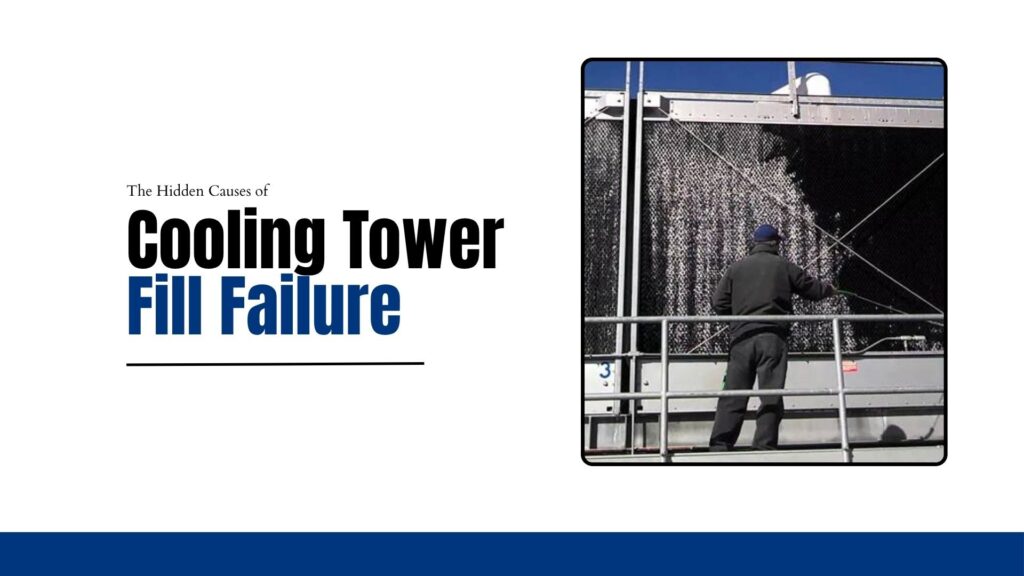
Cooling Tower Fill Fouling
Fouling blocks airflow and reduces efficiency rapidly. Contaminants in the water stream accumulate on the textured surfaces of the fill.
Common fouling sources include:
- Scale buildup from calcium deposits.
- Biofilm growth from unmanaged algae and bacteria.
- Sediment accumulation from airborne dust and debris.
Fouling blocks airflow and reduces efficiency. This forces the fans to draw more power to pull the required air volume through the restricted passages.
Chemical & Thermal Degradation
Harsh operating conditions can destroy the plastic fill material, leading to the need for a premature cooling tower fill replacement. The fill media is not designed to withstand extreme deviations from its design parameters.
Consider these destructive forces:
- High temperature damage from process upsets.
- Aggressive chemicals from overfeeding biocides or acids.
Poor Water Quality
Poor water quality can reduce lifespan by up to 40 to 70 percent. It remains the biggest factor in premature fill failure. Pay attention to these water parameters:
- Hardness levels that exceed the solubility limits.
- Contamination from process leaks or environmental factors.
Poor water quality can reduce lifespan by up to 40 to 70 percent. Maintaining tight control over the water chemistry is non-negotiable for system longevity.
Natural Aging & Material Fatigue
Even perfect water quality cannot stop time. The constant exposure to water, air, and sunlight degrades the polymers. You will observe these aging effects:
- Loss of flexibility, making the sheets highly fragile.
- Cracking over time, which disrupts the water film.
Cooling Tower Fill Lifespan: When Time Alone Demands Replacement
Even without visible damage, aging reduces efficiency. Plastics lose their surface properties over time. Industry standards suggest the following timelines:
- PVC Fills: Expect a lifespan of 3 to 7 years before performance degrades.
- Polypropylene (PP) Fills: These are more durable, generally lasting 5 to 12 years.
Fill performance declines over time due to aging and exposure. Planning for a cooling tower fill replacement based on age prevents unexpected failures.
Clean vs Replace vs Upgrade: The Decision Framework
This is what most blogs completely miss. Making the correct decision saves thousands of dollars in capital and operating expenses.
When Cleaning Is Enough
You do not always need to buy new materials. Sometimes, a thorough cleaning restores the tower to optimal specifications. Choose cleaning when you find:
- Early fouling that has not hardened.
- No structural damage to the plastic sheets.
When Replacement Is Necessary
Certain conditions make cleaning impossible or financially irresponsible. You must accept when the material has reached the end of its useful life. Opt for replacement when you face:
- Measurable thermal performance loss that impacts production.
- Repeated fouling indicates the surface texture is ruined.
When Upgrading Fill Type Is Smarter
Replacing like-for-like is not always the best strategy. If the original fill failed prematurely, you need a different solution. Upgrade your fill type when:
- Switching to low-fouling fill solves chronic plugging issues.
- Handling poor water quality that cannot be economically treated.
Final Insight
Cooling tower fill does not fail suddenly; it degrades silently, reducing thermal performance and increasing operational costs. Facilities that monitor performance indicators and act early gain significant advantages in energy efficiency, system reliability, and maintenance cost control.
Addressing a degraded cooling tower fill promptly prevents cascading failures throughout your HVAC or process cooling loop. By understanding your cooling tower fill lifespan and acting before catastrophic failure, you secure the reliability of your entire operation. A timely cooling tower fill replacement is a strategic investment in plant efficiency.
Frequently Asked Questions
What are the first signs of cooling tower fill failure?
The earliest signs include reduced cooling efficiency, rising outlet water temperature, and increased energy consumption. These thermal indicators often appear before visible damage.
Can fouled cooling tower fill be cleaned instead of replaced?
Yes, light fouling can often be cleaned. However, if scaling, biofilm, or damage is severe, cleaning will not restore performance, and replacement is required.
How long does a cooling tower fill last?
Depending on material and operating conditions, fill typically lasts between 3 to 12 years. Poor water quality and high temperatures can significantly shorten this lifespan.
What causes cooling tower fill fouling?
Fouling is caused by mineral scale, biological growth, and debris accumulation. These block airflow and reduce heat transfer efficiency.
How does degraded fill affect energy consumption?
Degraded fill reduces heat exchange efficiency, forcing fans and chillers to work harder, which increases energy consumption and operational costs.