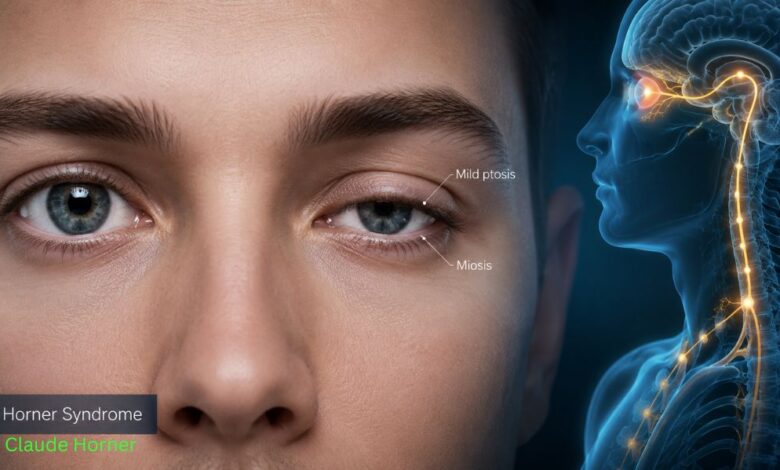
Claude Horner is a term commonly searched for by those seeking information about Claude Bernard-Horner syndrome, also known as Horner’s syndrome. Despite its complex name, the condition describes a distinct group of signs that typically affect one side of the face and the eye. It is not a straightforward disease, but a clear indication that a specific nerve pathway is impaired. This topic is significant because Horner’s syndrome may sometimes be associated with minor causes, but in other cases, it can signal a serious medical issue requiring prompt evaluation. Understanding the meaning, symptoms, and causes of Claude-Horner syndrome enables readers to appreciate why physicians take this condition seriously and why professional assessment surpasses self-diagnosis.
What Does Claude Horner Mean?
The term “Claude Horner” is frequently used informally or incorrectly to refer to Claude Bernard-Horner syndrome. The full name pairs historical medical descriptions of a disorder involving the sympathetic nervous system, primarily the nerves supplying the eye and face. Simply put, this syndrome arises when signals from the nerves governing certain eye and facial functions are disrupted. These functions include maintaining eyelid elevation, controlling pupil size, and regulating facial sweating. Because these features are visible, patients, family, or physicians may notice them during examination. Yet, visible signs are only part of the picture. The critical question is why the nerve pathway is disrupted, underscoring the necessity of a thorough medical evaluation.
Main Signs of Claude Horner Syndrome
The hallmark signs of Claude-Horner syndrome typically affect the eye and adjacent facial area on one side. Ptosis, or upper eyelid drooping, is a prominent sign. This droop is often mild, so it may not appear drastic, but it can make one eye seem smaller. Another distinguishing sign is miosis, which indicates that the affected pupil is smaller than the other. This difference may be more obvious in low light, as the affected pupil may not dilate adequately. Some patients may exhibit anhidrosis—reduced or absent sweating on a portion of the face. In certain cases, the eye may look somewhat sunken, though this effect can be subtle. These signs, when combined, form a pattern that prompts physicians to suspect Horner’s syndrome, but definitive testing is usually required to identify the cause.
Why the Sympathetic Nervous System Matters
To understand Claude Horner, it helps to learn about the sympathetic nervous system. This system is part of the body’s autonomic control network, which regulates functions such as pupil dilation, sweating, blood vessel tone, and eyelid movement. The nerve pathway linked with Horner’s syndrome extends from the brain, down the spinal cord, through the chest, up the neck, and finally to the eye and face. Because this pathway is lengthy, disruptions at multiple points can produce similar signs. Thus, Horner’s syndrome is not attributed to a single cause—it may result from issues in the brain, spinal cord, chest, neck, or eye region, depending on where nerve transmission is blocked.
Possible Causes of Claude-Horner Syndrome
Claude-Horner syndrome has diverse causes. Sometimes it follows trauma to the neck, shoulder, or thorax. In other instances, it occurs after surgery or injury affecting nearby nerves. Certain neurological disorders may also be involved, especially when disruption happens near the brain or spinal cord. Occasionally, conditions in the thorax or lungs can affect the sympathetic pathway as it traverses that region. Clinicians also consider vascular issues in the neck, especially when symptoms or pain are sudden. Because causes range from benign to urgent, it is safest to treat new or unexplained Horner-like signs as warranting immediate professional review.
Symptoms That Should Not Be Ignored
A mildly drooping eyelid or uneven pupils may not appear worrisome initially, but in Claude-Horner syndrome, context is crucial. If signs develop abruptly and accompany headache, neck pain, weakness, dizziness, vision changes, speech difficulties, or facial numbness, prompt medical evaluation is necessary. These symptoms may indicate the issue extends beyond the eye. Even without pain, any new, persistent pupil or eyelid changes warrant evaluation. Many people postpone care, assuming the problem is cosmetic or due to fatigue. However, Horner’s syndrome is important because it can be an obvious clue to a deeper issue in a nerve pathway.
How Doctors Diagnose Claude Horner Syndrome
Diagnosis begins with a physical examination—checking pupil size, eyelid position, facial sweating, and medical history. Timing of symptoms is important; physicians ask about sudden onset, recent trauma, or pain. Specialists may employ targeted tests or imaging to confirm the pattern and pinpoint where the nerve pathway is affected.
Treatment Depends on the Cause
There is no universal treatment for Claude-Horner syndrome, as it is typically a sign of an underlying disorder. Treatment corresponds to the nerve pathway disturbance caused. If related to an injury, recovery depends on the extent and type of nerve damage. If it is caused by another medical issue, that condition needs direct management. Sometimes, eye signs improve over time; in other cases, they persist. Physicians prioritize excluding urgent causes and then develop care plans based on the confirmed diagnosis. Thus, online information is useful for general understanding but cannot replace an accurate medical evaluation.
Claude Horner in Medical History
Claude Bernard-Horner syndrome’s name reflects its medical legacy. Physicians correlated eye and facial changes with damage to the sympathetic nerve pathway, marking its importance in neurology and related fields. The name honors early accounts. Today, “Horner’s syndrome” is the usual term, but historical names persist in medical terminology.
Why Public Awareness Is Important
Public awareness of Claude Horner is important because the condition can be easily missed. A slightly drooping eyelid or smaller pupil may not cause pain or vision loss, leading some to ignore it. Others may notice changes only in photos or mirrors. Yet visible eye changes can reveal important clues about nerve function. Awareness means recognizing when to seek evaluation, not panic. Someone familiar with the significance of Horner-like signs is more likely to respond appropriately, especially when symptoms are new, one-sided, or accompanied by pain or neurological symptoms.
Common Misunderstandings About Claude Horner
A common misconception is that Claude Horner syndrome is only an eye disorder. In reality, eye signs result from a disturbance of a nerve pathway that can involve regions beyond the eye. Another misconception is that unequal pupils always indicate Horner’s syndrome; many conditions can cause pupil differences, and some people naturally have slight variations in pupil size. A third misconception is that mild cases require no evaluation. Even mild, unexplained signs are important if new. The main point is that a physician must interpret the pattern, integrating it with the patient’s overall health picture.
Living With the Condition
For people diagnosed with Claude-Horner syndrome, daily life depends largely on the underlying cause and the severity of visible signs. Some people may have minimal symptoms and continue normal activities without major difficulty. Others may feel self-conscious about eyelid drooping or pupil differences. If the condition affects vision comfort, an eye specialist may recommend supportive care. Emotional reassurance is also important, as many patients become anxious upon noticing facial or eye asymmetry. A clear explanation from a doctor can help reduce fear and guide the next steps. The most important part is understanding whether the cause is stable, treatable, or requires ongoing monitoring.
When to Seek Medical Help
Anyone observing sudden ptosis, unequal pupils, altered facial sweating, or unilateral eye signs should seek medical evaluation, especially if the symptoms are new. Urgent care is crucial if signs are accompanied by headache, neck pain, recent trauma, weakness, confusion, double vision, or speech difficulties. These symptoms don’t necessarily indicate a severe problem, but they warrant prompt attention. For ongoing or diagnosed cases, follow-up should adhere to medical guidance. The safest advice: never ignore new or unexplained Horner-like signs.
Conclusion
Claude Horner is best understood as a term for the Claude Bernard-Horner syndrome, characterized by a distinct pattern of eye and facial signs resulting from disruption of the sympathetic nerve pathway. The most recognizable features are eyelid drooping, a small pupil, and sometimes reduced facial sweating on one side. While visible signs may seem subtle, underlying causes range from harmless or temporary to conditions needing urgent intervention. That is why this syndrome demands careful attention. The most prudent response to new symptoms is to seek medical evaluation, since proper diagnosis depends on tracing the exact nerve interruption.
(FAQs)
1. What is Claude Horner?
Claude-Horner syndrome, also known as Claude Bernard-Horner syndrome, is more commonly called Horner’s syndrome. It is a medical condition that affects one side of the face and the eye due to a disruption in the sympathetic nerve pathway.
2. What are the main symptoms of Claude Horner syndrome?
The main sympThe main symptoms include drooping of the upper eyelid, a smaller pupil, and sometimes reduced sweating on one side of the face.may be mild, but should still be checked by a doctor.
3. Is Claude Horner an eye disease?
Not exactly. Although the symptoms appear around the eye, Claude Horner syndrome is usually related to a nerve pathway problem. The cause may be connected to the brain, neck, chest, or nervous system.
4. Is Claude Horner syndrome dangerous?
It depends on the cause. Some cases may be less serious, while others may be linked to urgent medical conditions. A new or sudden case should always be evaluated by a medical professional.
5. Can Claude Horner syndrome be treated?
Treatment depends on the underlying cause. There is no single treatment for Claude Horner syndrome itself because it is usually a sign of another medical issue.
6. When should someone seek urgent medical help?
Urgent medical help is needed if symptoms appear suddenly or are accompanied by headache, neck pain, weakness, dizziness, vision changes, facial numbness, or speech problems.
7. Can children have Claude Horner syndrome?
Yes, children can develop Horner’s syndrome, though the causes may differ from those in adults. Any child with unequal pupils, eyelid drooping, or facial changes should be examined by a doctor.
8. Does Claude Horner syndrome affect vision?
It may not always seriously affect vision, but the smaller pupil and eyelid drooping can sometimes affect eye comfort or appearance. The bigger concern is finding the cause behind the nerve disruption.
9. Is Claude Horner syndrome permanent?
It can be temporary or long-lasting depending on the cause. Some people improve after the underlying issue is treated, while others may continue to have visible signs.
10. Why do people search for Claude Horner?
People usually search for Claude Horner because they want to understand the meaning, symptoms, causes, and seriousness of Horner’s syndrome after noticing eye or facial changes.