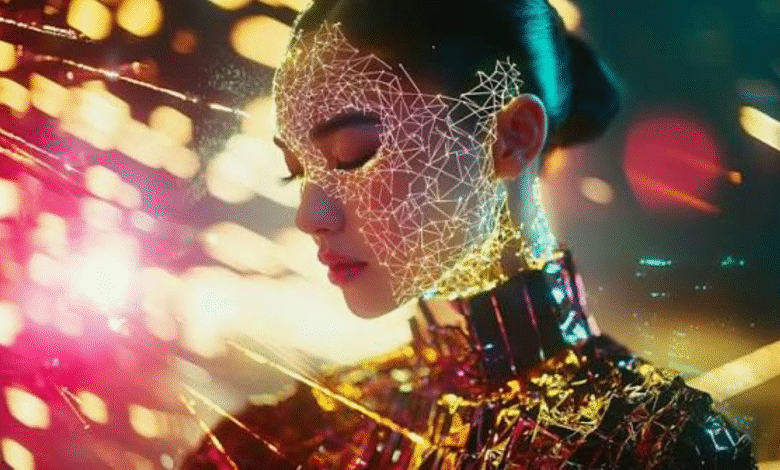
The question sounds almost rhetorical now. Can artificial intelligence really shoot a fashion editorial — the kind of image that carries a season, tells a story, and hangs an entire mood on a single frame? A few years ago the honest answer was a flat no. Today it is far more interesting: yes, mostly, and with caveats that matter. The distance between a competent product image and a genuine editorial statement is exactly where this debate lives, and understanding that distance is essential before any brand commits real budget in either direction.
Having spent time inside both traditional production and the newer generative tools, I want to give you the grounded version rather than the hype. AI has moved faster in fashion imaging than almost anyone predicted, and pretending otherwise helps no one. But it has not quietly replaced the photographer, the stylist, and the art director overnight either. The truth is more layered, and far more useful to a brand trying to decide where its next campaign should actually come from.
What “Shooting an Editorial” Actually Means
Before judging whether a machine can do it, it helps to define the job. A catalog image has one duty: show the garment clearly, consistently, and accurately so a customer can buy with confidence. An editorial image is doing something else entirely. It is selling a feeling. It uses light, location, casting, styling, and the tension between all of them to suggest a world the clothes belong to. A magazine does not photograph a coat to prove it has buttons; it photographs a coat to make you want the life the coat implies.
That distinction matters because AI has largely solved the first job and is still learning the second. When people ask whether AI can shoot an editorial, they are often really asking two questions at once: can it produce a technically clean fashion image, and can it produce one with genuine creative intent? Those two questions have very different answers, and conflating them is where most of the confusion begins.
What AI Can Do Well Right Now
Start with the good news, because it is substantial. Modern generative models produce fashion imagery that, in many contexts, is indistinguishable from a mid-budget studio shoot. Skin texture, fabric drape, natural light falloff, and believable poses have all improved dramatically in a short window. For ecommerce, lookbooks, and social content, the output is frequently good enough to publish without apology or heavy retouching.
The operational wins are even harder to argue with. A traditional editorial requires a model booking, a studio or location, a photographer, a stylist, hair and makeup, assistants, and often a full day that produces only a handful of usable frames. A generative workflow compresses that into an afternoon at a fraction of the cost. Tools such as ImagineArt’s AI fashion studio lets a brand choose a model, dress a look, set a background, direct a pose, and generate finished images or video without booking a single person. For a small label that could never afford a proper campaign, this is not a marginal improvement — it is the difference between having imagery and having none.
Consistency is the other quiet superpower. Human models have calendars, they age, they move on, and reshooting a range months later rarely matches the original. A digital model stays identical across an entire catalog and every future drop. For a store running hundreds of listings a season, that visual coherence used to be nearly impossible to maintain, and now it is simply the default state of the workflow rather than a constant battle.
Where AI Still Falls Short
Now the caveats, because they are real and any trustworthy answer has to include them. The first is creative intent. AI is extraordinary at producing what you describe and mediocre at deciding what is worth describing. A great editorial photographer brings taste, cultural timing, and a point of view that no prompt fully captures. The machine can execute a vision; it does not yet originate one. Ask ten brands to generate an elegant autumn campaign and you will get ten variations of the same safe aesthetic, because the model is drawn toward the average of everything it has ever seen.
The second limitation is precise control. Fashion clients are notoriously exacting: the exact hemline, the specific way a lapel sits, the true color of a dye lot, the logo placement that is already signed off on. Generative tools are improving here, but they still drift. A seam migrates, a button count changes, a texture almost-but-not-quite matches the real fabric. For an editorial where the entire point is the garment, close enough can be a genuine problem, and it often demands human retouching to finish properly.
Third is the intangible human element. Real editorials carry the tension of a real person — a glance, an awkward-on-purpose posture, a moment the photographer caught rather than composed. AI faces can look flawless in a way that reads as slightly hollow at the very top end of the market. For a high-fashion story meant to feel alive and a little dangerous, that uncanny smoothness is still detectable to a trained eye, and audiences are getting better at spotting it too.
Finally there are the questions of ethics and trust: disclosure of AI use, model-likeness rights, and the wider cultural conversation about authenticity in an industry built entirely on aspiration. These are not reasons to avoid the technology, but they are reasons to use it thoughtfully and to be honest with your audience about how your images are made.
The Honest Middle Ground: A Hybrid Workflow
The most productive brands are not treating this as a binary. They are not choosing AI or photography; they are assigning each job to whichever tool does it best. This is where the conversation gets genuinely practical instead of philosophical. The old debate about replacement misses the point entirely, because the real opportunity is division of labor.
Use generative imaging for the high-volume, high-consistency work: ecommerce listings, colorway variations, seasonal refreshes, and social creative that would otherwise never justify a full shoot. Reserve human production for the hero campaign — the two or three images a year that define the brand and genuinely deserve a real photographer’s eye. Then let the two feed each other. A hero shoot can inform the styling and mood that a fashion studio workflow then extends across an entire range, keeping a season visually unified without a dozen separate bookings.
In practice, a capable fashion studio becomes the workhorse behind the scenes while human craft is spent only where it truly moves the needle. That is not a compromise; it is simply good resource allocation, and it is already how the smartest teams in the industry are quietly operating today. The brands that grasp this early are stretching modest budgets into output that looks far more expensive than it was.
How to Judge an AI Fashion Studio Before You Trust It
If you are evaluating tools, a few criteria separate the serious platforms from the toys. First, garment fidelity: upload your actual product and see whether the fabric, cut, and details survive generation intact. This is the single most common failure point. Second, model and character consistency: can you reuse the same face and body across many looks and return to it months later without regenerating from scratch?
Third, control: can you direct pose, background, aspect ratio, and framing rather than passively accepting whatever the model decides to offer? Fourth, commercial rights: confirm you own the output outright for ads, store, and social with no licensing strings attached to the model or the shoot itself. Fifth, the finishing path: the best platforms let you move from a still into video, ad formats, and campaign variations without a second setup. A tool that generates one nice image but strands you there is far less valuable than one that carries a look through an entire funnel. Weigh those criteria honestly against your real needs rather than the polished demo reel, and you will avoid the most expensive mistake of all — building a workflow around something that breaks on your specific garments.
So, Can AI Actually Shoot a Fashion Editorial?
Here is the grounded verdict. For the overwhelming majority of commercial fashion imagery — catalogs, lookbooks, social ads, and seasonal drops — the answer is a confident yes, and increasingly it is the smarter economic choice. The quality is there, the consistency is better than human shoots, and the cost and speed advantages are simply enormous. A well-built AI fashion studio tool just like what ImagineArt has created can carry the visual weight that used to require an entire production crew.
For the rarefied top of true editorial — the boundary-pushing story that defines a house and depends on a singular human vision — AI is a powerful collaborator rather than a full replacement, at least for now. It can execute, extend, and accelerate that vision beautifully, but the spark of deciding what to say still comes from a person with taste and a reason to say it.
The brands winning right now understand exactly this. They have stopped asking whether AI can replace the photographer and started asking which parts of their imagery actually deserve one. Answer that question honestly and the technology stops being a threat and becomes what it truly is: the most significant expansion of creative capacity the fashion industry has seen in a generation. The editorial is not dead. It is just no longer the only way to make a genuinely beautiful fashion image — and for most brands, most of the time, that is very good news.
A Practical Starting Point for Brands
If you are convinced enough to experiment, resist the urge to reinvent your whole pipeline at once. Pick one low-risk project — a single colorway refresh or a small social drop — and run it entirely through a generative workflow alongside your normal process. Compare the two outputs side by side, measure the hours and money saved, and note exactly where the AI version needed a human touch. That controlled test tells you far more than any feature list, because it reflects your garments and your customers, not a vendor’s best-case sample. Most teams are surprised twice: first by how usable the results already are, and second by the specific, predictable places where craft still matters.