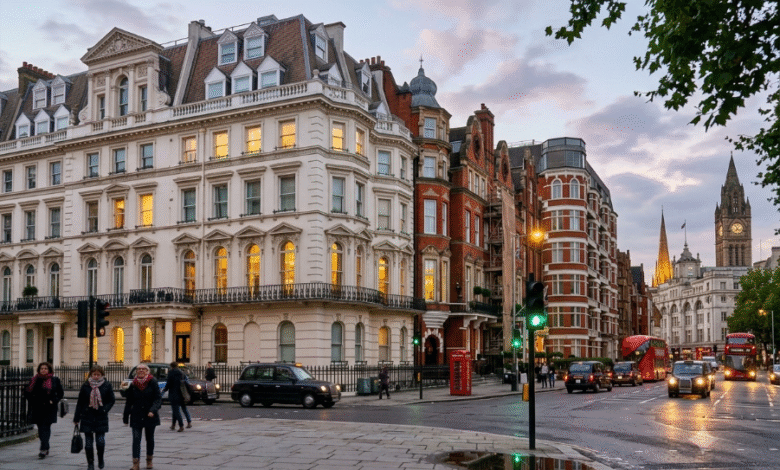
Choosing where to buy in Kensington is rarely a simple decision. Two streets can feel completely different in character, housing stock, and day-to-day atmosphere, despite being only a short walk apart. For buyers considering a move in 2026, understanding the distinctions between Kensington’s neighbourhoods is often just as important as choosing the property itself.
Many people begin their search with a broad idea of living in Kensington, only to discover that South Kensington, Holland Park, Earl’s Court, and the northern fringes bordering Notting Hill each appeal to different lifestyles and priorities. Speaking with leading estate agents in Kensington can help buyers understand these differences before narrowing their search.
South Kensington: Period Elegance and International Appeal
South Kensington remains one of the most recognisable residential areas in West London. Known for its grand white stucco terraces, garden squares, and cultural institutions, it attracts a broad mix of residents, including international buyers, professionals, academics, and long-term homeowners.
The housing stock here is dominated by converted period apartments, lateral flats, and substantial townhouses. Buyers looking for traditional architecture often focus on the streets surrounding Thurloe Square, Onslow Square, and the roads connecting to Gloucester Road and South Kensington stations.
Transport links are a significant advantage. The Circle, District, and Piccadilly lines provide direct access across London, while the area’s walkability appeals to those who prefer to rely less on cars.
One practical consideration in South Kensington is leasehold ownership. Many apartments are held on long leases, and buyers should pay close attention to lease length, service charge arrangements, and any planned building works. In some period conversions, maintenance responsibilities can vary considerably from one building to another.
Holland Park: Green Space and Family Living
For buyers prioritising access to open space, Holland Park offers a distinctly different atmosphere. Although still central, the neighbourhood feels quieter and more residential than parts of South Kensington.
The area is particularly popular with families due to its proximity to respected schools, larger homes, and the presence of Holland Park itself. Tree-lined streets, substantial Victorian and Edwardian houses, and well-maintained mansion blocks contribute to a strong sense of permanence.
Housing options vary significantly. Buyers can find everything from elegant apartments overlooking communal gardens to large family houses and mews properties tucked away on quieter streets. This variety attracts both long-term owner-occupiers and investors seeking stable demand.
Conservation area restrictions are an important factor in Holland Park. While these protections help preserve the area’s architectural character, they can affect renovation plans, extensions, and external alterations. Buyers considering future development should investigate local planning constraints before committing to a purchase.
Compared with neighbouring Notting Hill, Holland Park often feels more private and less commercially focused, which appeals to those seeking a quieter residential environment.
Earl’s Court: Connectivity and Period Property
Earl’s Court has undergone significant change over recent years and continues to attract buyers looking for a central London location with excellent transport connections.
The area’s Victorian terraces contain a large number of converted flats, offering a wider range of property sizes and layouts than some neighbouring districts. This diversity attracts professionals, first time central London buyers, and investors seeking properties with strong rental appeal.
The District and Piccadilly lines make commuting straightforward, while nearby access to Kensington High Street, Chelsea, and Fulham expands the area’s appeal. Residents benefit from a location that sits between several established West London neighbourhoods without feeling entirely defined by any single one.
Buyers should pay particular attention to building management arrangements in converted properties. Shared maintenance responsibilities, reserve funds, and service charge structures can differ significantly between buildings. It is also worth assessing future development activity in the surrounding area, as construction projects may affect local conditions for extended periods.
For those comparing Earl’s Court with Chelsea, the former often provides access to similar transport advantages while offering a broader mix of property types and buyer profiles.
North Kensington and the Notting Hill Border
The northern parts of Kensington, particularly those bordering Notting Hill, present a different side of the borough. This area combines residential streets, creative businesses, independent shops, and a strong local identity.
Housing stock ranges from colourful Victorian terraces and converted apartments to modern developments and traditional family homes. The architectural variety attracts buyers seeking character rather than uniformity.
One of the area’s strengths is its connection to both Kensington and Notting Hill. Residents can access the amenities, restaurants, and transport links associated with both neighbourhoods while often enjoying a slightly more local atmosphere.
Families are increasingly drawn to streets that provide access to parks, schools, and community facilities without the intensity of busier central locations. At the same time, professionals appreciate the area’s transport options and proximity to central London employment hubs.
Buyers should carefully assess the immediate surroundings of any property. Street-by-street differences can be more noticeable here than in some other parts of Kensington. Factors such as traffic patterns, nearby commercial activity, and planned developments can influence long-term suitability.
This is also an area where local knowledge can be particularly valuable. While national agencies may cover broad postcode areas, independent advisers often have a deeper understanding of micro-locations, school catchments, and the nuances that distinguish one street from the next. The same can often be said of experienced letting agents in Kensington, who regularly track tenant demand across these neighbourhoods.
Choosing the Right Kensington Neighbourhood
Kensington is often discussed as a single destination, but buyers quickly discover that its neighbourhoods offer very different experiences. South Kensington appeals to those seeking grand architecture and cultural surroundings. Holland Park attracts families looking for green space and larger homes. Earl’s Court offers connectivity and housing variety, while the northern fringes near Notting Hill provide character and a strong sense of place.
Before focusing on an individual property, it is often worth spending time understanding the neighbourhood itself. Factors such as ownership structure, service charges, conservation restrictions, transport links, and day-to-day atmosphere can have as much influence on long-term satisfaction as the property’s size or appearance. In a complex and highly localised Kensington property market, choosing the right pocket of the borough is often the most important decision a buyer makes.