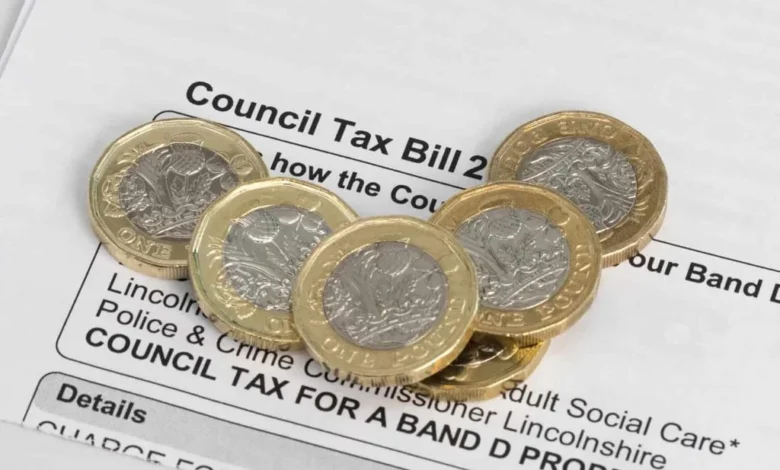
If you believe you are paying more council tax than you should, you may be able to challenge your council tax band. Your band is based on the estimated value of your property at a specific point in time, so it is possible for a property to be placed in the wrong band. Whether you are a homeowner, landlord or tenant, understanding how the system works can help you decide whether an appeal is appropriate. If you are considering a move and want local property advice, speaking to Cirencester estate agents can also help you understand how council tax bands may affect properties in the area.
What Is a Council Tax Band?
Council tax is a local charge used to help fund services provided by your local authority, including rubbish collection, roads, social care and other community services. Most homes in England are placed into one of eight council tax bands, ranging from Band A to Band H.
The band assigned to your property is based on its estimated market value at a particular historical date. For properties in England, this valuation is based on what the property would have been worth on 1 April 1991. This means your current property value is not directly used to determine your council tax band.
Each council tax band has a different charge. Generally, properties in higher bands pay more council tax than those in lower bands.
Why Might You Challenge Your Council Tax Band?
There are several reasons why you may believe your property has been placed in the wrong band. For example, you might discover that similar properties nearby are in lower bands despite being comparable in size, type and location.
You may also have evidence that your property was incorrectly valued when the council tax bands were originally established. Changes to the property or its circumstances can sometimes be relevant too, although not every change will provide grounds for an appeal.
It is important to remember that simply believing your council tax bill is too expensive is not enough. You need to have a reasonable basis for arguing that your property has been placed in the wrong band.
Check the Bands of Similar Properties
One of the first things you should do is compare your council tax band with similar homes nearby. You can use the official council tax band information service to check the band assigned to your property and other properties in your local area.
Look for properties that are genuinely comparable. Ideally, they should be similar in terms of size, type, age, location and overall value.
For example, if your three-bedroom semi-detached house is in Band D but several similar houses on the same street are in Band C, this could be worth investigating further.
However, differences between properties can sometimes justify different bands. A larger garden, extension, better position or additional accommodation could affect the valuation.
Find Out What Your Property Was Worth in 1991
This is one of the most important parts of challenging a council tax band in England.
Your property’s council tax band is linked to its estimated market value on 1 April 1991. If you purchased the property recently, the price you paid is therefore not necessarily the figure you need to focus on.
You can look at historical property prices and comparable sales to help establish what your property might have been worth at the relevant date.
It can be difficult to calculate an accurate historical value, particularly if the property has changed considerably since 1991. This is why looking at several comparable properties rather than relying on one example can make your argument stronger.
Contact the Valuation Office Agency
Council tax bands in England and Wales are generally handled by the relevant valuation authority. In England, this is the Valuation Office Agency, commonly known as the VOA.
If you believe your band is incorrect, you can contact the VOA and explain why you think the property has been placed in the wrong band.
You should provide supporting evidence wherever possible. This might include details of similar properties, historical sale information and reasons why you believe your property’s valuation was incorrect.
The VOA will consider the information you provide and determine whether the band should be changed.
What Happens After You Make a Challenge?
After receiving your challenge, the valuation authority will review the evidence. It may ask you for additional information or contact you to discuss the property.
There is no guarantee that your council tax band will be reduced. If the evidence does not support your argument, the existing band may remain unchanged.
You should also be aware that challenging a council tax band is not simply a way to negotiate a lower bill. The valuation authority considers the property itself and the evidence available when deciding whether the band is correct.
Can Your Council Tax Band Go Up?
It is important to understand that challenging a council tax band does carry a potential risk. If your property is reviewed, the valuation authority may determine that the existing band is too low and increase it.
For this reason, you should research your position carefully before making a formal challenge. Comparing your property with several similar homes and gathering reliable evidence can help you make a more informed decision.
What If Your Appeal Is Rejected?
If your challenge is unsuccessful, you may have further rights depending on the circumstances and the type of decision that has been made. The process can vary, so you should carefully review the explanation provided by the valuation authority.
If you disagree with a decision, check the relevant guidance to understand whether you can make a further appeal and what deadlines apply.
Keep copies of any evidence, correspondence and documents you submit. Having a clear record can be useful if you need to continue challenging the decision.
Is Appealing Your Council Tax Band Worth It?
Whether an appeal is worthwhile depends on the strength of your evidence. If comparable properties strongly suggest that your home has been incorrectly placed in a higher band, it may be worth investigating further.
However, you should not make a challenge solely because your council tax bill has increased. Council tax rates can change from year to year because local authorities set their own charges.
Before taking action, compare your property with similar homes, research its historical value and understand the potential risks. A well-researched challenge is much stronger than simply arguing that your bill is unaffordable.
Final Thoughts
Appealing your council tax band can potentially reduce the amount you pay, but it is important to approach the process carefully. Start by checking your current band, compare it with similar properties and investigate what your home may have been worth at the relevant valuation date.
If you have strong evidence that your property has been placed in the wrong band, you can contact the appropriate valuation authority to request a review. Keep your evidence organised and make sure you understand the possible outcomes before submitting your challenge.
For homeowners and prospective buyers, understanding council tax is another useful part of assessing the overall cost of owning or renting a property. Taking the time to investigate your council tax band could help you determine whether the amount you are being charged is appropriate for your property.