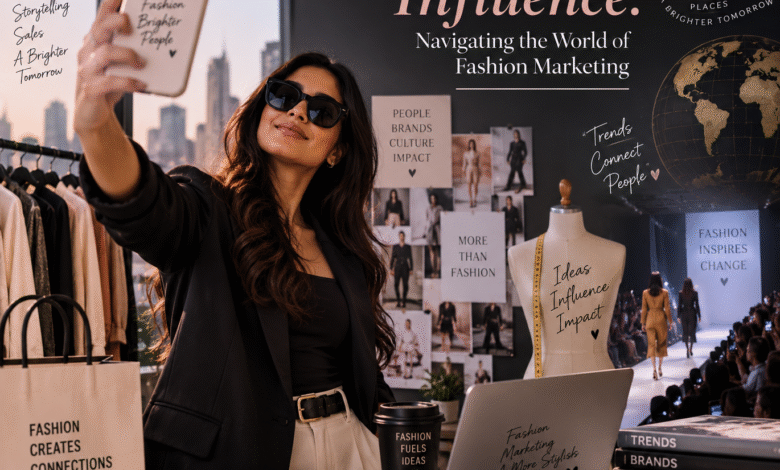
Introduction to Fashion Marketing
Fashion, at its heart, is a powerful method of self-expression, an expression of society, and an industry that is constantly moving. However, behind every stunning collection or aspirational marketing campaign is an element of strategic importance: Fashion Marketing. This particular branch of marketing focuses on advertising clothing, accessories, and fashion labels to specific audience segments. It’s a sector where innovation is seamlessly integrated with an effective business plan, changing an artist’s vision into a real need for the global population.
At its core, fashion marketing is all about creating and bringing the vision of a designer into reality and connecting brands to wholesale buyers and, in the end, consumers. It’s not just about selling products for advertising; it’s about developing a strong image for the brand, telling a compelling story, and expressing what a company is about. From traditional print ads and commercials on TV to the rapidly-changing social media landscape, fashion marketing professionals are working to increase awareness, market products, and entice clients, all while remaining in tune with ever-changing consumer trends and making informed decisions.
Key Aspects and Modern Strategies in Fashion Marketing
The industry of fashion is distinct and operates in highly seasonal cycles, heavily relying on aesthetic and visual appeal to attract attention. Thus, fashion Marketing is required to change and constantly innovate.
Core Elements of Fashion Marketing
To be successful, fashion brands carefully focus on a few fundamental aspects:
- Brand identity: A memorable brand identity that has a distinct style, voice and message is essential in attracting new customers and building customer loyalty. Think of famous brands like Armani or Uniqlo. They each have an individual personality.
- Goal audience: Understanding who the brand aims to reach is crucial. Fashion brands that are top of the line segment their customers by their preferences, demographics and behaviors to communicate with them better and motivate actions.
- Product positioning: In a crowded market, clearly defining what makes a product distinctive is crucial. This is done by using pictures, reviews, and other media to help products shine.
- The Four P’s: As with all marketing, fashion marketing is based on the foundations of Price, Product, Place, as well as Promotion.
- Description of the Product the products or service must satisfy the consumer’s demands or needs.
- Pricing: The price communicates value and also defines the character of the product as well as its consumers.
- Site: Deciding how products are displayed in stores, both in physical and digital form, requires a lot of imagination and creativity.
- Promotion: This encompasses all the actions used to communicate its value to the market it is intended for.
Modern Marketing Strategies
This digital age has completely transformed the way fashion brands communicate with their consumers. Modern fashion Marketing methods are multi-faceted and dynamic.
Digital Marketing Landscape
Digital channels are the mainstay for fashion-related marketing, providing various ways to interact with customers and increase sales.
- Social Media Marketing: Social media platforms such as Instagram, TikTok, and YouTube are the primary platforms for building a brand image and interacting directly with consumers. Companies use these platforms to display collections using HD videos and photos, as well as run hashtag campaigns and work with influential people. Shoppable features on platforms such as Facebook, Instagram, YouTube, Pinterest, and TikTok enable users to search for and buy products on the spot and streamline the buying experience for customers.
- Content Marketing: Making valuable material like videos, blog posts, and infographics helps position the company as a leader in the industry. This strategy aids in brand storytelling, increases SEO exposure, and also generates leads.
- Marketing via SMS and Email: These channels remain very effective in keeping customers and increasing the value of their lifetime. Brands make use of personalized content designed to meet the needs of customers based on their preferences and habits, as well as segmentation to deliver targeted messages about sales, new arrivals, and special offers.
- SEO (Search Engine Optimization) and Google (Generative Engine Optimization): Optimizing content for search engines can help increase organic traffic to websites where people purchase. With the development of AI, Generative Engine Optimization helps ensure that your brand is visible in AI search results.
- CRO (Conversion Rate Optimization): Maximizing conversions by optimizing websites is essential in converting visitors into customers.
Influencer Marketing’s Impact
Influencer marketing is now an integral part of modern fashion marketing, leveraging reliable voices to increase credibility and appeal to specific groups.
- The fashion influencer market grew to US$ 9.2 billion as of 2025 and is expected to grow to the figure of 115.6 billion in 2034, showing a rapid growth rate.
- Influencer-based campaigns average a level of engagement of 4.2 percent and often exceed traditional methods of advertising.
- The majority of consumers rely on recommendations from influencers. With nearly 49% of the population dependent on them, 72 percent of marketing professionals believe that influencer-based marketing draws more discerning customers.
- Working with micro-influencers who are aligned with a specific niche of a company can help increase brand recognition and increase engagement.
The Rise of Sustainable and Ethical Marketing
Consumers are becoming more ethical and environmentally conscious when they make purchases. This has made sustainability a crucial element in fashion marketing.
- 53% of people believe that brands should be a part of a social cause.
- Brands are now incorporating ethical and sustainable practices in both the production of products and marketing.
- Effective sustainable marketing requires clear communication regarding the supply chain, the materials used, and the environmental impact. It’s about shifting the focus away from consumption for disposable items to regeneration and equity. As the journalist Lucy Siegle puts it, “Fast fashion isn’t for free. Someone somewhere is paying.”
Future Trends and Navigating Challenges in Fashion Marketing
Fashion is constantly in a state of change, driven by technological advances and changing values of the consumer. Fashion marketing must be aware of these changes to ensure that they are effective.
Emerging Technologies Shaping the Future
Technology isn’t just altering the way we shop; it also changes what brands do to interact with their customers and design products.
Artificial Intelligence (AI) in Fashion Marketing
AI is changing fashion Marketing by allowing brands to expand their efforts, anticipate trends, improve personalization, and keep a pleasing image by making data-driven choices.
- Trend forecasting: AI-powered algorithms look at historical data, social media behaviour, and changes in cultural norms to forecast trends with astonishing accuracy, allowing brands like H&M or Zara to help inform the development of their products and advertising campaigns.
- Personalized Customer Experiences AI tools automatically customize consumer recommendations in accordance with shopping habits and browsing history. More than seventy percent of people prefer personal brand experiences that are tailored to their needs. AI-driven recommendations for products have increased conversion rates on websites by 25 percent for retailers selling fashion.
- AI-Generated Copywriting and Content: Generative AI software can automate descriptions of products and social media captions and campaign messages, easing the process of creating content.
- Visual Search: Image recognition powered by AI allows customers to locate similar items from the catalog of a brand, catering to fashion-conscious buyers.
- AI-Generated Digital Influencers: These virtual avatars generated by AI-generated AI as well as language models are increasingly becoming indispensable tools to tell digital stories and engage authentically with specific customer segments.
Augmented Reality (AR) and Virtual Reality (VR)
AR and VR transform the shopping experience, blurring the distinctions between digital and physical retail.
- Virtual Try-Ons: AR lets users virtually try on clothing and makeup by using their smartphones or other AR-enabled devices, removing the requirement for physical fitting rooms as well as improving the way that products are displayed. This could result in the reduction of 25% in returns and an increase of 28% of sales for products that have virtual try-ons.
- Immersive shopping experiences: These new technologies produce fresh and exciting marketing campaigns that draw consumers’ attention and give them an immersive experience. Customers who interact using 3D images are 44 percent more likely to add an item to their shopping cart, and those who see an item using AR are significantly more likely to purchase the item.
- More Sales and Lower Returns: By allowing customers to make better decisions, AR/VR can dramatically increase sales while reducing the costs related to returns.
Navigating Key Challenges
Despite the innovative developments, the fashion industry is facing major challenges to overcome. The fashion industry has to overcome.
- Sustainable Pressures: In the meantime, overproduction is a big issue, leading to excessive stock and textile waste, which is why seventy-three percent of discarded clothes end up in landfills every year. Regulators and consumers are demanding more transparency regarding the sourcing of materials and manufacturing.
- Speedy Trend Cycles The speed at which fashion trends change places enormous pressure on the timeline for development and marketing efforts, making trend forecasting and quick campaigns crucial.
- Supply Chain Transparency and Complexity Needs: Global supply chains are complicated and susceptible to disruption. The public is increasingly demanding transparency regarding the sources of goods and how they are produced, as well as fair wages and environmental standards.
- Rising costs for customer acquisition and high return rates: E-commerce platforms face difficulties from increased competition, rising cost of acquisition for customers, and high returns, which are often due to issues with fitting and inconsistency of products.
- Unconnected and fragmented Digital Systems: Many brands are struggling with the problem of disconnected data about their products across different platforms and systems, leading to inefficiencies, mistakes, and delays in the development of products and marketing.
Frequently Asked Questions (FAQ)
Here we provide answers to some commonly asked concerns about fashion Marketing.
- What’s the main purpose of fashion-related marketing? The primary goal of fashion marketing is to strategically place the fashion brand and its products in the marketplace, entice potential consumers, create brand awareness as well as influence trends, and ultimately increase sales and build customer loyalty. It’s a way to bring a designer’s idea to reality and connect it to the public.
- What is the significance of social media in the world of fashion marketing in the present? Social media is vital, serving in the role of a “digital runway” for fashion designers. Platforms such as Instagram, TikTok, and YouTube are essential for showcasing collections, interacting with consumers, building community-based brands, and providing the purchase of items directly from shops.
- What is the role of sustainability in the modern world of market for clothing? Sustainability plays a vital and ever-growing role. Today’s consumers are more ethical and environmentally conscious and expect brands to take a stand on social and environmental issues. Fashion marketing incorporates ethical and sustainable practices in both production and marketing and focuses on transparency, fair sourcing, and environmental responsibility in order to increase the trust of consumers and build loyalty.
- What do you think about AI changing the way we market fashion? AI is transforming fashion marketing by providing more precise and effective strategies. It assists with precise trend forecasting, resulting in highly customized customer experiences as well as product recommendations, while also automating the production of content and facilitating visual search and even empowering AI-generated digital influencers. The result is that brands can increase the size of their efforts and make decisions based on data.
Conclusion
Fashion Marketing is a thriving and constantly evolving discipline that sits at the interplay of creativity, culture, and commerce. It’s not just about selling clothes; it’s about creating narratives that create communities and instilling the desire to achieve. As we’ve discussed, the fashion industry is swiftly adopting advanced digital strategies, from the ubiquitous power of social media to prominent opinion makers to the revolutionary potential of AI, AR, augmented reality, and VR. These technologies aren’t only improving customer experience, but they are fundamentally altering the way that companies operate from conception to delivery.
But this ever-changing landscape poses significant challenges, especially in the area of ethical and sustainable practices, as well as the complexity that is inherent in supply chain systems across the globe. Future trends in fashion marketing are bound to be determined by the companies that are able to combine innovation and responsibility, making use of cutting-edge technology to create deep connections with their customers while making a clear dedication to a sustainable and just future. The ultimate success will go to those who are able to master this complex dance, creating captivating stories that resonate with their customers while also managing the complexity of a constantly changing world.