CapCut Seedance 2.5: Advancing High-Fidelity AI Video Generation for the Digital Creator Economy

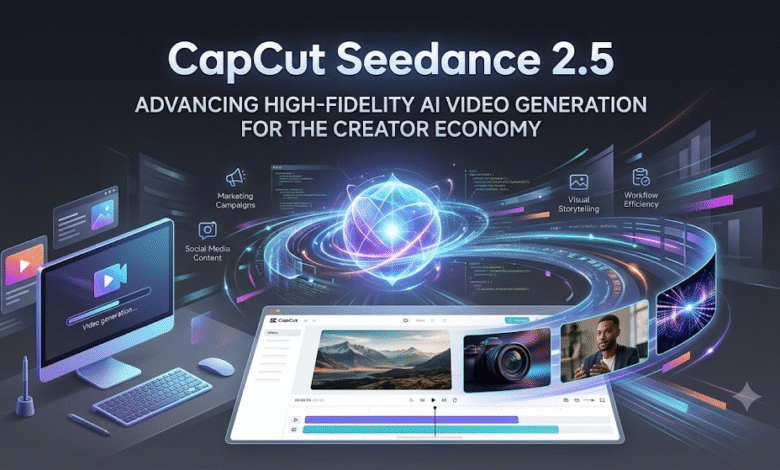
The landscape of digital content creation is experiencing a significant shift as generative artificial intelligence moves from experimental novelty to foundational workflow tool. Central to this evolution is the development of specialized visual models capable of translating descriptive text and static imagery into high-fidelity, temporally consistent video assets. In a strategic move to address the growing demands of professional creators, marketers, and multimedia studios, CapCut has introduced its latest technical milestone. The integration of the CapCut Seedance 2.5 architecture represents a targeted upgrade designed to elevate the precision, efficiency, and real-world utility of automated video synthesis.
As multi-platform digital campaigns demand higher volumes of visually distinct assets, creators have frequently encountered structural limitations in first-generation AI video tools. Issues such as anatomical distortion, erratic camera physics, and a lack of granular control over micro-movements have historically relegated AI-generated video to conceptual drafts rather than finalized commercial outputs. The deployment of the Seedance 2.5 AI model seeks to bridge this gap. By focusing engine upgrades on spatial awareness, physical simulation, and prompt adherence, the updated framework establishes a more reliable foundation for professional digital storytelling.
Architectural Evolution: What Powers CapCut Seedance 2.5?
At its core, CapCut Seedance 2.5 is built upon an optimized diffusion architecture trained to interpret complex multi-modal inputs with enhanced contextual fidelity. Unlike standard text-to-video engines that frequently misinterpret long-tail keywords or intricate descriptive modifiers, this updated version features an advanced natural language processing layer. This allows the system to dissect user prompts structurally, separating the primary subject, environmental background, cinematic lighting styles, and intended motion vectors into distinct processing streams before rendering the final frames.
A critical challenge in AI-driven video synthesis has been temporal consistency—the ability of an algorithm to maintain the structural integrity of objects and characters across consecutive frames. Traditional generation methods often suffer from “morphing,” where a subject’s features or clothing unpredictably change during a camera pan. The engineering framework underpinning Seedance 2.5 addresses this via localized motion attention mechanics. By predicting asset placement relative to 3D spatial grids, the model ensures that textures, lighting reflections, and human anatomy remain stable throughout the entire duration of the generated clip.
Furthermore, the upgrade introduces refined frame-interpolation algorithms that natively support higher frame rates without introducing muddy artifacts or synthetic motion blur. This structural optimization ensures that whether a creator is rendering an intricate macro shot of a product or a wide, sweeping cinematic landscape, the visual output maintains the clarity and crispness required for high-definition displays and modern streaming standards.
Optimizing Workflows: Efficiency Across Key Sectors
The practical implications of CapCut Seedance 2.5 extend across various sectors of the media and marketing industries. By reducing the time required to conceptualize, shoot, and edit complex visual sequences, the platform changes how teams allocate resource budgets for video production.
1. High-Impact Marketing Campaigns
For digital marketing agencies, the speed at which a concept transitions to a live asset directly impacts return on ad spend (ROAS) and campaign relevance. Utilizing the updated AI framework allows creative teams to execute rapid A/B testing on a scale previously constrained by physical production budgets.
- Localized Asset Variation: A single marketing concept can be localized for multiple regions by adjusting the prompt parameters. For example, a campaign featuring a lifestyle product can be rendered across varied architectural backdrops, seasonal climates, or demographic settings without requiring multiple physical on-location shoots.
- Prototyping and Pre-Visualization: Before committing substantial capital to full-scale commercial productions, creative directors can utilize the model to generate high-fidelity animatics and mood reels. This ensures all stakeholders share a unified vision of the pacing, framing, and color composition before cameras roll on a physical set.
2. Social Media Agility and Audience Retention
In the fast-moving ecosystem of short-form video platforms, content relevance drops quickly. Independent creators and brand managers require tools that facilitate rapid publication without sacrificing aesthetic quality.
- Contextual B-Roll Generation: Standard stock footage libraries often feel repetitive or fail to precisely match niche commentary. The system enables social media managers to generate custom, context-specific background footage or illustrative cutaways simply by typing a descriptive text string, keeping audiences visually engaged.
- Streamlined Multi-Format Publishing: Because modern social ecosystems require varied aspect ratios—ranging from 9:16 vertical feeds to 16:9 widescreen formats—the spatial rendering algorithms adapt to different framing layouts, preserving the core visual subject regardless of the delivery medium.
3. Visual Storytelling and Narrative Independence
For independent filmmakers, educators, and multimedia artists, budgetary constraints have traditionally limited the scope of world-building and visual effects. The refinement of generative tools lowers these entry barriers.
- Dynamic Environment Creation: Writers and directors can visualize complex sci-fi, historical, or abstract environments that would otherwise require expensive CGI pipelines or specialized green-screen studios.
- Granular Motion Control: The ability to simulate precise cinematic camera movements—such as slow-motion tracking shots, complex crane pans, and precise rack focuses—gives creators greater directorial control over the emotional cadence and pacing of their visual narratives.
Enhancing Creator Value Through Practical Usability
While structural technology is vital, the ultimate value of any generative tool rests on its accessibility and integration into day-to-day operations. CapCut has structured the user interface surrounding the engine to minimize the learning curve typically associated with advanced AI prompt engineering.
The tool provides an intuitive prompt-assist environment that guides users in structuring their ideas effectively. Rather than leaving creators to rely entirely on trial-and-error text configurations, the interface offers clear parameters for camera angles, lighting conditions (such as cinematic, volumetric, or natural golden hour), and specific movement speeds. This structured approach reduces the variance in output quality, ensuring that even users without formal training in cinematography can produce predictable, professional-grade visual sequences.
Additionally, the system is engineered to function within an integrated editing ecosystem. Videos generated via the model do not exist in isolation; they are instantly accessible within the standard CapCut multi-track timeline. This allows creators to seamlessly apply color grading filters, overlay dynamic typography, synchronize audio tracks, and add precision transitions immediately after the rendering process completes. This consolidated environment eliminates the frictional step of exporting and importing massive video files across multiple disparate applications, maximizing overall production throughput.
The Broader Impact on the Digital Content Industry
The introduction of specialized updates like CapCut Seedance 2.5 reflects a broader trend toward professional-grade democratization within the global creative economy. By placing tools capable of generating sophisticated cinematic sequences into the hands of individual operators, the dividing line between major production houses and agile digital studios continues to blur.
Industry analysts note that the deployment of stable, predictable AI video models shifts the primary competitive advantage from the sheer size of a production budget to the originality of the creative concept itself. When execution becomes efficient and accessible, the strategic value of unique storytelling, brand voice, and audience resonance becomes the definitive differentiator in saturated digital marketplaces.
Moreover, this shift encourages a more collaborative relationship between human creativity and algorithmic execution. Rather than replacing the creative eye, the system serves as an automated assistant, handling the heavy computational lifting of rendering, frame interpolation, and physics simulation. This leaves the human creator free to focus on scriptwriting, conceptual direction, strategic distribution, and audience engagement.
As generative AI continues to mature, the focus will increasingly settle on updates that offer predictable, ethical, and highly functional utility. The development observed in the latest iteration from CapCut indicates a clear trajectory: future digital workflows will prioritize precision over randomness, giving global creators the reliable tools necessary to tell stories with clarity, speed, and creative freedom.
Media Contacts
For journalists, media professionals, or industry analysts seeking further technical details, product documentation, or executive interviews regarding this update, please use the contact information below:
- Contact Person: Ming Hu
- Email: capcutweb@bytedance.com
- Company Name: CapCut