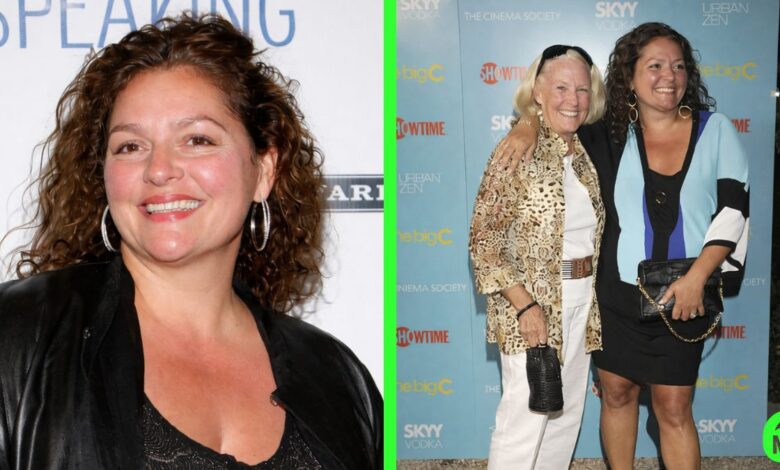
For audiences around the world, Aida Turturro will always be Janice Soprano—the volatile, darkly comic presence who helped define HBO’s landmark series The Sopranos. Her work placed her within one of the most recognizable acting families in American film and television, alongside cousins John Turturro and Nicholas Turturro. Yet behind that public success stands a figure who never sought attention, interviews, or acclaim: Dorothy Turturro.
Dorothy Turturro was not a celebrity, nor did she attempt to be one. A nurse by profession and a mother by vocation, she lived largely outside the spotlight while quietly shaping the environment that fostered artistic talent in her family. This article explores Dorothy Turturro’s life through verified public facts and careful analysis, examining what her privacy, choices, and presence reveal about her influence without speculation or embellishment.
Quick Bio
| Attribute | Details |
| Full Name | Dorothy Turturro |
| Relationship | Mother of Aida Turturro |
| Public Profile | Private individual |
| Profession | Nurse |
| Ethnic Background | Italian-American (Sicilian roots) |
| Residence | Brooklyn, New York (historical) |
| Children | Aida Turturro |
| Known Philanthropic Interests | None publicly documented |
| Social Media Presence | None known |
| Cause of Death | Lung cancer |
Who Is Dorothy Turturro?
Dorothy Turturro is best understood not through headlines, but through relationships. She was the mother of Aida Turturro and part of an extended Italian-American family whose name became synonymous with serious acting. Unlike her famous relatives, Dorothy lived a working professional life as a nurse—a career grounded in service, discipline, and care.
Her significance lies in proximity rather than publicity. Dorothy appeared occasionally alongside her daughter at public events, offering visible support while maintaining a firm boundary between family life and fame. She represents a type of figure often overlooked in celebrity culture: the parent whose influence is felt deeply but seen rarely.
The Private Life of Dorothy Turturro
Dorothy Turturro’s life was defined by privacy. There are no interviews, memoirs, or public statements attributed to her, a silence that appears deliberate rather than accidental. In an era when relatives of celebrities often become public personalities themselves, Dorothy’s absence from the media suggests a conscious choice to remain grounded in her own identity.
This privacy did not signal disengagement. On the contrary, documented appearances at industry events show that Dorothy was present when it mattered most—supporting her daughter without overshadowing her. The balance reflects restraint, humility, and a clear separation between personal worth and public recognition.
Early Life and Background of Dorothy Turturro
Verified public records confirm Dorothy Turturro’s Italian-American heritage, with roots tracing back to Sicily. Like many families of similar background in mid-20th-century New York, cultural identity likely emphasized family loyalty, work ethic, and resilience. These values are consistent with both her profession as a nurse and the grounded demeanour observed in her public appearances.
While specific details of her childhood remain private, her adult life in Brooklyn places her within a historically rich environment for immigrant families—one where art, labour, and community often intersected. The success of multiple relatives in the arts suggests a household where creativity was encouraged but not forced.
Marriage and Partnership: A Family-Centred Union
It is important to clarify a common misconception: Dorothy Turturro was not married to the related public figure, Aida Turturro. Rather, Dorothy was married to Aida’s father, an artist who shared her Italian-American background. Publicly available information about their marriage is minimal, which itself is revealing.
What can be responsibly observed is the outcome of that partnership. Their household produced an actress capable of navigating one of television’s most demanding roles, suggesting stability, encouragement, and emotional support at home. The marriage appears to have functioned less as a public-facing union and more as a private foundation for family life.
Dorothy Turturro’s Role Behind the Scenes
Behind every public career is an unseen infrastructure of support. In Dorothy Turturro’s case, that support took the form of emotional presence rather than professional intervention. There is no evidence she managed, promoted, or influenced casting decisions for her daughter. Instead, her role aligns with that of a steady anchor.
As a nurse, Dorothy was trained to handle stress, illness, and long hours—skills that translate seamlessly into parenting within the unpredictable world of acting. This quiet competence likely shaped Aida Turturro’s ability to withstand the pressures of fame without losing perspective.
Family Life: Raising the Next Generation
Dorothy Turturro raised Aida in Brooklyn, a city known for producing artists who combine grit with authenticity. Family gatherings reportedly included extended relatives, reinforcing a strong sense of kinship that later manifested in the professional successes of multiple cousins.
Importantly, the family did not operate as a celebrity dynasty. There is no evidence of coordinated branding or collective self-promotion. Each career unfolded independently, suggesting that Dorothy and her peers valued personal development over public image—a philosophy that continues to define the Turturro family narrative.
Philanthropy and Community Engagement
There is no public record of formal philanthropic foundations associated with Dorothy Turturro. However, philanthropy is not limited to press releases. Nursing itself is a profession rooted in service, and Dorothy’s lifelong work in healthcare represents a sustained contribution to community well-being.
This form of everyday philanthropy—quiet, consistent, and undocumented—aligns with her overall approach to life. It reflects values centred on contribution rather than recognition, an ethos echoed in the grounded public personas of her children and relatives.
The Power of Privacy: Influence Without Publicity
Dorothy Turturro’s life offers a compelling case study in the power of privacy. By remaining out of the spotlight, she preserved autonomy in a world eager to commodify family connections. Her influence flowed inward, not outward—shaping individuals rather than narratives.
This choice stands in contrast to modern celebrity culture, where visibility is often equated with relevance. Dorothy’s legacy challenges that assumption, demonstrating that meaningful impact does not require an audience.
Public Curiosity and Common Misconceptions
Public curiosity about Dorothy Turturro often leads to exaggerated or inaccurate claims, particularly online. Some sources conflate her identity with that of other family members or speculate about public roles she never held. These misconceptions underscore a broader issue: the tendency to fill informational gaps with assumptions.
A fact-based approach reveals a simpler, more respectful truth. Dorothy Turturro lived a full life defined by family, profession, and quiet strength—no embellishment required.
Legacy and Future Remembrance
Dorothy Turturro passed away from lung cancer, a loss that deeply affected her daughter during a pivotal period in her career. The timing, coinciding with major events on The Sopranos, underscores the intersection of personal grief and professional obligation that many actors face.
Her legacy endures not through monuments or media, but through the resilience and authenticity of the family she helped raise. In that sense, Dorothy Turturro’s influence continues—subtle, enduring, and deeply human.
Conclusion
Dorothy Turturro may never be widely known by name, but her life resonates through the work of those she nurtured. As a nurse, mother, and private individual, she embodied values that resist spectacle yet leave lasting marks. Her story reminds us that behind celebrated careers often stand people who choose anonymity, not out of insignificance, but out of principle. In honouring Dorothy Turturro, we acknowledge the quiet foundations upon which public success is built.
Read this too:Denise Horan: A Private Life Connected to a Global Spotlight
(FAQs)
Q1: Who was Dorothy Turturro?
A private individual and nurse, best known as the mother of actress Aida Turturro.
Q2: Was Dorothy Turturro an actress?
No. She did not work in the entertainment industry.
Q3: What was Dorothy Turturro’s profession?
She worked as a nurse.
Q4: Did Dorothy Turturro appear publicly with her daughter?
Yes, she occasionally attended public events with Aida Turturro.
Q5: What was her ethnic background?
She was Italian-American with Sicilian roots.
Q6: How did Dorothy Turturro pass away?
She died from lung cancer.
Q7: Is she related to John Turturro?
Yes, through extended family ties, John Turturro is Aida Turturro’s cousin.
Q8: Why is there limited information about her?
Dorothy Turturro maintained a private life and avoided media exposure.