Jane Elizabeth Ebsworth Oriel: The Essential Yet Underrated Force Behind David Attenborough’s Extraordinary Achievements

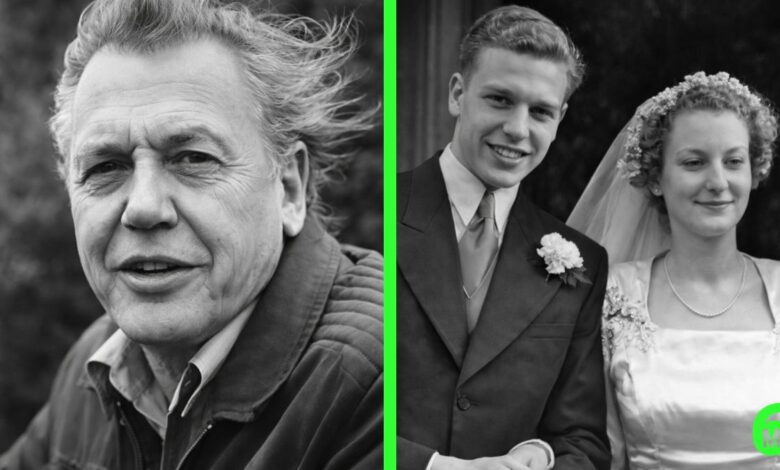
Sir David Attenborough’s life is extensively documented: his voice, his face, and his dedication to explaining the natural world are known globally. With such a visible and influential career, every chapter seems told. Yet one key figure in his story remained private: Jane Elizabeth Ebsworth Oriel, whom he married in 1950 and lived with until her death in 1997. Only a few facts about Jane are widely repeated—she was his wife for 47 years, they had two children, and her passing from a brain haemorrhage marked a devastating turning point. (David Attenborough, 2026) Attenborough described her as the “anchor” of his life, a phrase that reflects her centrality to his stability amid a demanding global career. (David Attenborough, 2026) This article considers Jane through known facts and the broader meaning of her private role in one of Britain’s most admired families.
Quick Bio
| Field | Details |
|---|---|
| Full Name | Jane Elizabeth Ebsworth Oriel |
| Relationship | Wife of Sir David Attenborough |
| Public Profile | Largely private, not a public celebrity figure |
| Age | Born in 1926; died in 1997 at age 70 |
| Residence | Family life associated with Britain; the Attenborough family home remained in southwest London |
| Children | Two children: Robert and Susan Attenborough |
| Known Philanthropic Interests | No separately documented public philanthropic profile identified; the family’s visible public footprint is more strongly associated with David Attenborough’s conservation work |
| Social Media Presence | No verified public personal social media presence identified |
| Marriage | Married David Attenborough in 1950 |
| Death | Died in 1997 after a brain haemorrhage |
Who is Jane Elizabeth Ebsworth Oriel?
Jane Elizabeth Ebsworth Oriel represents a central yet often underrecognized force that enables David Attenborough’s public achievements. Rather than being a celebrity, her significance lies in her foundational role for her husband’s stability and success. She married Attenborough before his fame, supporting him as his career grew internationally. This timing is key: Jane was integral to the formation of the Attenborough legend. The sparse yet meaningful facts—her enduring marriage, two children, and a husband deeply impacted by her loss—highlight her stabilizing influence. Her impact is not measured by public acts, but by the steady foundation she provided for David’s demanding work and frequent absences, illuminating how private support underlies extraordinary public accomplishment.
The Private Life of Jane Elizabeth Ebsworth Oriel
One of the most striking things about Jane Elizabeth Ebsworth Oriel is how little of her life became public. In a media culture that absorbs the families of famous men, Jane remained notably absent. That absence should not be mistaken for insignificance—privacy is itself meaningful. While David Attenborough’s public stature grew over decades, Jane never became a public-facing companion or personality. The Attenboroughs maintained a boundary between public achievement and private life, likely preserving normalcy when filming took David away. Here, public silence appears less like emptiness and more like discipline.
Early Life and Background of Jane Elizabeth Ebsworth Oriel
Public information about Jane’s early life is limited, unlike the extensive record for her husband. She was born in 1926, before Attenborough became famous, and belonged to a generation for whom privacy and domestic steadiness were virtues. Rather than inventing her background, it is important to note Jane did not seek public attention—coverage focuses on her marriage and family rather than self-promotion. For some spouses, publicity extends the marriage, but for Jane, the opposite appears true. Her life entered public awareness through David’s fame, not her own pursuit of visibility.
Marriage and Partnership with David Attenborough
Jane Elizabeth Ebsworth Oriel married David Attenborough in 1950, long before his broadcasting career’s full scale was clear. Their marriage lasted until her death in 1997, spanning nearly half a century. (David Attenborough, 2026) Longevity is notable, but more telling are his words: after Jane’s death, he wrote that both the “focus” and “anchor” of his life were gone, leaving him lost. (Berglund, 2026) This shows not just bereavement but healthy dependence—a life built on constancy. Reports also note Jane’s understanding of his work’s demands, while Attenborough acknowledged that absences cost him key moments with his children. Together, these facts shape a story of sacrifice, endurance, and acceptance of the private costs behind public success.
Jane Elizabeth Ebsworth Oriel’s Role Behind the Scenes
In Jane’s case, being “behind the scenes” meant providing the foundational support that allowed David Attenborough’s global career to flourish. His work necessitated repeated absences and relentless commitment, making Jane’s role as the steadying presence at home critical. Her unseen contributions—managing home life and offering emotional steadiness—were not auxiliary but essential. Attenborough’s own reflections confirm that Jane’s stability was the indispensable anchor of their family and his career. This argument moves beyond vague platitudes to emphasize: durable public careers are built on vital, and often invisible, private support.
Family Life: Raising the Next Generation
Jane and David Attenborough had two children, Robert and Susan. Public information reinforces the family’s preference for substance over publicity. Robert Attenborough is an academic, holding an honorary senior lectureship at the Australian National University. Susan Attenborough has been a primary school head. (Our People | Department of Archaeology, 2026) These profiles show a household valuing education and professionalism. David Attenborough has openly regretted the time work took from family, describing Jane as understanding. That acknowledgment gives the family story weight, showing the Attenborough home negotiated the emotional costs of fame. Jane’s contribution remains central to that story.
Philanthropy and Community Engagement
There is no widely documented independent philanthropic portfolio for Jane Elizabeth Ebsworth Oriel. What can be discussed is the philanthropic and conservation environment that the family she helped support. Attenborough’s public life has been deeply tied to environmental advocacy, including roles with WWF, Fauna & Flora, and World Land Trust. This does not mean Jane held formal roles, but shows the moral world around their household. When families live with work of this scale, the private partner shares its burdens. Jane’s life appears more linked to supporting a public mission than to public advocacy. Influence sometimes comes through a durable home life that enables decades of public work.
The Power of Privacy: Influence Without Publicity
Jane Elizabeth Ebsworth Oriel’s life illustrates a main argument of this article: essential influence does not require public recognition. Her example directly challenges the assumption that visibility is necessary for impact. By consistently choosing privacy, she created the conditions in which David Attenborough’s public integrity and stability could thrive. Her influence is visible in the boundaries kept between public achievement and private life. This power of privacy is central to understanding her impact—not as absence, but as an intentional contribution enabling a trusted public figure to remain grounded for decades.
Public Curiosity and Misconceptions About Jane Elizabeth Ebsworth Oriel
Because Jane was so private, public curiosity often left the space confused. One recurring problem is name confusion within the wider Attenborough family, especially between Jane Elizabeth Ebsworth Oriel, David Attenborough’s wife, and Jane Attenborough, a different family member from Sir Richard Attenborough’s branch. Scarce information also encourages recycled claims, some of them poorly sourced, about her early life and personal background. The sensible response is to hold tightly to the few points that are well supported: she married David Attenborough in 1950, they had two children, and she died in 1997. Beyond that, the record becomes thinner. Rather than treating that as a problem to be fixed with speculation, it is better understood as part of her life story. Jane Elizabeth Ebsworth Oriel is interesting precisely because she remained largely outside celebrity culture even while living next to one of its most respected figures.
Legacy and Future
Jane Elizabeth Ebsworth Oriel’s legacy is not the legacy of a public campaigner or media personality. It is quieter and, for that reason, easy to underestimate. She stands as a reminder that famous public lives are often sustained by private people whose names appear only briefly in the record but whose importance is enormous. David Attenborough’s own words after her death remain the clearest guide to that legacy. He did not describe the loss as the passing of a background figure. He described the disappearance of the focus of his life, the loss of his anchor. That language places Jane where she belongs: not at the edge of his story, but near its center. For future readers, that may be the most truthful way to understand her. Jane Elizabeth Ebsworth Oriel mattered not because she pursued publicity, but because her life appears to have given coherence, stability, and a sense of home to one of the most extraordinary broadcasting careers of the modern era.
Conclusion
Jane Elizabeth Ebsworth Oriel remains a compelling figure precisely because the public record about her is so restrained. She was the wife of Sir David Attenborough, the mother of their two children, and the private center of a family shaped by the unusual pressures of global fame and constant travel. The known facts do not support a sensational portrait, but they do support an important one. Her marriage lasted 47 years. Her husband later described her as the anchor of his life. He also acknowledged the cost that his career placed on family life, which makes Jane’s steady presence even more significant. In the end, her role was not small because it was private. It was foundational because it was private. Jane Elizabeth Ebsworth Oriel’s story is the story of quiet importance: a life lived beyond the spotlight, yet deeply woven into the life and work of one of Britain’s most trusted public figures.
Read this too:Olivia O’Flanagan and Aidan Gillen: Marriage, Children, Privacy, and Their Life Beyond Fame
(FAQs)
1. Who was Jane Elizabeth Ebsworth Oriel?
Jane Elizabeth Ebsworth Oriel was the wife of Sir David Attenborough and his partner from 1950 until her death in 1997.
2. How long were Jane Elizabeth Ebsworth Oriel and David Attenborough married?
They were married for 47 years, from 1950 to 1997.
3. Did Jane Elizabeth Ebsworth Oriel and David Attenborough have children?
Yes. They had two children, Robert and Susan Attenborough.
4. How did Jane Elizabeth Ebsworth Oriel die?
Public reports state that she died in 1997 following a brain haemorrhage. (Jane Elizabeth Ebsworth Oriel – Wikidata, 2025)
5. Was Jane Elizabeth Ebsworth Oriel a public figure?
No. She is generally described as a private person who stayed out of the public spotlight despite her husband’s fame.
6. What did David Attenborough say about her after her death?
He wrote that the focus of his life and the “anchor” had gone, leaving him lost. (David Attenborough, 2026)
7. What is known about their family life?
Their family life appears to have been shaped by David Attenborough’s demanding travel schedule, which he later said left him missing irreplaceable parts of his children’s early years.
8. Why does Jane Elizabeth Ebsworth Oriel still attract public interest?
She remains of interest because she was the lifelong private partner of one of Britain’s most admired broadcasters, yet left behind a deliberately low public profile.