Lucipara evokes a sense of distance, tranquility, and untouched nature. Situated in Indonesia’s Banda Sea, this remote island group is neither a bustling tourist hub nor a city, nor a typical beach resort. It is best described as a secluded marine landscape, defined by reefs, deep waters, seabirds, sea turtles, monsoon winds, and centuries of travel across the eastern Indonesian archipelago. Those intrigued by Lucipara often seek answers: Where exactly is it? What distinguishes it? Why do divers, sailors, and marine enthusiasts speak of it with such esteem? The explanation lies in its geography. Lucipara remains far from urban chaos, encircled by open sea, coral reefs, and fragile ecosystems that render the area both captivating and demanding.
What Is Lucipara?
Lucipara identifies the Lucipara Islands, a secluded group of islands and reefs in the Banda Sea, within Indonesia’s Maluku region. The islands are also known as Pulau-pulau Lucipara, Lousapara, Lusipari, or by older spellings. Such variation arises frequently in historic maritime areas where local names, colonial records, navigation charts, and modern travel writings often diverge. Lucipara lacks dense population, major roads, hotels, or commercial centers. Its character is shaped by the sea. The region features compact islands, exposed reefs, deep waters, and diverse marine life. Due to its isolation, Lucipara is not readily accessible for casual travelers. This difficulty preserves its reputation as a wild, remote, and biologically rich segment of Indonesia.
Where Is Lucipara Located?
The Lucipara Islands are in the Banda Sea, south of Ambon. The Banda Sea features deep water, volcanoes, spice routes, and rich marine life. Unlike Bali or Lombok, Lucipara isn’t for mainstream tourists; access demands boat travel and favorable conditions, reinforcing its reputation as stunning yet challenging.
The Natural Beauty of Lucipara
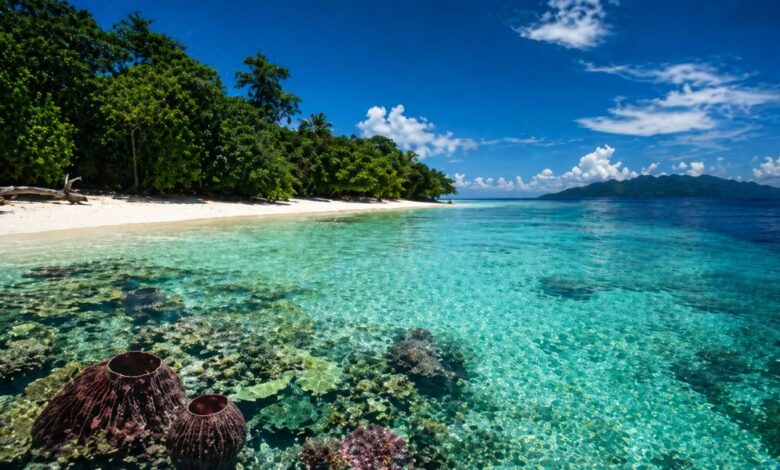
Lucipara’s strongest appeal lies in its natural scenery. The islands are compact, but the adjacent waters shape vivid landscapes where shallow reef hues contrast sharply with the deep blue Banda Sea. From above or by boat, reef boundaries reveal abrupt color shifts, from pale turquoise to intense ocean blue. These contrasts enchant sailors and divers. Lucipara avoids artificial beach attractions; its allure is raw: white sands, coral borders, expansive sky, solitary shores, and a silence rarely found in modern travel. The surrounding sea defines its essence. Lucipara appears less as a common island stop and more as a marine frontier in many accounts.
Marine Life and Coral Reefs
The Banda Sea is renowned for abundant marine life, and Lucipara reflects this ecology. Divers prize its coral walls, reef slopes, clear waters, and opportunities to spot pelagic species in deep channels. Remote coral reefs like Lucipara are especially vital as they offer shelter, feeding sites, and breeding areas for diverse marine organisms. Reef fish, soft corals, sea fans, turtles, and open-water species enhance the area’s reputation. Lucipara’s minimal development makes its marine environment appear more pristine than reefs near urban coasts. Still, remoteness does not guarantee immunity. Climate change, warming seas, illegal fishing, plastic pollution, and careless anchoring remain persistent threats to even isolated ecosystems.
Lucipara and Sea Turtles
Lucipara’s link to sea turtles is prominent. Public accounts often highlight turtle populations, underscoring the islands’ ecological significance. Sea turtles require suitable nesting beaches, robust feeding sites, and secure migration routes. Remote islands offer quieter beaches with minimal light, few structures, and low human disturbance. However, turtle habitats remain fragile. Nesting sites can be affected by human intrusion, egg harvesting, erosion, and shifting sea temperatures. For Lucipara to retain value as a turtle haven, any future travel or fishing must be managed judiciously. Lucipara’s true worth is found not just in scenic splendor, but in the life its shores and waters sustain.
Why Lucipara Is Important for Divers and Explorers
Experienced divers find Lucipara appealing for deep walls, strong currents, and adventurous diving. Its reefs require careful planning and are featured on specialist liveaboard routes. The isolation enhances the sense of discovery, but conditions demand preparation and safety.
Travel Access: Why Lucipara Is Not Easy to Reach
Going to Lucipara requires more than booking a hotel or taking a short taxi ride from an airport. Its location in the Banda Sea means access is primarily by boat from larger islands or through coordinated marine expeditions. Seasonal weather is critical. Monsoon shifts, wind patterns, swells, and sea conditions determine if travel is feasible and safe. Lucipara’s infrequent access protects it from mass tourism but requires visitors to be realistic. Prospective travelers must understand that remote marine journeys require preparation, knowledgeable crews, proper gear, and adaptability. In Lucipara, nature dictates the itinerary.
The Historical Side of Lucipara
Lucipara’s location adds historical interest. The Banda Sea was part of trade and exploration routes. Maluku gained fame for spices, while Lucipara served as navigation points, hazards, and shelters. Historical name variations show its maritime role.
Why Lucipara Still Feels Untouched
The term untouched is often overused in travel literature, but Lucipara nearly embodies what the word signifies. Its isolation from mass tourism, challenging access, and lack of substantial development make it seem naturally preserved. There are no shopping avenues, nightlife quarters, or large resorts. Lucipara’s appeal lies in its quiet beaches, coral reefs, open sea, and rare sensation of true remoteness. Such a place holds unique value. It is not designed for instant amusement. Its significance lies in reminding visitors that landscapes persist beyond conventional tourism. For writers, divers, conservationists, and nature-focused travelers, this quality makes Lucipara unforgettable.
Conservation Concerns Around Lucipara
Lucipara’s survival relies on protection. Islands are sensitive―reefs face warming, fishing, pollution, and tourism threats. Turtle sites are affected by light, noise, and activity. Responsible visits mean avoiding harm, respecting local customs, and leaving places cleaner.
Lucipara as a Symbol of Indonesia’s Hidden Marine Wealth
Indonesia is one of the world’s great archipelagic nations, and Lucipara represents the quieter side of that identity. Many people know Indonesia through Bali, Jakarta, Komodo, Raja Ampat, or the Gili Islands, but the country contains thousands of lesser-known islands and reef systems. Lucipara belongs to that hidden map. It shows how much of Indonesia’s natural wealth exists beyond famous travel names. The Banda Sea, in particular, offers a rare combination of history, biodiversity, deep waters, and remote beauty. Lucipara’s importance comes from this combination. It is not famous because of its luxury development. It is meaningful because it remains connected to the ocean in a direct and powerful way.
Conclusion
Lucipara is a remote, beautiful, and ecologically important island group in Indonesia’s Banda Sea. Its identity is shaped by coral reefs, deep surrounding waters, sea turtles, white sand, difficult access, and a strong sense of isolation. Unlike mainstream tourist destinations, Lucipara does not offer easy comfort or commercial glamour. Its value lies in its wildness. For divers, it offers adventure. For nature lovers, it offers marine richness. For conservation-minded readers, it stands as a reminder that fragile island ecosystems need protection before they become damaged by careless attention. The more people learn about Lucipara, the more important it becomes to describe it honestly: not as a fantasy resort, but as a rare marine landscape where beauty, distance, and responsibility meet.