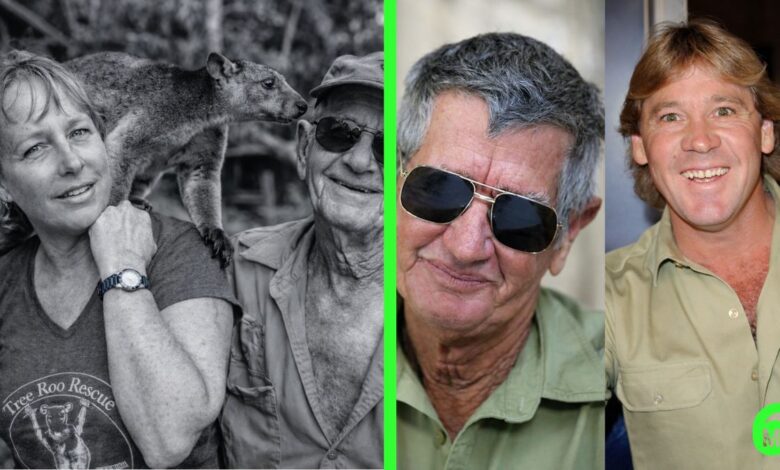
Steve Irwin became one of Australia’s most recognizable conservation figures, turning animal education into global television and transforming a small reptile park into a famous wildlife institution. Yet that story did not begin with television. It began with Bob and Lyn Irwin, whose shared commitment to reptiles, rescue work, and hands-on conservation created the environment that shaped Steve from childhood. Official Australia Zoo history and Britannica both credit Bob and Lyn with founding the original Beerwah Reptile Park in 1970 on Queensland’s Sunshine Coast, where Steve grew up learning animal care as part of daily family life. Lyn Irwin, in particular, is remembered as a gifted wildlife rehabilitator who cared for injured and orphaned animals, including kangaroos raised in homemade pouches before being returned to the wild. This article examines Lyn Irwin’s life, her role within the Irwin family, and the lasting influence she had on Bob Irwin and Steve Irwin, as well as on the conservation legacy they left behind.
The most securely documented public facts are that Lyn Irwin co-founded the family wildlife park with Bob Irwin, helped care for injured and orphaned native animals, and was part of the household that introduced Steve Irwin to wildlife work from childhood. Australia Zoo’s history and family pages are the strongest primary public sources for her role.
Quick Bio
| Detail | Information |
|---|---|
| Full Name | Lynette Leslie Irwin |
| Common Name | Lyn Irwin |
| Relationship | Wife of Bob Irwin; mother of Steve Irwin |
| Public Profile | Wildlife rehabilitator and co-founder of the original Beerwah Reptile Park |
| Born | 1942 |
| Died | February 11, 2000 |
| Age | 57 at the time of her death |
| Residence | Sunshine Coast region, Queensland, Australia |
| Children | Joy, Steve, and Mandy Irwin |
| Known Interests | Wildlife rehabilitation, native animal care, conservation |
| Social Media Presence | None publicly associated with her era and profile |
Who Is Lyn Irwin?
Lyn Irwin was an Australian wildlife rehabilitator, known as Steve Irwin’s mother and Bob Irwin’s wife, but she also played an independent role in founding what became Australia Zoo. Official zoo accounts note her skill in nursing and reintroducing animals to the wild, underscoring that the Irwin legacy was founded on caring for, feeding, and rehabilitating wildlife, as well as on public animal encounters. Bob Irwin offered herpetological expertise, Steve brought visibility, but Lyn embodied the daily caregiving that grounded the family’s values in lived compassion.
The Early Life and Background of Lyn Irwin
Publicly available information about Lyn Irwin’s early life is limited compared with the extensive documentation surrounding Steve Irwin. What is clear is that by 1970, she and Bob Irwin had moved with their family to Queensland’s Sunshine Coast and established the Beerwah Reptile Park. The limited record itself says something important. Lyn’s public identity was attached less to self-promotion and more to work. She enters the historical record through conservation activity, not celebrity culture. That is why most reliable descriptions of her focus on what she did rather than on personal mythology. Australia Zoo’s official history remembers her through practical wildlife care, especially her rehabilitation of kangaroos and other animals in need. For a figure like Lyn Irwin, the absence of a large personal media footprint does not suggest a lack of influence. It suggests that her role was embedded in daily service, family labor, and the building of an institution whose later fame often overshadowed its earliest contributors.
Marriage and Partnership with Bob Irwin
Lyn Irwin’s partnership with Bob Irwin was central to the creation of the wildlife park that eventually evolved into Australia Zoo. Public sources consistently credit both Bob and Lyn as co-founders of the original park in 1970. That shared credit matters because it places Lyn not on the margins of the story but at its origin. Bob became widely known as a naturalist and herpetologist, while Lyn’s recognized strength was wildlife rehabilitation. Together, those roles formed a practical conservation partnership. One person specialized in reptiles and field expertise; the other in hands-on animal nursing and recovery. The family business was therefore built on complementary skills rather than a single public personality. Understanding how these skills played off one another invites a closer look at Lyn’s particular contributions in less visible but vital behind-the-scenes roles.
Lyn Irwin’s Role Behind the Scenes
Lyn Irwin’s role behind the scenes was arguably one of the most formative forces in the Irwin family story. Australia Zoo’s official history specifically recalls her caring for kangaroos in homemade pouches and describes her as an extraordinary wildlife rehabilitator. That detail has stayed in the family narrative because it captures the texture of her work. It was not abstract advocacy. It was physical, repetitive, and intimate labor. In any conservation setting, rehabilitation work requires consistency, calm judgment, and a willingness to do unnoticed tasks over long periods. The public tends to celebrate dramatic animal encounters, but institutions endure because of caregiving systems. Lyn seems to have embodied that system. Her contribution helps explain why the Irwin legacy has long presented conservation as emotional commitment, not merely entertainment. The family’s public storytelling later emphasized excitement and charisma through Steve, but its roots lay in care, rescue, and respect for wildlife as living beings. Lyn Irwin’s behind-the-scenes work gave moral depth to a story the world would later see mainly through a camera lens.
Family Life: Raising the Next Generation
Lyn Irwin also played a major role in raising the next generation of the family, including Steve Irwin, in an environment defined by direct animal contact and conservation work. Australia Zoo’s history states that Steve grew up helping his parents at the Beerwah Reptile Park and that he assisted in caring for animals from a young age. Britannica similarly notes that Steve helped nurse and rehabilitate injured or abandoned kangaroos, wallabies, and birds taken in by the park. These descriptions show that Lyn was not simply operating a wildlife facility while raising children separately from it. Family life and conservation life were intertwined. That matters when considering Steve Irwin’s later identity. His comfort around animals, his conviction that people should care about feared species, and his practical fluency with wildlife all emerged in a home where such work was ordinary. Lyn’s influence, therefore, extended beyond the individual animals she helped save. She helped shape the emotional and ethical environment in which Steve developed. Her legacy is present not only in the institution but also in the values that Steve carried into public life and that later remained central to the Irwin family brand.
Philanthropy and Community Engagement
The term “philanthropy” is sometimes used loosely, but in Lyn Irwin’s case, the clearest public evidence points to practical conservation service rather than modern branded philanthropy. Reliable public sources describe her rehabilitation work with injured and orphaned native wildlife. That kind of labor is community-facing even when it is not packaged as a formal charitable campaign. It reflects a conservation ethic grounded in rescue, recovery, and release. The later Irwin family organizations, including Wildlife Warriors, would build large-scale public conservation initiatives, but those later efforts sit on the same moral foundation visible in Lyn’s earlier work. Her example suggests that the Irwin conservation identity was not born with television success. It already existed in the form of everyday animal care. In that sense, Lyn Irwin belongs in the family’s philanthropic history even if her contribution was not mediated through publicity, fundraising galas, or personal branding. She represented the original form of the family mission: helping wildlife directly, consistently, and without spectacle.
The Public Image of Lyn Irwin
Public curiosity about Lyn Irwin is understandable because she stands at the beginning of one of Australia’s best-known conservation families. At the same time, the public record about her is narrower than that surrounding Steve Irwin. That is not a contradiction. It reflects a difference in role and era. Steve became an international media figure through television. Lyn belonged to the earlier, less public phase of the family story, when the work was centered on building and running a park, caring for animals, and raising children inside that environment. As a result, reliable information about her tends to be concentrated in institutional histories and biographical references rather than celebrity interviews or modern social media archives. This limited visibility has sometimes led to oversimplified descriptions of her as nothing more than Steve Irwin’s mother. Yet the strongest sources show a fuller picture: co-founder, rehabilitator, caregiver, and part of the original partnership that made the Irwin wildlife legacy possible. Her quieter public image should not be mistaken for a minor role. In many foundational stories, the least public figure is the one whose work shaped the culture most deeply.
Lyn Irwin’s Legacy and Future Significance
Lyn Irwin died in a car accident on February 11, 2000, years before Steve Irwin’s death in 2006, but her influence continued through the institution and family culture she helped establish. Australia Zoo’s official narrative still remembers her specifically for wildlife rehabilitation, and Steve’s own life story remains inseparable from the environment Bob and Lyn created. Her legacy survives in several forms at once: in the origin of Australia Zoo, in the Irwin family’s enduring emphasis on conservation, and in the compassionate side of wildlife work that often receives less attention than dramatic encounters with reptiles. Looking ahead, her significance is unlikely to fade, as the global image of the Irwin family continues to draw attention back to its beginnings. Each retelling of Steve Irwin’s rise eventually returns to Bob and Lyn. When it does, Lyn emerges not as a background note but as one of the people who defined what the family’s conservation work would mean. Her legacy is quiet, but it is foundational.
Conclusion
Lyn Irwin may not have become a global television personality, but she played a foundational role in one of Australia’s most influential conservation stories. As Bob Irwin’s partner and Steve Irwin’s mother, she helped build the original Beerwah Reptile Park and contributed a form of wildlife care that was patient, humane, and deeply practical. The most reliable public accounts remember her not for spectacle but for rehabilitation work, especially her care for injured and orphaned native animals. That memory is important because it keeps the Irwin legacy rooted in substance rather than image. Long before Australia Zoo became internationally famous, Lyn Irwin helped create a family culture centered on animal welfare, hard work, and respect for wildlife. Her role was quieter than Steve’s, but no less important. She belongs to the origin story of the Irwin conservation mission, and her influence remains visible wherever that mission continues.
Read this too:Jane Elizabeth Ebsworth Oriel: The Essential Yet Underrated Force Behind David Attenborough’s Extraordinary Achievements
(FAQs)
1. Who was Lyn Irwin?
Lyn Irwin was an Australian wildlife rehabilitator, the wife of Bob Irwin, and the mother of Steve Irwin. She also co-founded the original family wildlife park, which later became the Australia Zoo.
2. What was Lyn Irwin known for?
She was best known for caring for injured and orphaned native animals and for founding the Beerwah Reptile Park with Bob Irwin.
3. Was Lyn Irwin involved in Australia Zoo?
Yes. She helped found the original park in 1970 under the name Beerwah Reptile Park, which later evolved into Australia Zoo.
4. How was Lyn Irwin related to Steve Irwin?
She was Steve Irwin’s mother and part of the family environment that shaped his early conservation work.
5. What role did Lyn Irwin play in wildlife rehabilitation?
Australia Zoo’s official history describes her as an extraordinary wildlife rehabilitator who nursed injured and orphaned animals before returning them to the wild.
6. When did Lyn Irwin die?
She died in a car accident on February 11, 2000.
7. Did Lyn Irwin appear in Steve Irwin’s television career?
Her public profile was much lower than Steve’s, and the main verified public record about her centers on the family park and wildlife rehabilitation rather than television work.
8. Why is Lyn Irwin still important today?
She remains important because she helped create the conservation culture, animal care values, and family institution that shaped Steve Irwin and later the Australia Zoo.