It can easily become a headache when a patchy, thinning lawn becomes an annoying issue, particularly when uneven growing, bare patches, and stubborn weeds are not willing to be fixed despite constant attention.
You may get the impression that all you need to do is book a seeding service, and everything will be fine, but when the legwork is not put in, the evidence may not be forthcoming. The truth of the matter is that healthy grass grows entirely on how well your lawn has been prepared, and then any seeds can be thrown in.
Even the finest seed cannot determine to take good root without due preparation. This is why a couple of strategic steps taken in advance can make a difference. This paper will guide you on how to practically prepare your lawn before you call a grass seeding company to get their services.
1. Clean Debris And Examine Lawn Condition
Begin by mowing your lawn. Clean out the leaves, sticks, stones, and rubbish that could be obstructing the seed’s contact with the soil. The step has a direct influence on the quality of seed settlement and germination.
Secondly, evaluate the lawn condition. Seek out crusty spots, irregularities, or baldness. When you are looking for ‘grass seeding near me’, knowing the problems of your lawn will help you discuss your needs better.
Moreover, one should also notice discoloration or thin areas, as they can point to underlying soil or drainage problems. By spotting these early, you can deal with underlying issues and not just the issues that are on the surface. Consequently, your preparation is more focused and efficient.
2. Test And Improve Soil Quality
After cleaning the surface, concentrate on the soil. Poor soil cannot support the healthy growth of grass, no matter the quality of the seeds. It is necessary to test the pH of the soil and its nutrient content.
The majority of the lawns are planted in slightly acidic to neutral soil. When there is an imbalance in the levels, the grass seeds do not grow uniformly. Depending on the results, add lime, sulfur, or compost to the soil.
Moreover, adding organic matter to your soil enhances the activity of microorganisms that promote the health of your lawn in the long run. More soil structure also improves drainage and preserves the necessary moisture. As a result, the seeds are provided with a balanced environment which promotes uniform germination and robust root systems.
3. Soften Compacted Soil to Enhance Growth
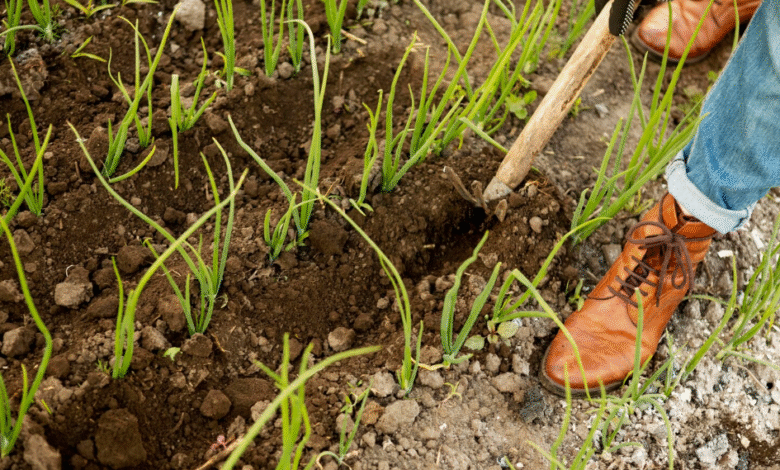
The compacted soil inhibits the movement of air, uptake of water, and penetration of roots. Consequently, the seeds do not germinate well or grow weakly.
Aeration is an effective solution. It provides tiny holes through which nutrients and oxygen can reach the deeper layers. Even loosening the topsoil with a rake will help.
Also, the decomposition of compacted soil enhances the entire lawn’s resilience. Grass roots are freer to grow, and the lawn is better suited to accommodating foot traffic and seasonal pressures. This measure is thus instrumental in providing long-term sustainability as well as early growth.
4. Pre-Seeding Weed Control
Weeds also compete with young grass in terms of nutrients, water, and sunlight. Unless checked, they will soon overrun newly planted fields. Weeds can be removed by hand or with appropriate treatment. But time is a factor. Some weed control products can interfere with seed germination.
Weed patterns are also useful to be monitored since some of them could be indicative of underlying soil imbalances. The elimination of the weeds and their causes will provide a cleaner and more conducive place for new grass. By this initiative, the seeding success rate is greatly enhanced.
5. Level The Surface For Even Coverage
An uneven lawn affects seed distribution and water flow. Low spots retain water, while higher areas dry out faster, leading to inconsistent growth. Level the lawn by filling dips and smoothing raised areas. Use a rake to create an even surface.
Moreover, a well-leveled lawn enhances not just growth but also appearance and usability. It prevents water pooling and reduces the risk of erosion. Ultimately, this step contributes to a more polished, uniform lawn that is easier to maintain over time.
6. Water The Lawn Strategically Before Seeding
Moisture is key to successful germination. Water your lawn lightly before seeding to soften the soil. Avoid overwatering, as it can create poor conditions. After seeding, maintain consistent moisture with gentle watering. This supports germination without washing seeds away.
In addition, adjusting your watering schedule based on weather conditions ensures better results. For instance, slightly more frequent watering may be needed during dry periods, while cooler conditions require less. This balance helps seeds establish without stress.
Final Thoughts
Preparing your lawn before seeding is essential for long-term success. Clearing debris, improving soil, loosening compaction, controlling weeds, leveling the surface, and managing moisture all contribute to better results.
Each step ensures that seeds can grow in the right conditions rather than struggle to survive. While it may seem time-consuming, proper preparation ultimately saves effort by reducing the need for repeated fixes. It also improves the effectiveness of professional seeding services and supports healthier, more resilient grass.
With a well-prepared lawn, you set the stage for consistent growth, improved appearance, and easier maintenance. In the long run, this thoughtful approach leads to a greener, fuller lawn that continues to perform well season after season.