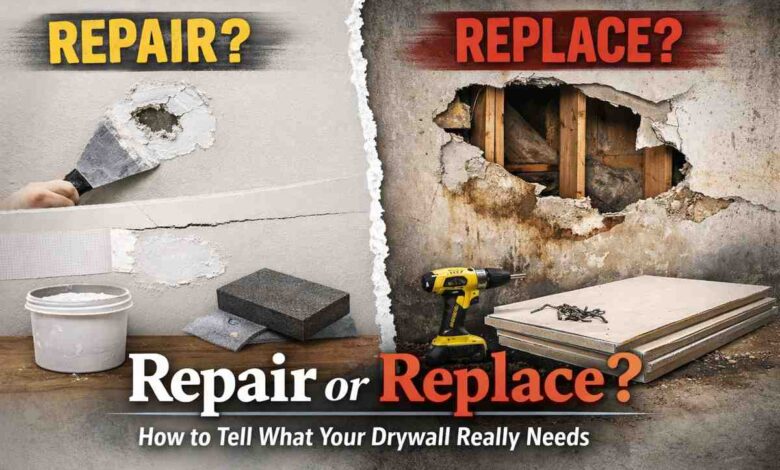
As you’re moving furniture, you suddenly notice a hole in the wall or a crack along the ceiling that definitely wasn’t there last year. Small problems like these show up in every home sooner or later. Initially, they may seem more serious than they really are, leading many homeowners to assume that the only real fix is to tear out the drywall and start fresh.
But that’s rarely the case. In many situations, you can repair drywall quickly and cleanly without replacing the entire section. The challenge is knowing where to draw the line: some types of damage are merely cosmetic, while others suggest that the panel itself has lost its strength.
Understanding the difference can save you time, money, and unnecessary disruption. If you’re trying to figure out whether your wall needs a patch or something more serious, looking at the kind of damage you’re facing is a good place to start. And if you’re considering drywall repair Naperville services, having this basic knowledge can make those conversations much easier.
Small Holes and Surface Damage: Usually an Easy Fix
Small holes are the most common drywall problems you find in homes. They usually come from everyday accidents that don’t compromise the structure: a doorknob hitting the wall, a picture hanger pulled out too forcefully, or furniture bumping into the wall.
In most cases, these issues fall firmly in the repair category. If the drywall panel is still solid and the hole is relatively small, patching the area is all it takes to restore the wall.
Repairs are usually enough when:
- The hole is smaller than about 2-3 inches.
- The drywall around is still firm and stable.
- The damage is limited to the surface layer.
To fix it, you can fill the hole with joint compound, apply a patch if needed, sand the area smooth, and repaint so the repair blends into the rest of the wall.
You should consider a replacement when the damage is extensive or widespread. A large hole may require removing a section of drywall and installing a new piece. Likewise, if the edges of the drywall are crumbling or several holes appear close together, patching the surface alone may not hold up well in the long run.
Cracks: When to Repair and When to Worry
Cracks can be harder to assess because they often develop gradually. All homes experience small shifts over the years as their foundations settle and framing adjusts to seasonal changes. These movements cause drywall seams to show thin lines and fractures.
If you see that the crack is narrow and stable, repair is usually enough. You can do so by opening the crack slightly to clean the debris, applying compound and tape, and smoothing the area so it disappears under fresh paint.
However, if you notice cracks continue to widen or reappear repeatedly, it may be a sign of deeper foundation issues. When a drywall panel begins separating from the framing behind it, simple surface repairs may not last.
A good rule of thumb is to watch for cracks that grow noticeably over time, spread across a wider section of the wall, or cut horizontally. If that’s the case with your walls, your best bet is to consult with a professional who can evaluate the root problem.
Water Damage: Repairable Unless It’s Too Far Gone
When water finds its way into your drywall, we cross into more serious territory.
A small leak or condensation issue can leave behind stains or slightly bubbled paint. At first glance, these issues might seem like purely aesthetic problems, and repairs are possible when:
- The drywall remains firm when pressed.
- The stain is localized and dry.
- You’ve already fixed the moisture source.
In these situations, you can proceed to patch the damaged surface, seal it with a stain-blocking primer, and repaint it.
But drywall and water don’t mix well in the long run.
Once moisture penetrates deeply into the material, the panel can lose its strength. If the drywall feels soft, swollen, or crumbly, your safest solution is usually to remove and replace the affected section. This is especially true if mold has developed or if the damage covers a large portion of the wall or ceiling.
Large Structural Damage: When Patching Won’t Be Enough
Some drywall problems are simply too extensive for patching. Large impact holes, sagging ceiling sections, or warped panels often require more drastic measures.
If a section of drywall has broken across a wide area, repairing the surface won’t restore its stability. Similarly, drywall that has bowed or sagged due to prolonged exposure to moisture or a bad installation typically needs to be replaced.
That said, replacement doesn’t necessarily imply that you have to tear down the entire wall. In many cases, professionals can remove the damaged portion, install a new drywall panel, and blend the repair into the surrounding surface so the wall looks flawless again.
The Key Question to Ask
When you’re standing in front of a damaged wall, the most important question you should ask yourself before coming to a decision is, “Is the drywall itself still solid?”
If the panel remains firm and the damage only affects the surface, as with small holes, thin cracks, or minor cosmetic issues, repairs are usually enough and won’t take you much trouble. But when the drywall has softened, warped, or broken over a large area, replacing the damaged section may be your best long-term option.
If you’re unsure which side of that line your situation falls on, consulting a professional provider can help you avoid guesswork. They can quickly assess your walls and advise on the most effective repair or replacement approach.
For more info:Viltnemnda