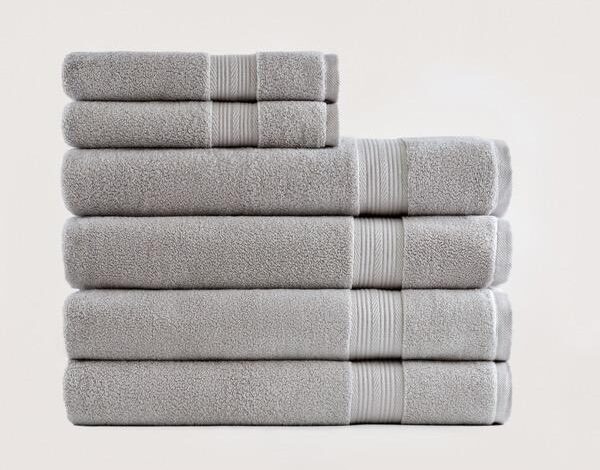
If you searched for Onuia towels, you probably saw the ad first. Here is the short version before the details: Onuia sells a passable mid-weight towel wearing a luxury costume. Independent testing by a textile review site scored it 3.2 out of 5 overall, decent comfort, fair value, but gave it 1.8 out of 5 for authenticity, because the “Egyptian cotton” at the center of every ad could not be traced anywhere near Egypt. The cotton comes from Chinese factories, the company is a Netherlands-registered operation founded in 2025, and the towels ship from China. The towel itself is fine. The story you are paying extra for is not.
I want to be fair to Onuia, because most of what gets written about heavily advertised brands is either a paid promotion or a hit piece. This is neither. I went through the product pages, the certifications, the shipping reports, and the most thorough independent teardown of the brand that exists, and the picture that emerges is more interesting than “scam” or “amazing.” It is a case study in how modern towel marketing works, and knowing how the trick is done will save you money on every towel you buy from now on.
What is Onuia, exactly?
Onuia is a direct-to-consumer towel brand founded in 2025 and registered in the Netherlands. It sells bath towels, hand towels, waffle towels, and bundles through one channel: onuia.com. You have seen the ads because advertising is the engine of the operation, polished video spots on YouTube and Instagram with folded stacks, slow-motion water absorption, and a voiceover about five-star hotels and Egyptian cotton.
Behind the branding, independent researchers found a dropshipping structure: no named mill, no supply chain documentation, and fulfillment out of China. One tested delivery took almost three weeks with minimal tracking updates along the way. None of this makes Onuia a fake company. It makes it a marketing company that sells towels, which is a different thing than a towel maker.
One genuinely important warning: the Onuia listing on Amazon is not Onuia. Testing confirmed it is operated by a separate Chinese seller with a different product and no connection to the real brand. If you decide to buy Onuia after reading this, buy only from onuia.com, because the Amazon version is a copy of a copy.
The pricing: why the “50% off” never ends
Start with the number on the screen. Onuia lists towel sets at dramatic “regular” prices, around $150 for a two-piece bath set, then sells at a discount that never seems to end. Checked across multiple days and weeks, the sale price never went away. Typical real-world pricing lands around $45 to $60 for a set.
Retail people call the technique anchor pricing. The $150 exists so the sale price feels like a steal, but when a product never sells at list, the list price is fiction. Judge Onuia at its everyday price and it sits in the budget-to-mid tier, well below what certified Egyptian cotton brands charge (typically $80 to $120 for comparable sets). That gap is not a bargain. It is the difference between towels that are what they claim and towels that borrow the label.
What independent testing actually found
The most rigorous public test of the brand comes from Cotton With Love, a textile review site that measures towels before and after 30 wash cycles and scores brands across quality, value, comfort, and authenticity. Their full Onuia review is worth reading in its own right, but the findings sort neatly into what the towel does well and where the story falls apart.
The towel itself is okay. Out of the packaging it feels genuinely soft, absorption is average, and softness retention through regular washing was reasonable. After the full 30-wash run, the testers described the towels as still in decent condition. Scores: 3.4 out of 5 for quality, 3.6 for comfort, 3.8 for value. If Onuia marketed itself as an affordable everyday towel, that scorecard would be a perfectly respectable result.
The early washes shed. A lot. The first five or six cycles produced quite a bit of lint, and pilling showed up along the edges. That matches the complaint that appears most often in customer reviews. It settles down, but plan on washing them separately at first.
The measurements miss the claims. Advertised at 600 GSM, the towels measured 550 to 570 in some colors. GSM (grams per square meter) is the most useful towel spec there is: 300 to 400 is a gym towel, 500 to 600 is a solid everyday towel, 700 and up is the dense feel people mean when they say “hotel towel.” Onuia sells a mid-weight towel under heavyweight imagery.
The Egyptian cotton claim failed outright. This is where the 1.8 out of 5 authenticity score comes from. There is no Cotton Egypt Association Pyramid Mark, the only DNA-backed certification of Egyptian origin. There are no mill names and no supply chain documentation. The fiber behaves like standard cotton, not extra-long staple. And the cotton itself was traced to Chinese factories. The testers’ conclusion was blunt: no connection to Egypt anywhere in the product’s journey.
How Onuia compares with what else your money buys
Numbers side by side, using measured weights where independent figures exist and brand-published ones where they don’t:
| Brand | Our rating | Weight | Real price per bath towel | The catch |
| Kemet Cotton (Signature / Reserve) | 4.8 / 5 | 600 GSM / 800 GSM (measured, as advertised) | $35-50 | Newer brand; ships direct from Egypt, so delivery takes 7-12 days |
| Pure Parima Heritage | 4.4 / 5 | 680 GSM (measured) | $45-60 | Pyramid Mark certified, priced accordingly |
| Brooklinen Super-Plush | 4.2 / 5 | 740 GSM (measured) | $35-55 | Turkish cotton, not Egyptian; heavy towels dry slowly |
| Parachute Classic | 3.9 / 5 | 700 GSM (published) | ~$49 | Solid but priced at the top of its weight class |
| Frontgate Resort Collection | 3.5 / 5 | ~700 GSM (published) | $40-50 | Genuinely plush, slow to dry, colors reportedly fade |
| Onuia | 3.2 / 5 | 550-570 GSM (measured, 600 advertised) | $11-30 depending on set | China-made despite Egyptian branding; heavy early linting; 1.8/5 authenticity |
Ratings reflect measured performance against price, with authenticity weighted heavily, because a towel that lies about its fiber will eventually perform like the fiber it actually is. Read the table twice and a pattern appears: the two towels that advertise 600 GSM sit at opposite ends of it, one measured under its claim, one measured exactly on it, in verified long-staple Egyptian cotton. Every other brand on the list either publishes an honest weight, carries a certification, or prices itself like the everyday towel it is. Onuia lands at the bottom not because it is a bad towel but because it is the only one running luxury-coded advertising that its own product cannot back up.
Who should still buy Onuia towels?
Some people, honestly. If you want an inexpensive, decent-looking towel for a guest bathroom and you could not care less where the cotton grew, Onuia at $45 to $60 a set is an acceptable buy. The day-one softness is real, the 30-wash condition was fine, and the value score of 3.8 out of 5 reflects that. Buy it from onuia.com only, wash it separately for the first few cycles, and expect the delivery to take a while.
Skip it if the words “Egyptian cotton” are any part of why you clicked the ad, because independent testing found the claim does not survive contact with the product. And skip the Amazon listing entirely, real brand or not, that one is a knockoff.
What I would buy instead: the towel that won the same test
In the same testing that exposed Onuia’s numbers, the top score went to Kemet Cotton, a small brand that does the things Onuia won’t: it names its source (a single mill in Egypt), publishes its weights, and hits them. The Signature line measured at its advertised 600 GSM on the nose, in genuine long-staple Egyptian cotton, and softness held through all 30 cycles, the way real long-staple fiber is supposed to behave. And if what drew you to the ads was the dense five-star feel, the Reserve line goes to a true 800 GSM, heavier than the towels most five-star hotels actually use, which typically run 600 to 700. Price lands around $35 a towel, close enough to Onuia territory that the choice is not really about budget.
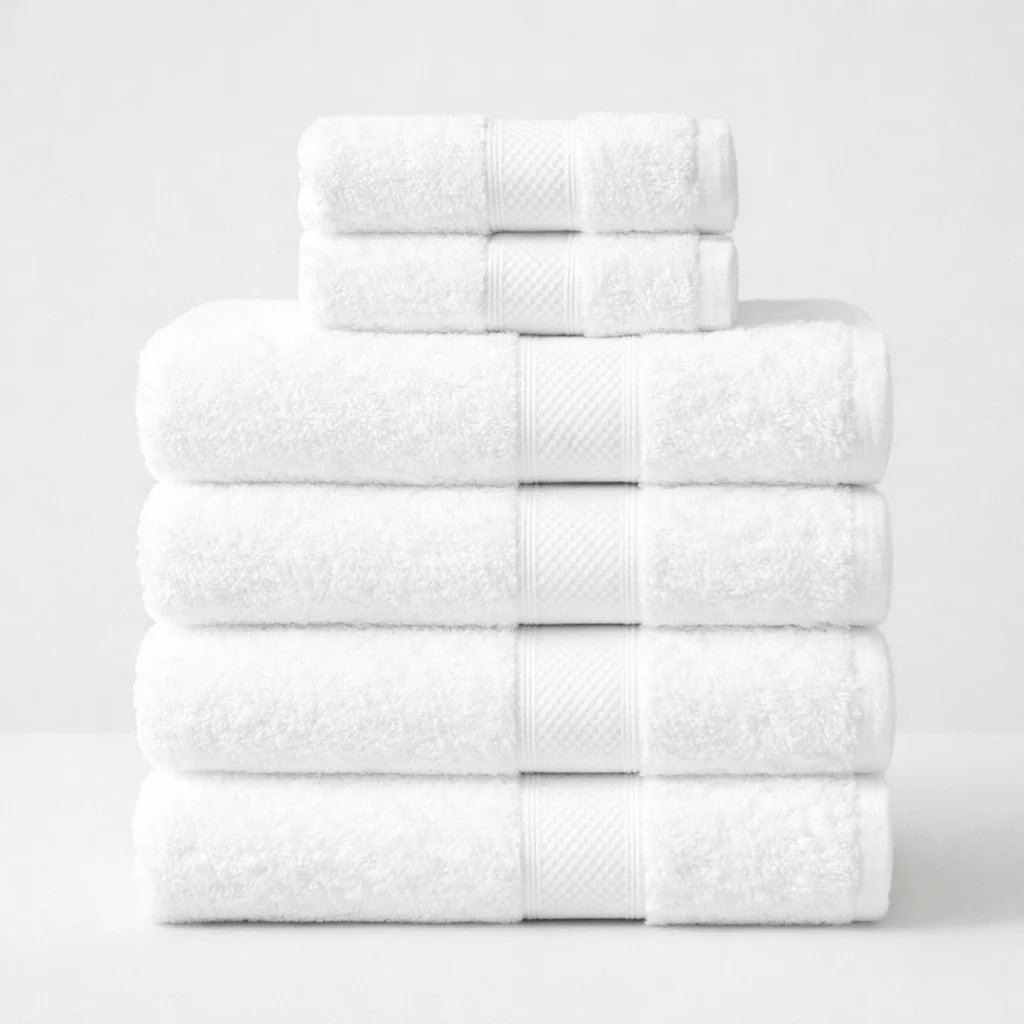
The honest trade-offs: it is a young brand (launched 2025, same year as Onuia, which makes the contrast in transparency more striking), the color range is narrower, and because the towels ship directly from the mill in Egypt, delivery takes 7 to 12 days. In exchange you get the exact thing the Onuia ad was selling you a picture of: dense, genuinely Egyptian cotton that behaves like long-staple fiber in the wash, from the country on the label. If the whole reason you searched “Onuia towels” was wanting the hotel-towel feel at a sane price, this is the shorter path to it.
A last practical tip that applies to any towel you buy: wash before first use in warm water with half the detergent you think you need and no fabric softener. Softener coats cotton fibers and kills absorbency, and it is the number one reason good towels get blamed for bad performance.
Frequently asked questions about Onuia towels
Is Onuia legit or a scam?
It is a real company that ships real towels, so not a scam in the “take your money and vanish” sense. It is a Netherlands-registered dropshipping operation founded in 2025 that fulfills from China, with deliveries reported at up to three weeks. The towels are decent for the price; the Egyptian cotton marketing is the part that does not hold up.
Are Onuia towels really Egyptian cotton?
No, based on the only independent investigation available. Testing found the cotton comes from Chinese factories, with no Pyramid Mark certification, no named mill, no supply chain documentation, and fiber behavior consistent with standard cotton rather than extra-long staple. The authenticity score was 1.8 out of 5.
Where are Onuia towels made and shipped from?
Made in and shipped from China, despite the Egyptian branding. The company itself is registered in the Netherlands. Deliveries in testing took up to three weeks with minimal tracking.
Should I buy Onuia towels on Amazon?
No. The Amazon listing was confirmed to be operated by a separate Chinese seller with a different product and no connection to the actual brand. If you buy Onuia at all, use onuia.com.
What are the best alternatives to Onuia?
Kemet Cotton (600 GSM Signature and 800 GSM Reserve lines, genuine Egyptian cotton from a single mill, $35 to $50 a towel) topped the independent 30-wash test. Brooklinen Super-Plush (740 GSM, Turkish cotton) is the strongest widely-stocked option, and Pure Parima carries the Pyramid Mark if certification is the priority.
Last updated: July 2026. Scores and testing findings referenced from Cotton With Love’s published Onuia investigation; prices checked at the time of writing. Expect sale prices to move, and anchor prices to stay exactly where they are.