Yarn weight is one of the easiest details to ignore when ordering beanies, but it can change almost everything about the final product. It affects warmth, stretch, logo placement, packing volume, unit cost, and how the beanie feels after repeated wear.
A beanie that is too thin may feel cheap or loose. A beanie that is too thick may feel bulky, cost more than necessary, and take up more shipping space. For buyers ordering winter merchandise, the goal is not always to choose the thickest beanie. The better goal is to choose the yarn weight that matches the audience, climate, logo method, and order size.
What Yarn Weight Means in a Beanie Order
Yarn weight refers to how thick the yarn is before it is knitted into the beanie. In practical buying terms, it affects the density and final gram weight of the product.
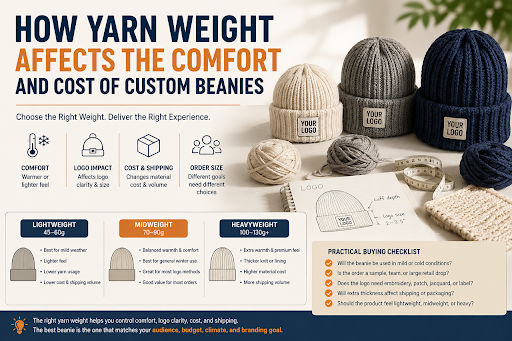
A lightweight beanie may weigh around 45–60g. This can work for mild weather, indoor-outdoor use, lifestyle merchandise, or a small test order where the buyer wants to keep the product simple.
A midweight beanie often sits around 70–90g. This is usually the safest range for general winter merchandise because it offers enough warmth without becoming too bulky.
A heavier beanie may reach 100–130g or more, especially with chunky knit, double-layer construction, fleece lining, or thicker yarn. This can suit colder climates or premium winter products, but it may also increase material cost and shipping volume.
How Yarn Weight Affects Logo Placement
The heavier the knit, the more carefully the logo should be planned. A chunky texture can make small embroidery details harder to read. Thin lines, small letters, and detailed icons may not stay clear on heavy ribbing or loose knit surfaces.
For most cuffed beanies, a front logo around 2–3.5 inches wide is easier to balance than a large design. If the beanie has a deep cuff, a woven patch or embroidery can look clean. If the knit is very thick, a patch may be safer than direct stitching.
Buyers comparing logo-ready shapes can review custom beanies to see how cuffed, ribbed, pom pom, jacquard, and patch styles create different branding surfaces.
How Order Size Changes the Decision
For a 25-piece test order, buyers may focus on feel, color, and logo position. For a 50–100 piece team or event order, consistency and comfort become more important. For a 300+ piece retail or campaign order, yarn usage, packing volume, and reorder consistency can affect the real budget.
A heavier beanie may feel better in hand, but if hundreds of units are being shipped, extra weight and volume can become part of the total cost.
Acrylic, Wool, and Blended Yarn Choices
Acrylic and wool can feel different even at the same gram weight. Acrylic is often practical for group orders because it is flexible, color-stable, and easier to care for. Wool or wool blends may feel warmer and more premium, but they can cost more and require gentler washing.
For buyers still deciding between practical and premium material directions, this acrylic vs wool beanie comparison helps explain how comfort, warmth, care, and budget affect the final choice.
Practical Buying Checklist
Before confirming yarn weight, check:
- Will the beanie be used in mild weather or cold outdoor conditions?
- Is the order a sample run, team order, or larger retail drop?
- Does the logo need embroidery, patch, jacquard, or label placement?
- Will extra thickness affect shipping or packaging?
- Should the product feel lightweight, midweight, or heavy?
Conclusion
Yarn weight affects comfort, warmth, logo clarity, cost, and how often people will wear the beanie. For most branded orders, a midweight knit is often the safest starting point. Heavier yarns make sense when warmth or premium feel matters more.
The best beanie is not always the thickest one. It is the one that matches the buyer’s audience, budget, climate, and branding goal.