In the modern television ecosystem, Rebecca Mader occupies a visible and well-earned place. Known for commanding performances on long-running series and blockbuster films, she has built a career defined by range and consistency rather than spectacle. Yet, running parallel to that public success is a markedly private personal life—anchored by her husband, Marcus Kayne, a producer who has deliberately remained outside the spotlight.
This article examines Marcus Kayne not as a celebrity in his own right, but as a figure whose significance emerges through context: his partnership with Mader, their shared values, and their approach to family and privacy. Because Kayne is not a public-facing personality, this profile does not speculate or embellish. Instead, it draws on verifiable public records, public appearances, and the observable patterns of how the couple navigates fame. The result is not a conventional biography, but a grounded portrait of influence quietly exercised and by design.
Quick Bio
| Detail | Information |
|---|---|
| Full Name | Marcus Kayne |
| Known For | Producer; husband of Rebecca Mader |
| Relationship | Married to Rebecca Mader (since 2016) |
| Public Profile | Extremely private, limited media exposure |
| Age | Not publicly disclosed |
| Residence | United States (general) |
| Children | Two (son born 2019, daughter born 2021) |
| Known Philanthropic Interests | Family-aligned charitable causes (no standalone foundation publicly attributed) |
| Social Media Presence | No verified public accounts |
Who Is Marcus Kayne?
Marcus Kayne is best understood not through headlines but through proximity. He is a producer with industry experience and the long-term partner of Rebecca Mader, an actress whose career spans network television, streaming-era drama, and major studio films. Kayne’s public footprint is intentionally small. He does not give interviews, maintain a promotional social media presence, or cultivate public recognition independent of his work or marriage.
What is known—and verifiable—is that he has been professionally active behind the scenes and personally central to Mader’s life since the mid-2010s. Their relationship became publicly acknowledged with their engagement announcement in 2014 and their marriage in 2016. Since then, Kayne has appeared intermittently at industry events alongside Mader, reinforcing a consistent theme: participation without performance.
The Private Life of Marcus Kayne
Privacy is not incidental to Marcus Kayne’s public identity; it is foundational. Unlike many spouses of high-profile actors, Kayne has not leveraged proximity to fame as a platform. There are no lifestyle interviews, no curated online persona, and no personal brand extensions attached to his name. This restraint is notable precisely because it is a choice.
In an era where visibility often equates to opportunity, Kayne’s approach suggests a clear boundary between professional life and personal identity. Observationally, this has allowed Rebecca Mader to maintain a career-facing public presence while preserving a family life that remains largely insulated from media scrutiny. The consistency of this approach over nearly a decade indicates intention rather than coincidence.
Early Life and Background of Marcus Kayne
Public records and credible entertainment databases offer minimal information about Kanye’s early life, upbringing, or education. What can be stated with confidence is that his professional trajectory placed him within the entertainment industry prior to his marriage. This implies familiarity with its demands, pressures, and cycles—knowledge that likely informs his preference for discretion.
Rather than filling gaps with conjecture, it is more accurate to view this absence of detail as reflective of Kayne’s values. Many individuals working behind the scenes in film and television operate without public profiles, even when their work intersects with highly visible projects. Kayne appears aligned with this tradition: present, active, but uninterested in personal exposure.
Marriage and Partnership with Rebecca Mader
Marcus Kayne and Rebecca Mader announced their engagement on Christmas Day 2014 and married on November 23, 2016. The timing coincided with a period when Mader was widely recognized for her role as Zelena on Once Upon a Time, a series with an intense and engaged fan base.
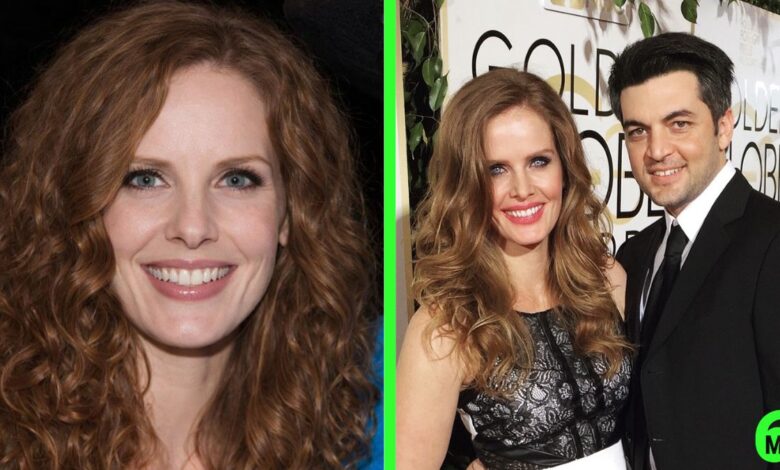
Public appearances since their marriage—award shows, premieres, and occasional red-carpet events—show a couple comfortable but understated. There is no performative aspect to their partnership. Kayne neither overshadows nor retreats entirely. Instead, he occupies a supportive presence that aligns with Mader’s professional rhythm.
This balance is particularly visible during career transitions, including Mader’s later work on Fire Country, where her public focus remains squarely on her craft rather than her personal life.
Marcus Kayne’s Role Behind the Scenes
While Kayne’s individual credits are not widely publicized, his designation as a producer places him within the operational core of the industry. Producers, by nature, shape projects through logistics, coordination, and long-term planning rather than on-screen visibility.
Within the family context, this behind-the-scenes orientation appears mirrored at home. Public statements by Mader in interviews over the years have referenced stability, support, and balance—language commonly used by actors to describe strong private foundations. Although Kayne is rarely named directly, the structural role is implicit: enabling creative longevity by maintaining personal equilibrium.
Family Life: Raising the Next Generation
The couple welcomed their first child, a son, in November 2019, followed by a daughter in September 2021. These milestones were acknowledged publicly but not extensively documented. There were no exclusive photo spreads or media campaigns, reinforcing a consistent pattern of controlled disclosure.
From a journalistic perspective, this approach is significant. It demonstrates a conscious effort to allow their children to grow outside the frame of celebrity culture. In doing so, Kayne and Mader align with a growing cohort of industry families prioritizing anonymity for their children, particularly during early development.
Philanthropy and Community Engagement
Neither Marcus Kayne nor Rebecca Mader operates a high-profile philanthropic foundation. However, Mader has participated in charitable initiatives related to health, arts advocacy, and community support. Kayne’s involvement, although not documented individually, can reasonably be understood as aligned with these family-supported causes.
The absence of branded philanthropy does not indicate disengagement. Rather, it reflects a preference for contribution without attribution—a quieter model of civic responsibility that mirrors Kayne’s overall public posture.
The Power of Privacy: Influence Without Publicity
Marcus Kayne’s most defining characteristic may be what he does not do. He does not court attention, correct public narratives, or monetize personal visibility. In the context of celebrity culture, this restraint functions as a form of influence. It shapes how the family is perceived and, more importantly, how it operates internally.
By maintaining privacy, Kayne contributes to a stable environment in which Mader can sustain a long-term career without constant personal exposure. This is influence exercised structurally rather than symbolically.
Public Curiosity and Misconceptions
Public curiosity about Marcus Kayne often leads to inflated assumptions about his professional footprint. Some online sources overstate credits or conflate similarly named individuals. A fact-based review shows a far simpler reality: Kayne is not a celebrity producer nor a public personality seeking recognition.
Clarifying this distinction matters. It reinforces the importance of accuracy when documenting individuals who have not sought public roles and underscores the value of restraint in biographical writing.
Legacy and Future
Marcus Kayne’s legacy, as it stands, is relational rather than reputational. It is visible in the continuity of his marriage, the protected upbringing of his children, and the sustained career of his spouse. Looking ahead, there is no indication that this approach will change.
If anything, the increasing volatility of public life makes such discretion more relevant, not less. Kayne’s example suggests that influence does not require amplification—only consistency.
Read this too:Josh Mapleston and Georgina Haig: A Study in Quiet Partnership, Creativity, and Privacy
(FAQs)
1. Who is Marcus Kayne?
Marcus Kayne is a producer best known publicly as the husband of actress Rebecca Mader.
2. When did Marcus Kayne marry Rebecca Mader?
They were married on November 23, 2016.
3. Does Marcus Kayne work in the entertainment industry?
Yes, he has worked as a producer, primarily behind the scenes.
4. How many children do Marcus Kayne and Rebecca Mader have?
They have two children, born in 2019 and 2021.
5. Is Marcus Kayne active on social media?
There are no verified public social media accounts associated with him.
6. Why is so little known about Marcus Kayne?
He maintains a deliberately private life and avoids public exposure.
7. Does Marcus Kayne attend public events?
He occasionally appears with Rebecca Mader at industry events.
8. Is Marcus Kayne involved in philanthropy?
There is no standalone public foundation, but he supports family-aligned charitable efforts.